Sensational Slow Cooked Beef Brisket
Mastering Slow Cooked Beef Brisket: The Ultimate Guide to Tender, Flavorful Perfection
The art of slow-cooked beef brisket transcends mere culinary technique; it’s a journey into transformative flavors and textures, yielding a dish that’s both comforting and profoundly satisfying. This comprehensive guide unpacks the science and secrets behind achieving brisket nirvana, ensuring your slow cooker becomes an instrument of edible alchemy. We will delve into brisket selection, essential preparation steps, the nuances of low-and-slow cooking, and the critical resting and slicing phases, empowering you to create a truly sensational beef brisket that will impress even the most discerning palates. Forget dry, tough, or uninspired attempts; this is about unlocking the inherent potential of this magnificent cut of beef through the magic of low, slow heat.
The foundation of exceptional slow-cooked brisket lies in the initial selection of the meat. The brisket, a primal cut from the lower chest of the cow, is characterized by its abundance of connective tissue and intramuscular fat, components that, when rendered over extended periods, contribute to its signature tenderness and rich flavor. There are two primary sections of the brisket: the "flat" (leaner, more uniform) and the "point" (fattier, with a distinct muscle separation). For slow cooking, a whole brisket, encompassing both flat and point, often yields the most desirable results, offering a spectrum of textures and moisture. When choosing your brisket, prioritize a piece with generous marbling – those fine streaks of fat woven throughout the muscle – and a substantial fat cap on one side, ideally around a quarter to half an inch thick. This fat cap acts as a natural basting agent, slowly melting and infusing the meat with moisture and flavor as it cooks. Look for briskets labeled "USDA Prime" or "USDA Choice" as these grades indicate superior marbling and overall quality. While "USDA Select" can be used, it will require more careful attention to ensure tenderness. The weight of the brisket can vary, but a common range for slow cooking is between 3 to 5 pounds, offering a good balance for even cooking. Don’t be afraid to ask your butcher for recommendations or to trim the fat cap to your desired thickness, although it’s generally advisable to leave a good portion for optimal results.
Preparation is paramount, transforming a raw cut into a canvas for flavor. Begin by trimming any excess hard, thick fat that is more than a half-inch thick, particularly from the top of the brisket, to prevent it from becoming greasy and unappealing during cooking. However, leave that essential fat cap intact. Next, consider the "silverskin," a thin, iridescent membrane that can remain tough and unyielding even after prolonged cooking. Carefully remove this silverskin from the meat side of the brisket using a sharp boning knife or fillet knife, working at a shallow angle to avoid removing too much valuable meat. The beef brisket is now ready for its flavor infusion. A dry rub is the traditional and highly effective method for seasoning brisket for slow cooking. A basic yet potent rub can consist of equal parts kosher salt and coarse black pepper, providing a robust savory foundation. However, the possibilities for a dry rub are virtually limitless, allowing for personalization and experimentation. Consider adding smoked paprika for a smoky depth, garlic powder and onion powder for aromatic complexity, chili powder for a hint of heat, or brown sugar for a subtle sweetness that aids in caramelization. Apply the rub generously to all surfaces of the brisket, ensuring an even coating. Gently press the rub into the meat to help it adhere. For an even deeper flavor penetration, particularly if you have the time, allow the seasoned brisket to rest in the refrigerator, uncovered, for at least 4 hours, or ideally overnight. This allows the salt to begin its curing process, drawing out moisture and then reabsorbing it along with the flavors of the rub, resulting in a more intensely seasoned and tender outcome.
The slow cooking process is where the magic truly happens, transforming tough collagen into gelatin, which then melts into the muscle fibers, imparting succulence and tenderness. Your slow cooker, with its consistent low heat, is the ideal instrument for this metamorphosis. The optimal cooking temperature for beef brisket in a slow cooker is low, typically between 200-225°F (93-107°C). While slow cookers don’t have precise temperature controls in this range, selecting the "LOW" setting is generally equivalent. The cooking time will vary significantly depending on the size and thickness of your brisket, as well as the specific wattage of your slow cooker. As a general guideline, a 3-4 pound brisket cooked on "LOW" can take anywhere from 8 to 12 hours. It is crucial to resist the temptation to peek too often, as each opening of the lid releases valuable heat, prolonging the cooking process and potentially affecting the outcome. The true indicator of doneness is not time, but tenderness. The brisket is ready when it is fork-tender, meaning a fork can be inserted into the thickest part of the meat with minimal resistance, and it can be easily pulled apart. The internal temperature should reach at least 195°F (90.5°C), but can go as high as 205°F (96°C) for ultimate tenderness. Avoid relying solely on internal temperature, as tenderness is the more reliable measure for brisket. For added moisture and flavor, consider adding a small amount of liquid to the bottom of the slow cooker. A cup of beef broth, a splash of Worcestershire sauce, or even a bit of your favorite barbecue sauce can contribute to the overall flavor profile. However, use liquid sparingly, as the brisket will render its own juices, and too much liquid can lead to a stew-like consistency rather than a succulent, sliceable roast.
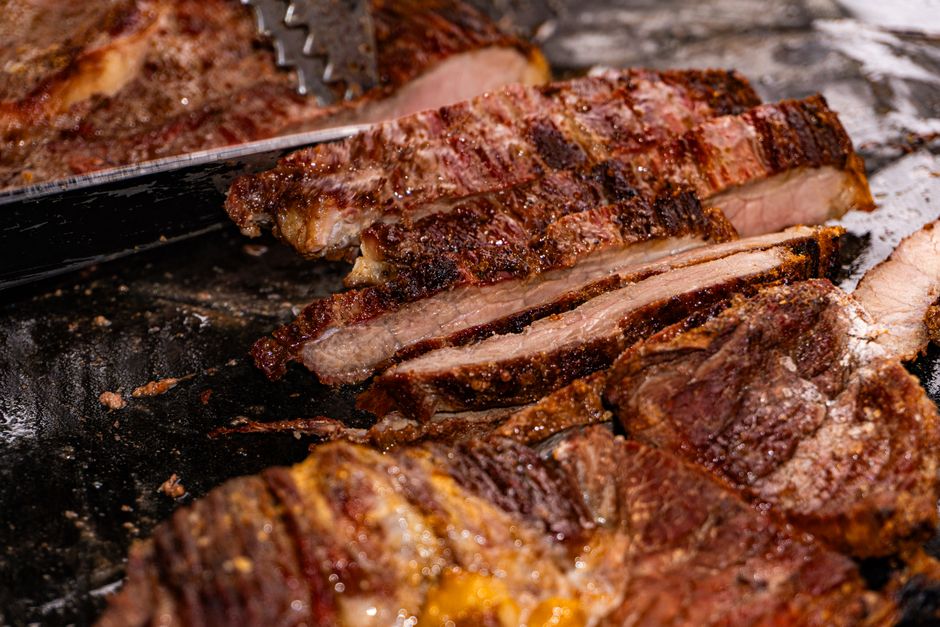
The resting and slicing stages are as critical to the final success of your slow-cooked brisket as the cooking itself. Once the brisket has reached optimal tenderness, remove it from the slow cooker and place it on a clean cutting board. Tent it loosely with aluminum foil and allow it to rest for a minimum of 30 minutes, and ideally for an hour. This resting period is crucial for allowing the meat to reabsorb the juices that have been drawn towards the center during cooking. If you slice the brisket immediately after cooking, these precious juices will simply run out, resulting in a dry, less flavorful product. Think of it as the meat redistributing its moisture internally. After resting, it’s time to slice. The key to slicing brisket is to understand the grain of the meat. The muscle fibers run in a particular direction. Identify this direction and slice against the grain, perpendicular to the muscle fibers. This shortens the muscle fibers, making the meat significantly more tender and easier to chew. If you slice with the grain, you’ll encounter stringy, tough meat. For the flat, the grain is generally more linear and easier to identify. The point can be more complex due to its layered structure, so examine it carefully to determine the direction of the muscle fibers before slicing. Aim for slices that are about ¼ inch thick for a balance of tenderness and substantial bite. Some enthusiasts prefer to separate the flat and the point before slicing, as they often have different grain directions, allowing for more precise slicing of each section.
Beyond the fundamental techniques, several advanced considerations can elevate your slow-cooked brisket from excellent to extraordinary. The inclusion of aromatics during the slow cooking process can add subtle yet impactful layers of flavor. Consider adding quartered onions, whole garlic cloves, bay leaves, or sprigs of fresh thyme or rosemary to the slow cooker alongside the brisket. These ingredients will gently infuse the cooking liquid and the meat with their essence. For those seeking an even deeper, more complex smoky flavor without the need for a smoker, a secret ingredient can be employed: liquid smoke. Use this sparingly, a teaspoon or two added to the cooking liquid, as its flavor is potent. Alternatively, for a more authentic smoky profile, consider searing the brisket on all sides in a hot pan before placing it in the slow cooker. This Maillard reaction creates a rich, browned crust that contributes significantly to the overall flavor and visual appeal. Another technique that enhances tenderness and moisture is "braising" the brisket in a flavorful liquid within the slow cooker. Instead of just a cup of broth, consider using a combination of beef broth, red wine, or even a dark beer. This adds a depth of flavor that complements the richness of the beef. Furthermore, for an extra layer of flavor and moisture, you can partially cook the brisket, remove it, wrap it tightly in butcher paper or foil, and then return it to the slow cooker to finish cooking. This "Texas Crutch" method helps to retain moisture and can create a more tender brisket. The final flourish for many is a barbecue sauce. While not always necessary for a well-seasoned brisket, a homemade or high-quality store-bought barbecue sauce can be brushed onto the brisket during the last hour of cooking, allowing it to caramelize and form a sticky glaze. The versatility of slow-cooked beef brisket is astounding; it serves as the star of sandwiches, tacos, loaded baked potatoes, or can be enjoyed simply with your favorite sides. Mastering this dish is a rewarding culinary endeavor that offers immense satisfaction and consistently delicious results.