The Legacy of Monsanto and the Legal Battle Over Roundup Pesticide Safety and Corporate Accountability

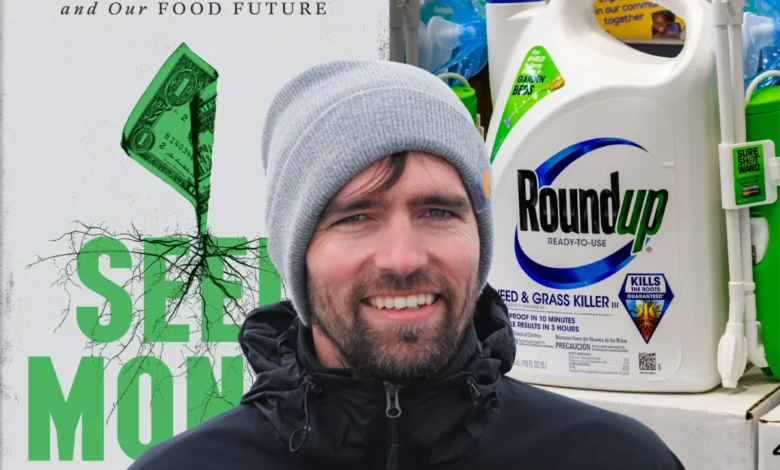
The United States Supreme Court issued a landmark 7–2 ruling on June 25, 2026, rejecting a lawsuit filed by John Durnell against Bayer, the parent company of Monsanto, which alleged that prolonged exposure to the herbicide Roundup caused his non-Hodgkin lymphoma. The decision marks a pivotal moment in a decades-long legal and scientific conflict regarding the safety of glyphosate, the active ingredient in Roundup, and the extent to which federal regulatory approval shields corporations from state-level liability. The Durnell case centered on the legal doctrine of "preemption," with Bayer arguing that because the Environmental Protection Agency (EPA) does not classify glyphosate as carcinogenic, the company cannot be held liable under Missouri state law for failing to include cancer warnings on its packaging.
The ruling is the latest chapter in the history of Monsanto, a company that transformed from a small 20th-century chemical startup into a global agricultural juggernaut. While the court’s decision provides a significant legal victory for Bayer, it also reignites intense public debate over the legacy of Monsanto’s chemical products, the transparency of corporate-funded science, and the efficacy of the American regulatory framework in protecting public health.
The Legal Core: Preemption and Regulatory Authority
The case of Monsanto v. Durnell arrived at the Supreme Court following years of conflicting lower court rulings. At the heart of the dispute was the Federal Insecticide, Fungicide, and Rodenticide Act (FIFRA), which grants the EPA the authority to oversee pesticide labeling. Bayer’s legal team contended that any state-level requirement to add a cancer warning to Roundup would directly conflict with federal findings. Since the EPA has consistently maintained that glyphosate is safe for use when applied according to label instructions and is "not likely to be carcinogenic to humans," Bayer argued that state "failure-to-warn" claims are preempted by federal law.
Critics and plaintiffs’ attorneys, however, argued that EPA findings should not serve as an absolute shield, particularly when emerging independent science suggests potential risks. They pointed to the 2015 assessment by the International Agency for Research on Cancer (IARC), a branch of the World Health Organization, which classified glyphosate as "probably carcinogenic to humans." This discrepancy between international health organizations and U.S. federal regulators has been the primary engine for more than 165,000 lawsuits filed against the company.
A Century of Chemistry: The Roots of Monsanto
To understand the current legal landscape, historians and industry analysts point to Monsanto’s origins as a chemical manufacturer. Founded in 1901 by John Francis Queeny in St. Louis, Missouri, the company’s first major success was the production of saccharine, an artificial sweetener sold primarily to the Coca-Cola Company. This early partnership provided the capital necessary for Monsanto to expand into a diversified chemical empire.
By the mid-20th century, Monsanto had become a leader in the "synthetic age," leveraging the byproducts of coal tar and oil refining to create a vast array of industrial and agricultural chemicals. This era saw the production of polychlorinated biphenyls (PCBs), which were used extensively in electrical equipment, and 2,4,5-T, a herbicide that would later become a primary component of Agent Orange.
The legacy of these products is marked by significant environmental and health controversies. In Nitro, West Virginia, workers at a Monsanto plant as early as 1949 exhibited severe health symptoms, including chloracne—a painful, disfiguring skin condition caused by exposure to dioxin, a toxic byproduct of 2,4,5-T production. Internal company records from that era, later unearthed during litigation, suggested that the company was aware of the toxic effects of these contaminants long before they became a matter of public record or military concern during the Vietnam War.
The Rise and Dominance of Glyphosate
As the environmental and legal pressures surrounding older chemicals like 2,4,5-T and PCBs mounted in the 1970s, Monsanto introduced glyphosate under the brand name Roundup. Marketed as an environmentally friendly alternative to more toxic herbicides, Roundup became the most widely used weed killer in history.
The company’s strategy shifted fundamentally in the 1990s under CEO Robert Shapiro, who envisioned a "life sciences" company that integrated chemical production with biotechnology. This led to the development of "Roundup Ready" crops—genetically engineered soybeans, corn, and cotton designed to survive direct applications of glyphosate. This system allowed farmers to spray entire fields to kill weeds without harming the crops, leading to a massive increase in the volume of glyphosate applied to American farmland.
By 2018, when the German pharmaceutical and chemical giant Bayer acquired Monsanto for $63 billion, Roundup had become a cornerstone of global industrial agriculture. However, the merger coincided with a series of high-profile legal defeats. The first major verdict came in 2018, when a California jury awarded $289 million to Dewayne Johnson, a school groundskeeper who claimed Roundup caused his terminal cancer. Subsequent multi-million dollar verdicts caused Bayer’s market capitalization to plummet, losing nearly half its value within a year of the merger.
Chronology of Key Events in the Roundup Litigation
- 1901: Monsanto is founded in St. Louis, Missouri.
- 1974: Roundup (glyphosate) is first brought to market.
- 1996: Monsanto introduces Roundup Ready soybeans, revolutionizing weed management.
- 2015: The IARC classifies glyphosate as "probably carcinogenic to humans," sparking a wave of litigation.
- 2018: Bayer completes its acquisition of Monsanto; Dewayne Johnson wins the first Roundup cancer trial.
- 2020: Bayer announces a settlement of up to $10.9 billion to resolve roughly 75% of the then-current 125,000 claims.
- 2024–2025: Bayer lobbies for "preemption" language in the federal Farm Bill and pushes for state-level "Bayer bills" to limit liability.
- June 25, 2026: The U.S. Supreme Court rules 7–2 in Monsanto v. Durnell, rejecting the plaintiff’s failure-to-warn claim based on federal preemption.
Data and Scientific Controversy: The Yield and Safety Debate
A central pillar of the agricultural industry’s defense of glyphosate is the "feed the world" narrative. Proponents argue that glyphosate-based systems increase yields and allow for no-till farming, which reduces soil erosion and carbon emissions. However, independent agricultural data has presented a more complex picture.
Research published in 2016 and 2017 indicated that the yield gains in genetically engineered crops were often comparable to those achieved through conventional breeding programs in Europe, where GE crops are largely prohibited. Furthermore, the widespread use of a single herbicide led to the emergence of "superweeds"—species like Palmer amaranth that have developed resistance to glyphosate. This resistance has forced farmers back toward older, more toxic chemistries, including dicamba and 2,4-D, creating what many ecologists call an "herbicide treadmill."
The safety debate remains equally contentious. While Bayer points to over 800 studies submitted to regulators that affirm glyphosate’s safety, investigative reports and the "Monsanto Papers" (internal documents released during discovery) have raised questions about the independence of some of that research. These documents revealed instances of "ghostwriting," where company employees drafted sections of scientific papers that were later published under the names of independent academics.
Corporate Responses and Legislative Strategy
In response to the ongoing litigation, Bayer has shifted its focus from the courtroom to the legislature. The company has aggressively supported state-level bills, often referred to as "Bayer bills," in states like Missouri, Idaho, and Iowa. These bills aim to provide companies with immunity from certain types of lawsuits if their products carry labels approved by the EPA.
Bayer’s official position remains that glyphosate is a vital tool for modern agriculture and that the litigation is driven by trial lawyers rather than scientific evidence. In a statement following the Supreme Court’s 2026 ruling, the company expressed satisfaction, stating that the decision "reaffirms the importance of a uniform federal regulatory system" and provides "necessary certainty for farmers who rely on these essential tools to produce a stable food supply."
Conversely, consumer advocacy groups and environmental organizations have decried the ruling as a blow to corporate accountability. They argue that the decision undermines the "precautionary principle"—the idea that if a product has a suspected risk of causing harm to the public or the environment, the burden of proof that it is not harmful falls on those proposing the action.
Implications for the Future of Regulation
The Supreme Court’s ruling in Monsanto v. Durnell has profound implications for the future of chemical regulation and tort law in the United States. By strengthening the doctrine of federal preemption, the court has made it significantly more difficult for individuals to challenge the safety of federally approved products in state courts.
This shift places an even greater burden on federal agencies like the EPA to ensure that their review processes are rigorous, transparent, and free from corporate influence. As the "herbicide treadmill" continues to drive the development of new chemical combinations, the tension between industrial efficiency and public health is likely to intensify.
The legacy of Monsanto, now subsumed into Bayer, serves as a case study in the complexities of modern capitalism, where the drive for innovation and market dominance often outpaces the development of regulatory safeguards. While the legal battle over Roundup may have reached a definitive milestone in the highest court of the land, the broader societal debate over how to balance agricultural productivity with the long-term health of the environment and the public remains far from resolved.