The Evolution of Vegan Pastry Science
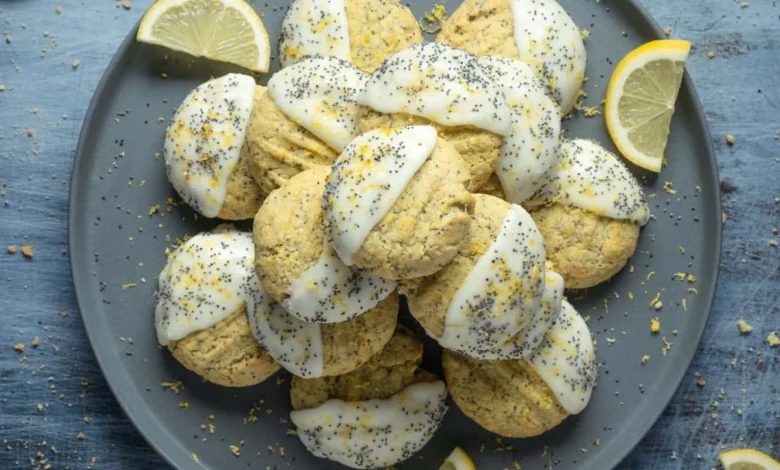
The culinary transition toward vegan baking has moved significantly beyond simple substitutions. Historically, early iterations of vegan cookies often struggled with moisture retention and the structural integrity provided by traditional dairy fats and proteins. The contemporary formulation of the lemon poppy seed cookie demonstrates a sophisticated use of emulsifiers and acidity to replicate the crumb structure typically achieved with eggs and dairy butter.

By utilizing high-quality vegan butter—a blend of plant-derived oils such as palm, coconut, and canola—bakers can achieve the required lipid profile necessary for a "short" dough, which is essential for a soft, tender cookie. The integration of fresh lemon zest provides a concentrated source of essential oils (limonene), which, when combined with a measured amount of leavening agents and an acidic component like lemon juice, results in a controlled rise and a consistent crumb.

Ingredient Composition and Nutritional Profile
The nutritional profile of these cookies is indicative of a standard moderate-sugar confection, containing approximately 139 kilocalories per serving. The composition relies on a balance of refined carbohydrates and fats, with poppy seeds providing a distinct textural element and a minor contribution of dietary minerals, including manganese and calcium.

The following is a breakdown of the primary components:

- Lipid Base: Vegan butter serves as the primary structural agent, providing the necessary fat to coat flour proteins, which limits gluten development and ensures a soft texture.
- Acidity and Flavor: The reliance on fresh zest and juice introduces natural citric acid. In baking, this acidity is crucial not only for flavor but for reacting with leavening agents to produce carbon dioxide, which gives the cookie its characteristic lift.
- Textural Components: Poppy seeds are historically significant in Central and Eastern European baking. Their inclusion here is not merely aesthetic; the small, spherical seeds add a distinct "nutty" crunch that contrasts with the softness of the cookie base.
- Glazing: The application of a lemon-infused powdered sugar glaze serves a functional purpose beyond flavor; it creates a protective barrier that helps retain the cookie’s internal moisture, extending shelf life at room temperature.
Culinary Methodology and Technical Execution
Achieving a professional-grade result requires adherence to specific technical protocols. The process of creaming vegan butter with sugar remains the foundational step. In the absence of egg proteins, the mechanical incorporation of air during the creaming stage is the primary method for achieving a light, airy crumb.

Temperature control is a critical variable in this process. Because plant-based fats often have different melting points than dairy butter, the dough must be handled with precision. The recommendation to bake in batches, rather than overcrowding the oven, is a standard industrial practice to ensure consistent airflow and even heat distribution. This prevents the edges of the cookies from caramelizing too quickly while leaving the center under-baked—a common challenge in home-scale convection baking.

Industry Trends in Plant-Based Baking
The emergence of such recipes is part of a broader shift in the food industry. According to market research, the global vegan food market is projected to reach significant valuations by 2030, driven by an increasing consumer preference for "flexitarian" diets. The popularity of lemon-based desserts specifically correlates with a broader consumer preference for "clean" or "bright" flavor profiles, which are perceived as fresher and less cloying than traditional chocolate-based confections.

From a manufacturing perspective, the success of these cookies signals a wider acceptance of ingredient-label transparency. The use of simple, recognizable ingredients—flour, sugar, plant-based fats, and citrus—aligns with the "clean label" trend currently dominating consumer packaged goods (CPG) sectors.

Economic and Practical Implications
For the home baker, the development of these techniques provides a pathway to cost-effective, high-quality production. The ability to store the dough or the finished product for up to three months in a freezer environment enhances the practical utility of the recipe. This longevity is a key factor in reducing food waste, a growing concern in household management and environmental policy.

Furthermore, the scalability of this recipe demonstrates the viability of small-batch production for artisanal bakeries. By focusing on shelf-stable ingredients and a reliable, repeatable method, businesses can minimize the overhead costs associated with the more expensive, niche ingredients often found in complex vegan recipes.

Analytical Summary of Best Practices
Based on current culinary guidelines for this recipe, the most critical factors for success include:

- Mechanical Flattening: Unlike traditional cookies that rely on the collapse of egg-based structures, these cookies require manual intervention—using a fork or a flat object—to ensure an even thickness and uniform baking time.
- Batch Management: The requirement to bake one tray at a time is a direct consequence of the physics of home ovens, where overcrowding significantly alters the humidity and temperature profiles of the cooking chamber.
- Moisture Preservation: The final glaze acts as a functional seal. Without this, the cookies would lose moisture rapidly due to the nature of the plant-based fats, which do not have the same hygroscopic properties as milk solids.
As consumer interest in plant-based nutrition shows no signs of waning, the refinement of these classic cookie archetypes will likely continue. The focus on texture, flavor balance, and technical precision indicates a maturing market that is increasingly demanding high-performance results from alternative ingredients. The shift toward these methodologies underscores a permanent change in how modern kitchens approach the fundamental principles of baking, favoring scientific consistency alongside traditional flavor pairings.