The Science of Flavor Development Through Roasting
The transition from traditional cauliflower soup recipes—which often rely on simmering raw florets—to the roasted iteration marks a shift toward flavor intensification. When cauliflower is subjected to dry heat in an oven, usually at temperatures between 400°F and 425°F (200°C–220°C), a series of chemical reactions occur, most notably the Maillard reaction. This reaction involves the amino acids and reducing sugars within the vegetable, resulting in the formation of melanoidins. These compounds are responsible for the complex, nutty, and savory notes that characterize roasted vegetables.

Nutritionally, while roasting does result in a slight reduction of heat-sensitive vitamins, such as Vitamin C, the process significantly enhances the bioavailability of other phytonutrients. Cauliflower itself is a member of the Brassicaceae family, recognized for its high concentration of glucosinolates, which have been studied for their potential anti-inflammatory and chemopreventive properties.

Chronology and Preparation Methodology
The preparation of this soup follows a standardized industrial-style culinary sequence designed for maximum efficiency in a domestic environment:

- Preparation Phase: Cauliflower is broken down into uniform florets. This uniformity is essential for ensuring even heat distribution during the roasting process.
- Thermal Processing: The florets are tossed in a high-smoke-point oil and seasoned, then roasted until tender and golden-brown. This stage typically requires 25 to 35 minutes of active oven time.
- Base Construction: Concurrently, aromatics—specifically onions and garlic—are sautéed in a heavy-bottomed pot. This creates the foundational layer of the soup’s flavor profile.
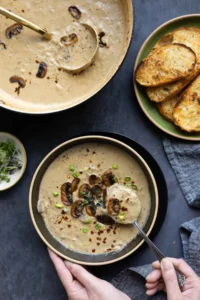
- Emulsification: Once the roasted cauliflower is integrated with the sautéed base and vegetable stock, the mixture undergoes a mechanical breakdown using an immersion blender. This step is critical; it is the physical act of blending that transforms the fibrous vegetable structure into a creamy, velouté-like consistency without the need for dairy-derived thickeners.
- Refinement: The addition of plant-based milks, such as almond milk, serves to adjust the viscosity and provide a subtle, creamy mouthfeel, balancing the acidity of the vegetable stock.
Economic and Dietary Implications
From a dietary perspective, the rise of such recipes mirrors a broader shift in consumer behavior. Data from the plant-based food industry indicates that consumers are increasingly seeking "whole-food" vegan options over highly processed meat alternatives. Cauliflower, due to its low calorie-to-volume ratio—approximately 25 calories per 100 grams—is a primary choice for health-conscious demographics.

Economically, the popularity of cauliflower as a "superfood" has led to fluctuations in retail pricing, yet it remains one of the most cost-effective fresh produce items available year-round in Western markets. The ability to utilize the entire vegetable, including the stalks (which, when roasted and blended, contribute significantly to the soup’s texture), aligns with contemporary goals of reducing household food waste.

Culinary Perspectives and Best Practices
Professional culinary consultants often emphasize that the success of a roasted cauliflower soup lies in the management of its moisture content. Because cauliflower contains approximately 92% water, excess moisture can dilute the flavor. By roasting, the cook effectively evaporates a portion of this water, concentrating the remaining solids and sugars.

Regarding equipment, the use of a high-speed immersion blender is considered the industry standard for home kitchens. Unlike a traditional upright blender, which requires the dangerous transfer of hot liquids, the immersion method allows for in-pot blending, which reduces the risk of thermal injury and streamlines the cleanup process.

Storage and Logistics: A Sustainable Approach
One of the most notable features of this soup is its high stability for storage. Unlike cream-based soups which may separate or spoil rapidly, the vegetable-stock-and-cauliflower base is highly resilient. When stored in airtight containers at temperatures below 40°F (4°C), the soup maintains its structural integrity for up to four days.

Freezing provides even greater longevity. When the soup is properly cooled to room temperature before being moved to the freezer, it can be preserved for up to three months without a significant degradation in flavor or nutritional quality. This makes it an ideal candidate for "batch cooking," a practice increasingly advocated by nutritionists to assist individuals in maintaining consistent dietary habits despite busy work schedules.

Broader Impact on Home Cooking Trends
The emergence of this recipe as a staple is indicative of a broader trend: the "professionalization" of the home kitchen. Recipes that were once reserved for restaurant menus—such as pureed vegetable soups featuring roasted aromatics—are now accessible to the average home cook through digital platforms. This democratization of culinary knowledge has led to a measurable increase in vegetable consumption among demographics that previously relied on pre-packaged or convenience-based meals.

Furthermore, the emphasis on customization—such as the suggestion to add toppings like paprika, red pepper flakes, or fresh herbs—allows for a high degree of personalization. This satisfies the modern consumer’s desire for "experience-based" cooking, where the act of preparing a meal is viewed as a relaxing, creative endeavor rather than a burdensome chore.

Future Outlook
As global supply chains continue to prioritize sustainable, locally sourced produce, dishes like Vegan Roasted Cauliflower Soup are expected to remain central to dietary discussions. The combination of accessibility, health benefits, and the ability to adapt the recipe based on seasonal availability (such as incorporating different spices or varying the type of vegetable stock) ensures its continued relevance in the evolving landscape of global gastronomy.

In summary, the transition of this dish from a simple soup to a sophisticated, flavor-forward culinary project reflects the current state of modern home cooking: one that values nutrition, environmental sustainability, and the fundamental science of flavor. Whether served as a standalone weeknight dinner or as part of a larger, multi-course meal, the roasted cauliflower soup serves as a testament to the versatility of simple, plant-derived ingredients when prepared with technical precision.