The Chemistry of the Brew: What Actually Hides Inside a Cup of Coffee

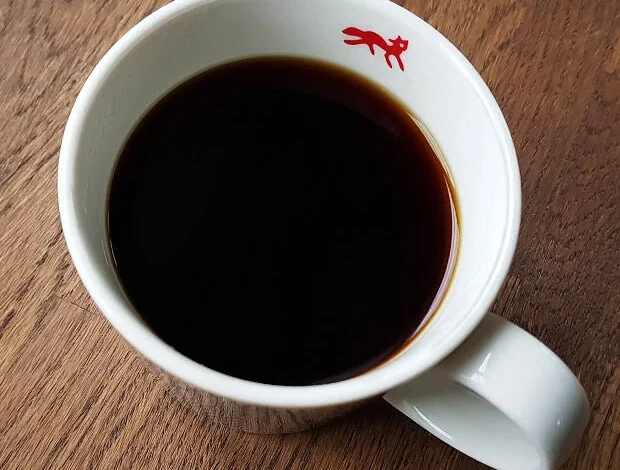
More than 98 percent of a standard cup of black coffee is pure water, yet that remaining fractional percentage holds the complex sensory blueprint that has captivated humanity for centuries. While coffee aficionados often obsess over grind sizes, water temperatures, and brew ratios—the physical mechanics of extraction—the true identity of coffee lies in its microscopic composition. A typical cup of brewed coffee contains between 1.2% and 1.5% of total dissolved solids (TDS), meaning that a single liter of the beverage holds roughly 12 to 15 grams of matter extracted from approximately 60 grams of roasted coffee beans. This seemingly modest amount of extracted material is a rich, chaotic cocktail comprising hundreds, if not thousands, of distinct chemical molecules that dictate everything from color and viscosity to acidity, bitterness, and aroma.
The Volatile and Non-Volatile Divide
To understand how a beverage can evoke such a vast spectrum of sensory experiences, food scientists divide the chemical constituents of coffee into two primary categories: volatile and non-volatile compounds. The non-volatile compounds—which include carbohydrates like sugars and soluble oligosaccharides, various organic acids, minerals, salts, proteins, lipids, and caffeine—remain in the liquid phase and interact directly with the tongue and palate. They establish the foundational tastes of bitterness, sweetness, acidity, and astringency, while suspended micro-particles and oils contribute heavily to the tactile mouthfeel and body of the brew.
Conversely, volatile compounds are the ephemeral messengers that escape the liquid matrix, travel through the retro-nasal passage, and register in the human brain as aroma. While humans can easily distinguish between basic tastes on the tongue, the human olfactory system can process an immense array of distinct aromatic notes. Yet, the relationship between a compound’s physical concentration and its sensory impact is far from linear.
The Paradox of Concentration and Odor Thresholds
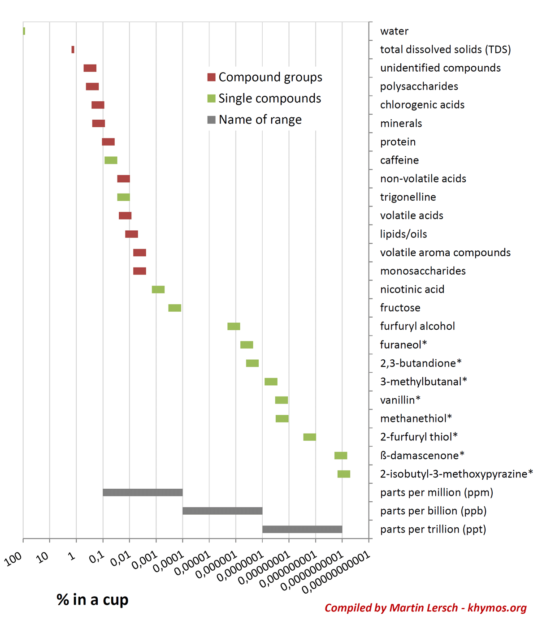
When examining the chemical profile of coffee on a logarithmic scale spanning multiple orders of magnitude, researchers frequently encounter a counterintuitive reality: a compound’s sheer abundance in the cup does not necessarily correlate with its contribution to flavor. Instead, perception is governed by the odor activity value (OAV), which is calculated by dividing a compound’s concentration by its individual odor threshold—the minimum concentration required for the human nose to detect it.

This dynamic explains why certain molecules present in vanishingly small amounts wield immense influence over the final flavor profile. A prime example is beta-damascenone, a potent aromatic molecule belonging to the rose ketone family. First discovered in rose oil during the 1960s and famously utilized by fragrance houses in luxury perfumes like Dior’s Poison, beta-damascenone has been identified as one of the top key odorants in coffee. Despite existing in coffee at concentrations as low as one part per trillion (ppt), its extraordinarily low odor threshold allows it to punch far above its weight class, shaping the aromatic complexity of the brew just as profoundly as compounds present at concentrations thousands of times higher.
Chronology of Coffee Chemistry Research
The scientific quest to decode the molecular architecture of coffee has evolved significantly over the past century, transitioning from broad nutritional analyses to high-resolution chromatographic investigations.
In the mid-20th century, food chemistry largely focused on macro-components such as caffeine, lipids, and major chlorogenic acids. However, the foundational analytical breakthroughs arrived in the latter half of the century as gas chromatography-olfactometry (GC-O) matured.
In 1996, a landmark study published in the Journal of Agricultural and Food Chemistry by researchers P. Semmelroch and W. Grosch demonstrated that a synthetic model coffee could be constructed using just 22 key volatile compounds. While assessors noted that these synthetic replicas were "clearly coffee-like," they lacked the profound depth and nuance of a natural brew, proving that human sensory perception relies on a far more intricate symphony of molecules than a basic baseline of 22 compounds could provide.
Six years later, in 2002, a comprehensive Aroma Extract Dilution Analysis (AEDA) conducted by C. Sanz and colleagues revealed a striking gap in human knowledge: out of 40 key odorants identified in coffee, 13 remained completely unknown to science. This inability to identify certain molecules stemmed from two primary obstacles: either their concentrations were too infinitesimally low to isolate a sufficient sample size for structural elucidation, or the molecules themselves were excessively large and complex, frustrating traditional resolution techniques.
Polarity and the Mechanics of Extraction
Further complicating the science of brewing is the chemical property of polarity. When water acts as a solvent during the extraction process, its polar nature makes it exceptionally efficient at dissolving other polar molecules. Consequently, standard water extraction successfully pulls out more than 75% of the polar compounds present in roasted coffee grounds, including acids, minerals, proteins, and carbohydrates.
On the other end of the spectrum lie non-polar compounds, which include essential lipids and delicate volatile aroma molecules. Because these substances share a low affinity for water, a standard aqueous brew typically extracts only 10% to 30% of the available non-polar compounds. This chemical reality has prompted advanced food scientists and culinary innovators to explore alternative solvents—such as food-grade ethanol—when seeking to unlock entirely new dimensions of extraction that water alone cannot access.
Implications for Baristas and Food Scientists
For the everyday barista and coffee roaster, these chemical realities carry profound implications regarding how coffee quality is measured. Total Dissolved Solids (TDS) refractometers remain the industry standard for determining coffee strength due to their speed and ease of use. However, because TDS only accounts for dissolved matter within a narrow 1.2% to 1.5% range and fails to track individual volatile aromatic compounds, it serves as a notoriously poor predictor of actual flavor and aroma.
A high TDS reading indicates strength, but it provides zero insight into whether the delicate rose ketones, acids, and sugars are balanced in a way that pleases the human palate. As a result, despite decades of sophisticated chromatographic research, the human nose and tongue remain the ultimate analytical instruments for evaluating coffee quality.
Industry experts and flavor chemists agree that the ongoing exploration of coffee extraction is far from complete. As analytical instrumentation becomes more sensitive, future researchers will undoubtedly unmask the remaining unknown odorants lurking in the parts-per-trillion range. Until then, the cup of coffee sitting on a morning desk remains an everyday miracle of organic chemistry—a delicate equilibrium of thousands of molecules working in concert to deliver an experience that continues to defy complete synthetic replication.