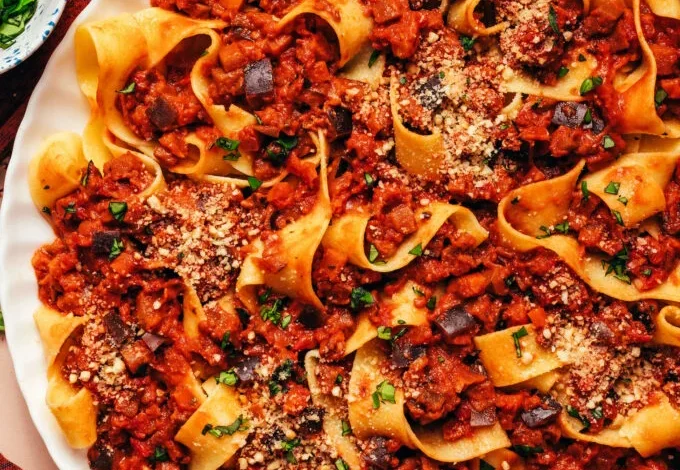
The culinary landscape of plant-based dining has reached a significant milestone with the introduction of a new, simplified iteration of a classic Italian comfort food: the Easy Eggplant Bolognese. Designed for home cooks seeking efficiency without compromising on traditional depth of flavor, this one-pot recipe reimagines the heritage of Bologna’s most famous sauce by substituting traditional minced meat with finely diced late-summer eggplant. As consumer demand for accessible, nutrient-dense, and sustainable weekday meals continues to rise, culinary developers are increasingly turning to produce-forward techniques that deliver hearty textures using minimal equipment and preparation time.
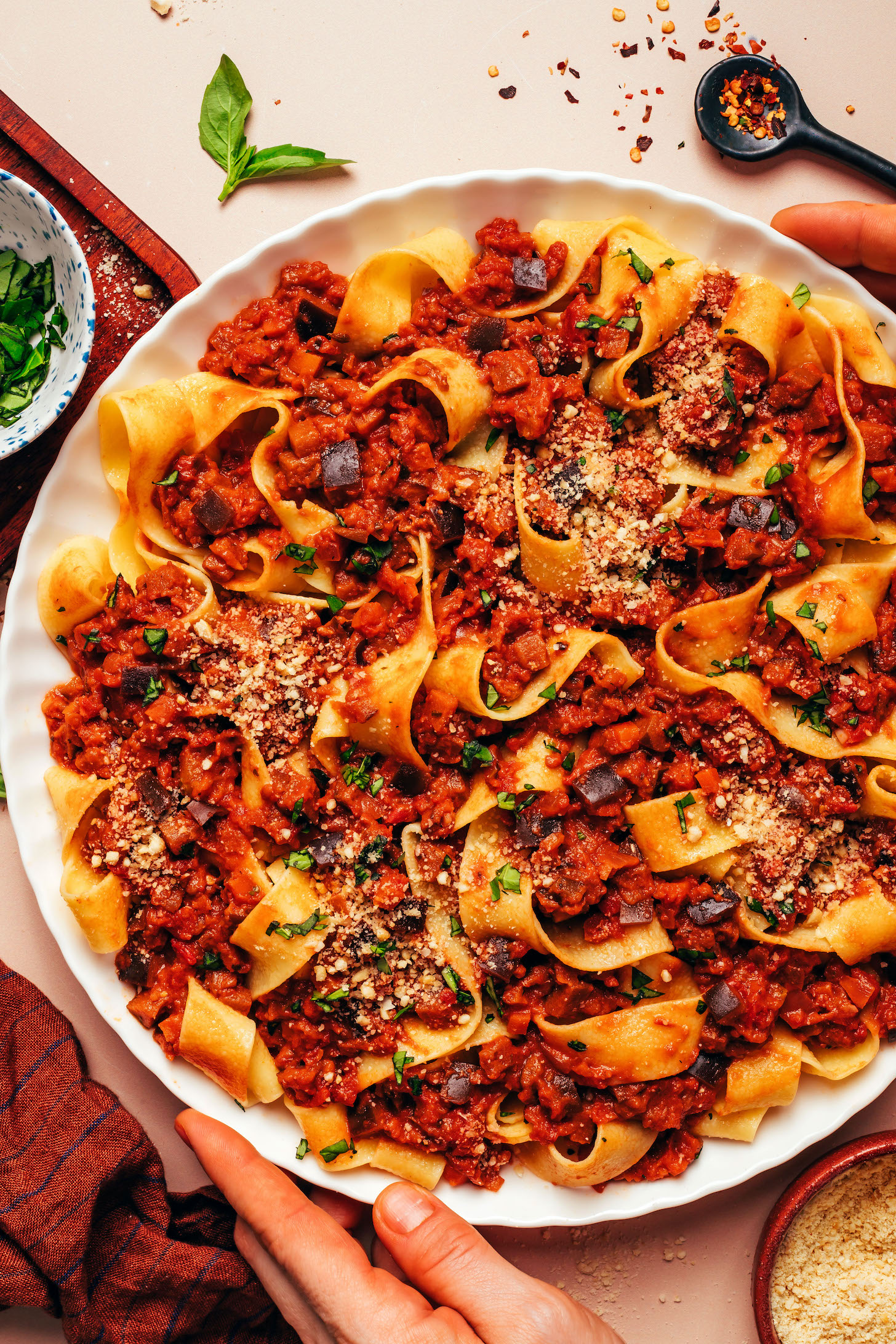
Understanding the Roots of Bolognese and Modern Plant-Based Adaptations
Traditional ragù alla bolognese traces its origins to the region surrounding Bologna, Italy, where historical documentation codified the dish as a slow-simmered meat-based sauce combined with a classic soffritto of onions, celery, and carrots, alongside white wine, milk, and tomato products. Over centuries, the recipe underwent numerous domestic and international transformations. In contemporary gastronomy, the global shift toward plant-forward diets has driven home cooks and professional chefs alike to experiment with alternative bases that mimic the rich, savory mouthfeel of the original dish without animal proteins.

Previous iterations of plant-based bolognese have relied heavily on legumes, mushrooms, or soy-based textured proteins to achieve a heavy consistency. However, the introduction of eggplant as the primary structural and textural component offers a unique gastronomic advantage. When diced finely and sautéed thoroughly with onions and carrots, eggplant breaks down to create a meltingly tender consistency that absorbs surrounding liquids while retaining a robust, meaty chew. This latest recipe bridges the gap between authentic Italian flavor profiles and modern dietary preferences, offering a completely vegan and optionally gluten-free alternative that appeals to both committed plant-based eaters and traditionalists alike.
Step-by-Step Chronology and Culinary Methodology
The preparation of this one-pot dish has been meticulously streamlined to reduce both active kitchen time and post-meal cleanup. The total time investment required is approximately 45 minutes, divided into 15 minutes of active preparation and 30 minutes of passive simmering.
The cooking process follows a precise sequence designed to build maximum flavor layers within a single Dutch oven or heavy-bottomed pot:
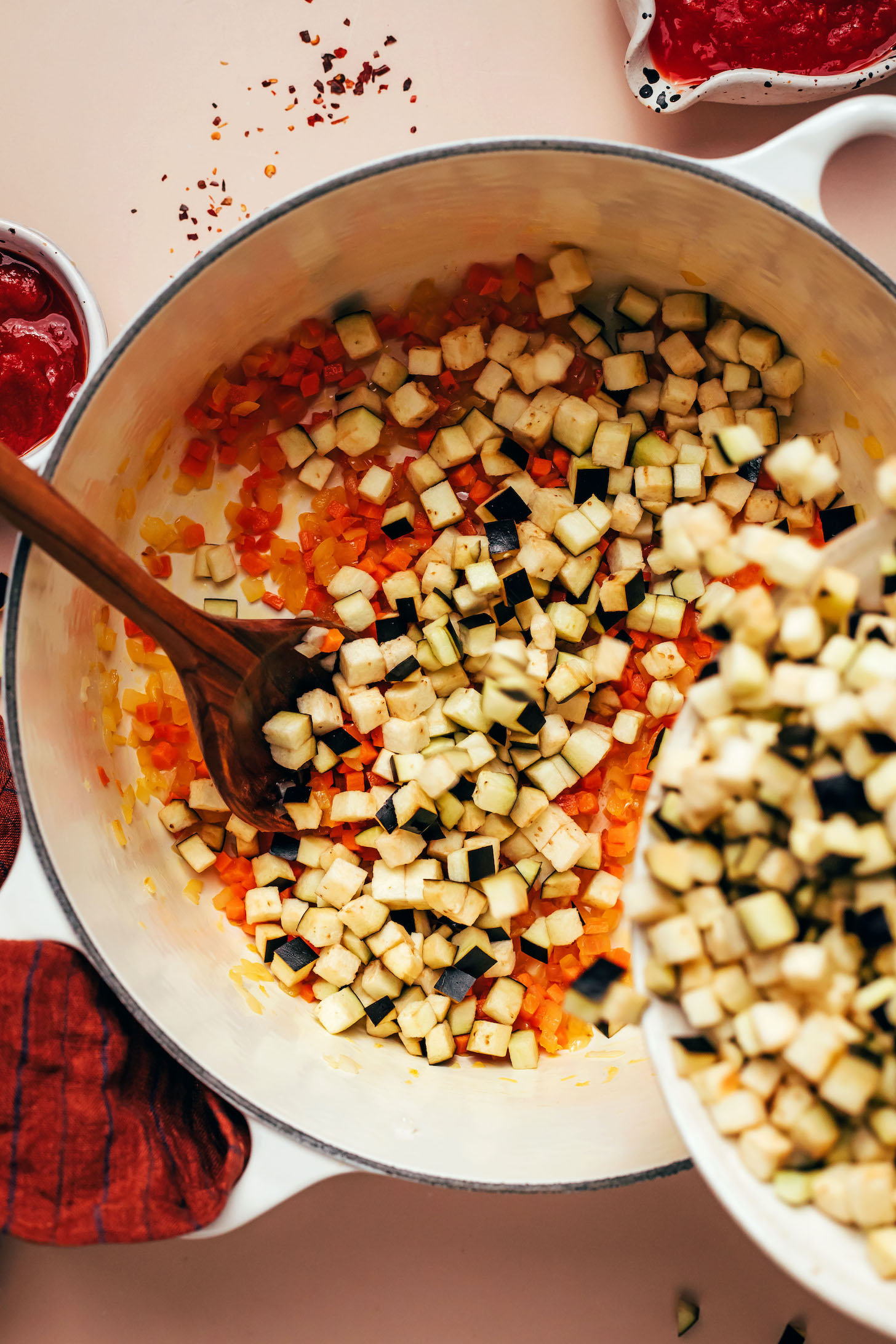
- Base Development: The cooking sequence initiates with the preparation of the soffritto, sautéing finely diced onions and carrots in olive oil until they achieve a savory-sweet caramelization.
- Vegetable Incorporation: Small-cubed eggplant is introduced directly into the aromatic base. Continuous heat application allows the eggplant to soften and develop localized browning, which is critical for generating deep umami undertones.
- Aromatic Enhancement: Minced garlic and red pepper flakes are incorporated into the mixture just long enough to release their essential oils without burning.
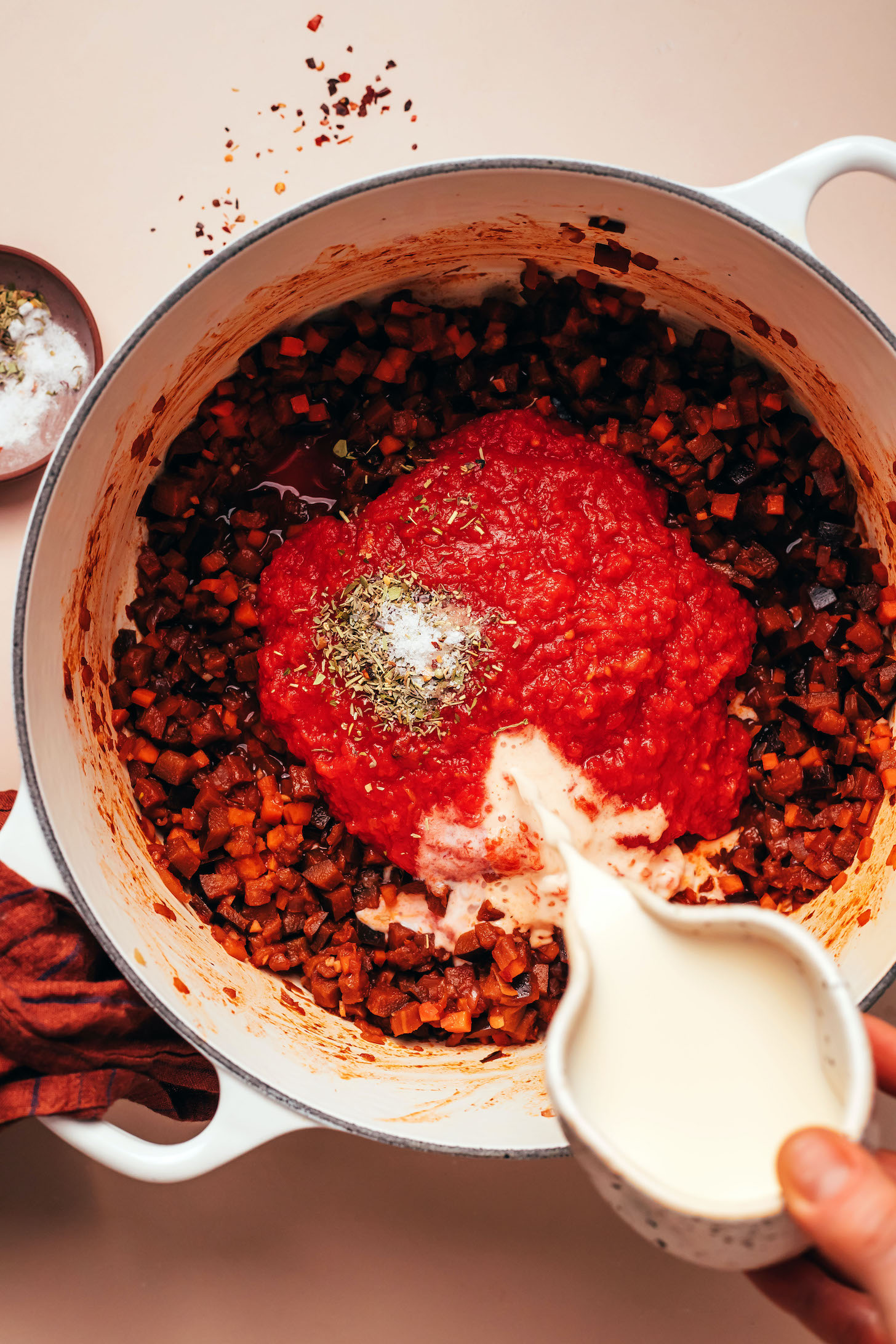
- Deglazing and Sourcing: The pot is deglazed with a measured splash of dry white or red wine, scraping up any browned bits from the bottom of the vessel. Crushed tomatoes and tomato paste are then added to establish a vibrant, acidic tomato foundation.
- Emulsification and Seasoning: A small quantity of dairy-free milk—traditionally substituted with homemade cashew milk—is whisked into the mixture to replicate the traditional dairy component of a classic ragù, imparting a subtle creaminess and counteracting the sharpness of the tomatoes. Dried basil, oregano, sea salt, and a touch of maple syrup are integrated to balance the overall acidity.
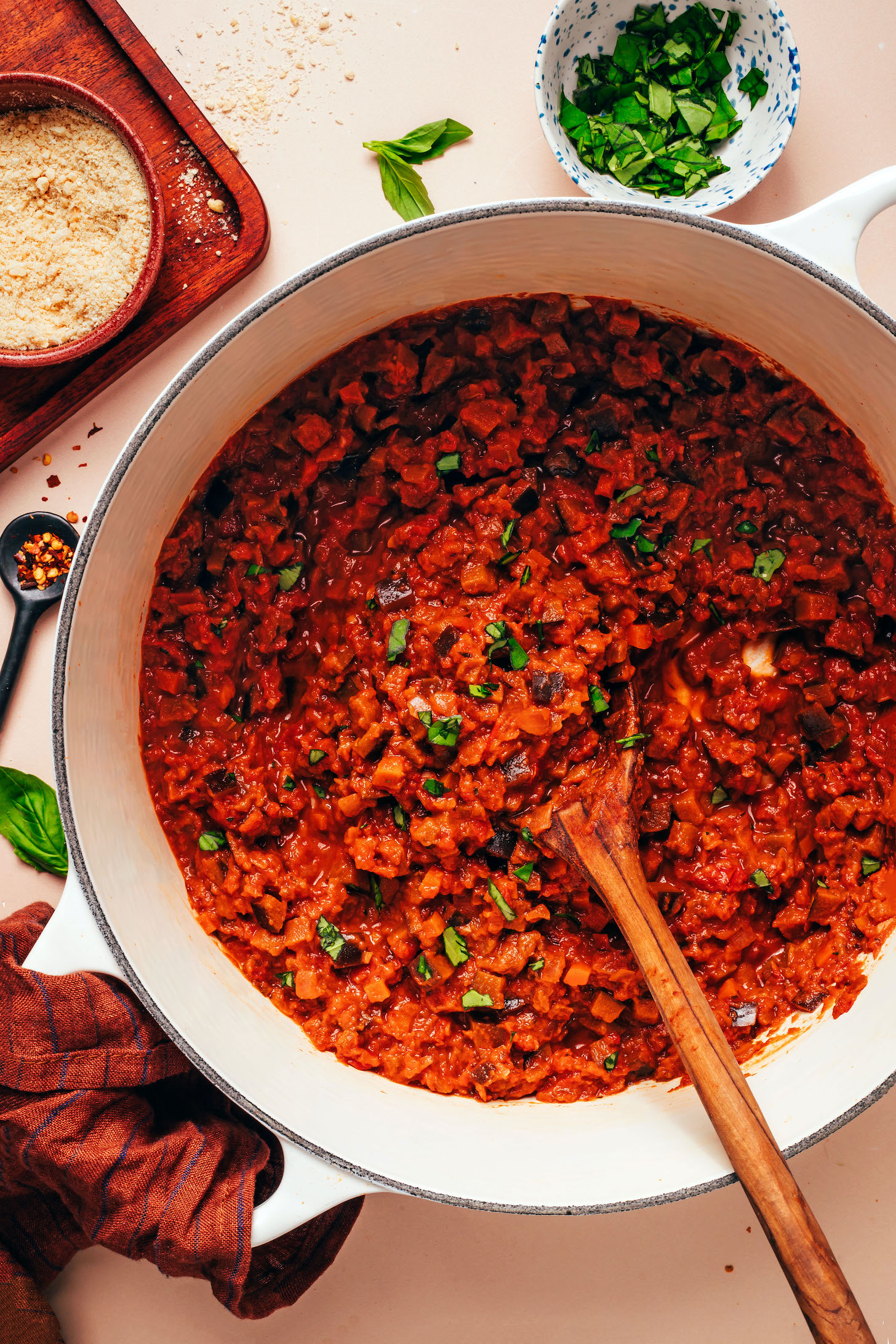
- Simmering Phase: The entire mixture is brought to a gentle simmer for 20 to 30 minutes, allowing excess moisture to evaporate and the flavors to concentrate significantly. Extended simmering up to one hour is optional for enhanced depth.
Nutritional Profile and Dietary Adaptability
From a nutritional perspective, the eggplant bolognese provides a balanced profile that aligns with contemporary dietary guidelines emphasizing fiber intake and reduced saturated fats. Based on a standard four-serving breakdown, each portion contains approximately 284 calories, 31.9 grams of carbohydrates, and 8.3 grams of dietary fiber, primarily sourced from the vegetables and tomato base. The dish maintains a modest protein content of 6.6 grams per serving, while keeping saturated fats low at 2.5 grams and containing zero cholesterol.
For individuals seeking a higher protein yield or specific dietary adjustments, the recipe accommodates several modifications:
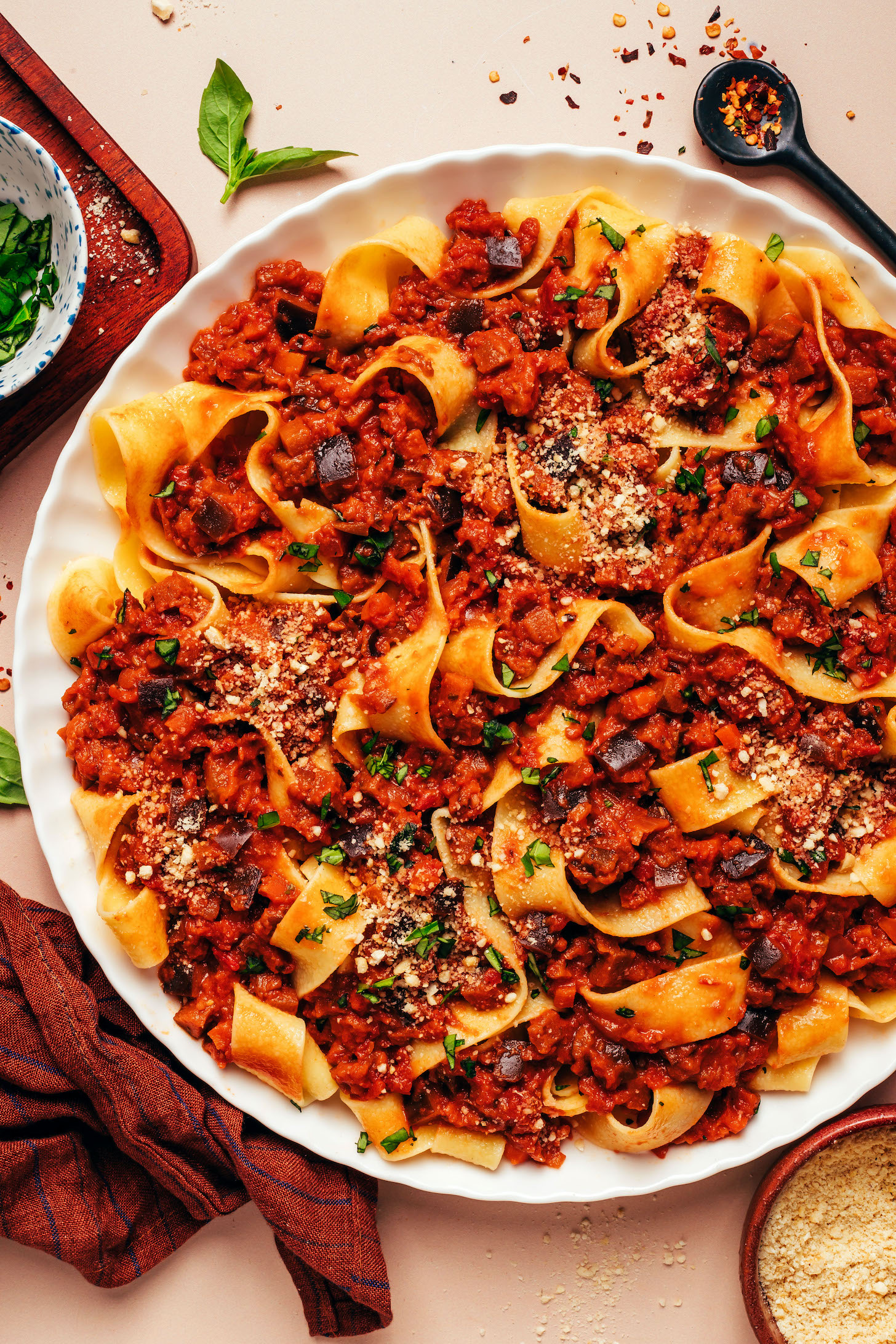
- Vegan Protein Augmentation: Cooks can incorporate cooked red lentils directly alongside the crushed tomatoes or top the finished dish with plant-based meatballs.
- Vegetarian Adaptations: Traditional dairy-based grated parmesan can be applied as a finishing garnish.
- Meat-Inclusive Variations: Omnivorous households have the option to brown ground beef or turkey within the wide pot prior to adding the eggplant, or serve the sauce alongside specialized poultry meatballs.
Storage, Preservation, and Broader Market Implications
Practicality remains a core advantage of this recipe for modern consumers managing fast-paced lifestyles. The prepared sauce exhibits strong preservation qualities, maintaining optimal quality for three to four days when stored in a sealed container in a refrigerator. Furthermore, the sauce is freezer-friendly for up to one month, making it a viable option for batch cooking and meal-prep planning.
Industry analysts note that the rise of simplified, single-vessel recipes reflects a broader cultural pivot toward functional home cooking. As grocery inflation and hectic work schedules influence consumer behavior, recipes that utilize versatile seasonal produce—such as late-summer eggplants—while minimizing equipment usage and cleanup time are experiencing heightened demand across digital cooking platforms and culinary media. By combining traditional flavor architecture with modern dietary flexibility, the eggplant bolognese serves as a case study in how heritage recipes successfully evolve to meet the needs of contemporary households.