Bridging Chemistry and Culinary Arts: The Launch of Avogadro, a Parametric Waffle Generator Marking Amedeo Avogadro’s 250th Birthday

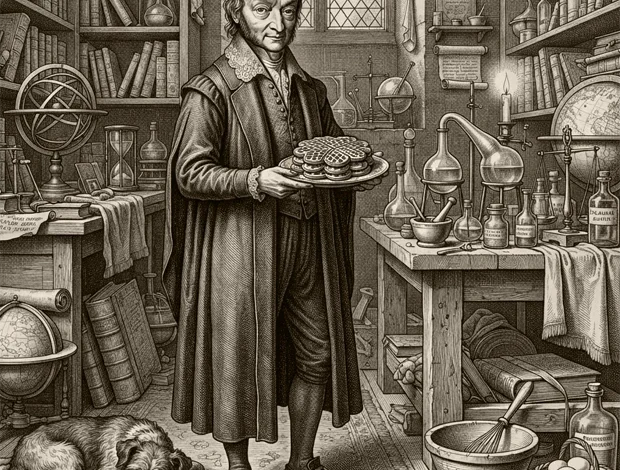
The intersection of quantitative science and culinary experimentation has reached a new milestone with the public release of Avogadro, a sophisticated parametric waffle recipe generator. Launched to coincide with the 250th anniversary of the birth of the celebrated Italian physicist and chemist Amedeo Avogadro on August 9, 2026, the digital tool represents the culmination of a conceptual project that began more than a decade ago. Designed to deconstruct and reconstruct the fundamental mechanics of waffle batter, the application bypasses traditional static recipe databases in favor of real-time computational modeling, allowing users to navigate an astronomical number of potential ingredient configurations.
The Origins and Conceptual Development of the Project
The architectural framework for Avogadro originated in 2014, when the developer initially conceptualized a system capable of translating intuitive culinary heuristics into precise mathematical ratios. Early iterations were restricted to rudimentary spreadsheets and preliminary interface mockups that explored how variables such as hydration, fat content, and structural starches interact within a baking matrix. For years, the project remained dormant, constrained by the complexity of defining the elusive boundary between a successful batter and an unworkable mixture.
Older culinary traditions frequently relied on tacit knowledge, utilizing vague instructions such as adding flour until the batter achieved the proper consistency. To address these historical ambiguities, the developer assembled a corpus of approximately 1,000 traditional waffle recipes, predominantly sourced from Norway and Scandinavia. Analyzing this extensive dataset raised fundamental questions regarding food science: what precise chemical and physical properties define a viable waffle batter, and at what point does a formulation cease to function under standard baking conditions? Avogadro was engineered to answer these questions by transforming qualitative kitchen wisdom into a quantifiable, algorithmic framework.
How the Parametric Generator Operates
Unlike conventional recipe websites that rely on static databases of pre-recorded dishes, Avogadro operates entirely on-the-fly. Users select baseline categories of ingredients—including liquids, dairy products, fats, eggs, starches, and sweeteners—and adjust a series of dynamic sliders corresponding to sensory and structural properties such as sweetness, richness, and tanginess.

Once parameters are established, the application immediately computes a tailored batter formulation measured in grams, scaled proportionally to the number of eggs selected by the user. A central feature of the interface is the waffle heart quality indicator. This diagnostic tool provides instantaneous feedback on two critical metrics: whether the generated batter possesses the physical characteristics necessary to bake successfully, and how closely its composition aligns with traditional, real-world waffle standards. Notably, the system demonstrates that deviation from traditional norms does not necessarily equate to poor quality, as several commercially successful mixes occupy surprisingly unconventional positions within the compositional space.
The application is structured into two distinct operational environments: standard mode and expert mode. Standard mode offers a streamlined interface with a curated selection of ingredients and a restricted number of sliders, ensuring that any generated combination yields a dependable result. Expert mode removes these guardrails, granting users access to the complete inventory of ingredients, all eight control sliders, and advanced presets designed to push the boundaries of conventional baking.
Mathematical Scale and the Avogadro Connection
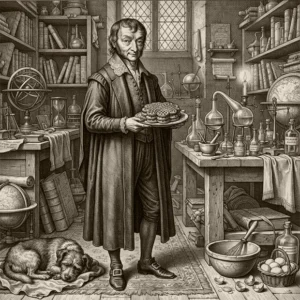
The naming convention of the tool pays homage to Amedeo Avogadro, born in Turin on August 9, 1776, whose foundational hypothesis concerning the volume and molecular count of gases established a cornerstone of modern chemistry. By calculating the permutations of all possible ingredient selections and slider positions, the developer estimates that the application spans approximately $10^24$ distinct control settings.
To contextualize this massive scale, Avogadro’s constant—the number of constituent particles, such as atoms or molecules, in one mole of a substance—is approximately $6.022 times 10^23$. Consequently, the total theoretical control settings accessible within the waffle generator encompass a numerical range equivalent to roughly 1,660 moles of potential batter configurations.
From a practical standpoint, the developer acknowledges certain scientific caveats inherent in such vast combinatorial systems. While the mathematical model permits $10^24$ control settings, rounding conventions and the algorithmic pruning of trace ingredients mean that numerous distinct inputs resolve to identical physical batters. Furthermore, a fraction of these theoretical settings inevitably fall outside workable culinary parameters, a limitation clearly signaled by the absence of active lobes on the application’s quality indicator. Nevertheless, the vast majority of the operational space yields functional recipes, offering users an unprecedented statistical probability of discovering entirely novel formulations.
Chronology of Development and Public Release

The timeline of the Avogadro project reflects a long-term synthesis of digital design and culinary research:
- 2014: Initial project conception, development of preliminary interface screenshots, and creation of a rudimentary Excel-based mathematical model.
- 2015–2025: Accumulation and standardization of a corpus comprising approximately 1,000 traditional Scandinavian and Norwegian waffle recipes to establish baseline behavioral parameters for batters.
- August 9, 2026: Official public launch of the Avogadro parametric waffle recipe generator, coinciding globally with the 250th anniversary of Amedeo Avogadro’s birth.
- Post-Launch Phase: Initiation of crowd-sourced user testing, data collection regarding edge-case formulations, and refinement of the model’s predictive algorithms based on practical baking results.
Industry Implications and Future Outlook
The release of Avogadro highlights a broader trend toward the computational modeling of traditional arts, demonstrating how food science and software engineering can intersect to demystify empirical kitchen practices. By treating baking as a parametric equation rather than a rigid set of instructions, tools of this nature provide culinary professionals and home cooks alike with a deeper understanding of ingredient functionality.
Because the software explores an unprecedented breadth of theoretical recipes, the developer has emphasized the importance of empirical validation. Rather than asserting that all $10^24$ permutations have been physically tested, the application is positioned as an advanced predictive model of traditional baking physics. The project team has established feedback channels encouraging users to report outlier combinations, structural anomalies, or exceptionally successful culinary discoveries.
As public engagement with the platform grows, the crowdsourced feedback loop is expected to refine the underlying algorithms, bridging the gap between theoretical chemistry and practical gastronomy. For the scientific and culinary communities observing the 250th anniversary of Amedeo Avogadro’s birth, the application serves as a fitting tribute: a systematic exploration of matter, proportion, and transformation.