When Fate Grants a Second Chance: The 1947 Plane Crash That Shaped Indonesian Economist Sumitro Djojohadikusumo


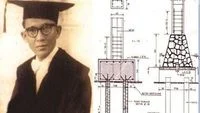
Few modern historical figures leave a legacy as deeply intertwined with the economic and political foundations of a nation as Professor Sumitro Djojohadikusumo. Revered as one of Indonesia’s most brilliant economists, a towering statesman, and patriarch to a new generation of political leadership—being the father of the eighth President of the Republic of Indonesia, Prabowo Subianto, and the father-in-law of the second President, Soeharto—Sumitro’s life was defined by intellectual rigor, political resilience, and public service. However, beneath his monumental contributions to fiscal policy and statecraft lay a harrowing personal chapter that profoundly altered his perspective on mortality and purpose: surviving a catastrophic commercial airline disaster in the winter of 1947.
This dramatic episode, recounted in his authorized biography Sumitro Djojohadikusumo, Jejak Perlawanan Begawan Pejuang (2000) by veteran journalist Aristides Katoppo, not only offered Sumitro what he viewed as a miraculous "bonus life" but also deeply influenced the psychological makeup of a man who would go on to architect critical phases of Indonesia’s national economy.
The Journey to New York: Anatomy of a Disastrous Flight
The events leading up to the near-fatal accident unfolded against the backdrop of the turbulent postwar era. In 1947, Sumitro Djojohadikusumo was deeply engaged in diplomatic and economic missions abroad, advocating for the nascent Indonesian republic on the international stage while navigating personal milestones. Tasked with traveling from the West Coast to the East Coast of the United States, Sumitro boarded a Douglas DC-6 aircraft operated by United Airlines, bound from San Francisco to New York City. His mission carried both professional urgency and personal significance: he was traveling to New York to reunite with and retrieve his wife, Dora Marie Sigar.
At the time, the Douglas DC-6 represented the pinnacle of commercial aviation engineering. Introduced into commercial service only a year prior in 1947, the four-engine propeller airliner was heralded as the future of transcontinental travel, promising speed, pressurized cabin comfort, and reliability. Yet, the rapid post-war expansion of commercial aviation also coincided with a period where navigational technology, weather forecasting, and emergency protocols were still in their relative infancy compared to modern standards.
As the Douglas DC-6 traversed the vast and rugged expanse of the American West, the flight encountered severe environmental challenges. The mountainous terrain of the Rocky Mountains—notoriously hazardous for aviation due to unpredictable wind shear, rapid weather shifts, and towering peaks—proved treacherous. Somewhere in the vicinity of these formidable peaks, the flight suffered catastrophic technical difficulties, culminating in an uncontrollable descent.
The Moment of Impact: Surviving the Unsurvivable
What transpired in the final moments before the crash remains etched in Sumitro’s memory as a chaotic blur governed by pure survival instinct. As the aircraft lost altitude and hurtled toward the unforgiving terrain, the cabin dissolved into panic. Recalling the harrowing seconds to his biographer Aristides Katoppo, Sumitro described an involuntary, lightning-fast physical reaction as the plane approached the ground.
"What he remembered was that his body tried to jump just before the plane hit the earth and shattered into pieces," Katoppo wrote in the biography.
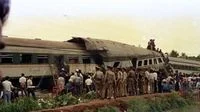
The impact was devastating. The Douglas DC-6 broke apart upon violent contact with the terrain, resulting in a catastrophic loss of life. Out of the 63 passengers and crew members on board, 32 individuals perished in the wreckage, making it one of the notable commercial aviation disasters of that specific route and era.
Yet, amid the carnage, Sumitro emerged with astonishingly minor injuries. Aside from psychological shock, his physical wounds were limited to a minor scratch on the middle finger of his hand. Surveying the wreckage and realizing the scale of the fatalities surrounding him, Sumitro later confessed a profound sense of bewilderment. He frequently remarked that he simply could not comprehend how he had managed to escape alive from a disaster that claimed the lives of more than half the people on board.
Immediate Aftermath and the Psychological Toll of Survival
In the immediate aftermath of the crash, rescue teams mobilized to evacuate the survivors from the remote crash site. Sumitro was promptly recovered from the scene and placed on a subsequent flight to continue his journey to New York. While his physical body required minimal medical intervention, the invisible psychological wounds cut deep.
The aviation disaster left Sumitro with severe post-traumatic stress, manifesting as a profound and persistent anxiety regarding air travel. In an era where commercial aviation was rapidly becoming the preferred mode of international diplomacy and business, Sumitro’s trauma posed a daily challenge to his active lifestyle.
According to Katoppo’s historical account, the psychological aftermath lingered for years. "Until 2 to 3 years afterward, Sumitro was still afraid to fly," Katoppo documented.
This fear fundamentally altered his behavior aboard aircraft. Sumitro became hyper-vigilant during flights, adopting routines that reflected a desperate need for control in an environment where he felt profoundly vulnerable. The memories of the shattered Douglas DC-6 would flood back whenever he boarded an airplane, turning routine takeoffs into tests of nerve.
Among his most acute triggers was the presence of smoking passengers—a common practice in commercial aviation during the mid-20th century. The sight of smoking inside the cabin easily induced panic in the economist, who associated it with potential fire hazards and catastrophic failure. Furthermore, Sumitro developed an obsessive familiarity with aircraft mechanics. Before every flight, he made it a point to attentively listen to the pitch and rhythm of the engines while the plane idled on the tarmac. If a mechanical sound struck him as unusual or irregular, Sumitro would not hesitate to summon the flight crew or directly question the pilot, demanding reassurance before authorizing himself to remain on the aircraft.
"Even if there is turbulence, if the engines sound good, then [I am] calm," Sumitro once reflected on his coping mechanisms.
The Philosophy of the "Bonus Life"
For Sumitro, surviving the 1947 Rocky Mountain crash was not merely a stroke of geographic and statistical luck; it was a profound existential turning point. Prior to the incident, he had already faced health prognoses that suggested he might not live a long life. Escaping a high-fatality aviation disaster reinforced a philosophical shift in his worldview: he viewed his extended years as an unearned gift, a literal "bonus life" granted by divine providence.
This perception fundamentally shaped his professional ethics and personal ethos. Rather than retreating into caution or self-preservation, Sumitro channeled his survival into an uncompromising dedication to public service, national development, and the welfare of the Indonesian populace.
Katoppo encapsulated this driving motivation in his biographical work, writing: "Throughout Sumitro’s long journey of life, most of his time was spent serving the nation and the ideals of the common people. That is perhaps why God was so kind as to give him several bonus lives."
From Crash Survivor to Economic Architect
The urgency to maximize his granted lease on life translated directly into Sumitro’s monumental contributions to the economic architecture of independent Indonesia. Educated at the Netherlands School of Economics in Rotterdam (now Erasmus University Rotterdam), where he earned his doctorate in 1935, Sumitro possessed a rare combination of theoretical brilliance and administrative capability during a critical juncture in the nation’s history.
Following the recognition of Indonesia’s sovereignty, Sumitro quickly rose to prominence as one of the nation’s premier financial minds. His career in high-level governance spanned multiple turbulent decades and political administrations, reflecting his indispensable value to the state regardless of shifting political tides.
During the parliamentary democracy era, Sumitro served as the Minister of Trade and Industry in the Natsir Cabinet (1950–1951). In this role, he pioneered the "Benteng Program," an affirmative economic policy designed to foster an indigenous (pribumi) business class by providing government subsidies, credit, and import licenses to native Indonesian entrepreneurs. Although met with mixed administrative results due to structural economic constraints, the initiative underscored his commitment to economic nationalism and equity.
He subsequently served twice as the Minister of Finance—first in the Wilopo Cabinet (1952–1953) and later in the Burhanuddin Harahap Cabinet (1955–1956). During these tenures, he focused on stabilizing post-inflationary fiscal policy, managing foreign debt inherited from the colonial era, and establishing foundational banking institutions that would anchor the young republic’s monetary system.
Political Exile and Return to Government
Sumitro’s career was not without intense political friction. In the late 1950s, driven by policy disagreements with President Sukarno regarding regional autonomy and economic centralization, Sumitro joined the Revolutionary Government of the Republic of Indonesia (PRRI) movement based in Sumatra. This led to a prolonged period of political exile abroad, primarily spent in countries like Malaysia, Singapore, and Switzerland, where he continued to work as an economist and educator.
Following the political transition in the mid-1960s and the rise of President Soeharto’s New Order administration, Sumitro was officially rehabilitated and invited back to Jakarta to help rebuild an economy devastated by hyperinflation. True to his reputation as an economic pragmatist, he joined the inner circle of the "Berkeley Mafia"—a group of US-educated Indonesian economists tasked with formulating stabilization and rehabilitation programs.
Under the New Order, Sumitro returned to the cabinet, serving as the Minister of Trade in the Development Cabinet I (1968–1973), where he successfully dismantled restrictive trade barriers, normalized international economic relations, and tamed inflation down to manageable single digits. He later transitioned to serve as the Minister of Research in the Development Cabinet II (1973–1978), laying early institutional frameworks for technological development and scientific research in national planning.
Beyond his formal ministerial portfolios, Sumitro was a prolific academic, mentor, and institutional builder. He served as the dean of the Faculty of Economics at the University of Indonesia (FEUI), transforming the institution into the primary breeding ground for the nation’s future technocrats, policymakers, and corporate leaders.
Historical Legacy and Lasting Implications
The trajectory of Sumitro Djojohadikusumo’s life offers a compelling lens through which to examine the intersection of personal contingency and national history. Had the Douglas DC-6 met a different fate over the Rocky Mountains in 1947, the trajectory of Indonesian economic policy, higher education, and statecraft during the critical formative decades of the 1950s, 1960s, and 1970s would have looked markedly different.
The trauma of the crash, paradoxically, fueled a relentless work ethic and a profound sense of historical duty. Sumitro viewed his survival not as a license for leisure, but as a mandate to serve. By dedicating his remaining decades to fiscal reform, academic institution-building, and governance, he left an indelible imprint on the financial systems and intellectual traditions of Indonesia.
When Sumitro Djojohadikusumo passed away in January 2001 at the age of 83, he left behind a legacy that extended far beyond his familial ties to two Indonesian presidents. He was remembered as the "Begawan Pejuang"—the warrior-sage of Indonesian economics—who navigated political storms, intellectual debates, and the literal wreckage of a mountain plane crash to help build the economic foundations of a modern sovereign state.