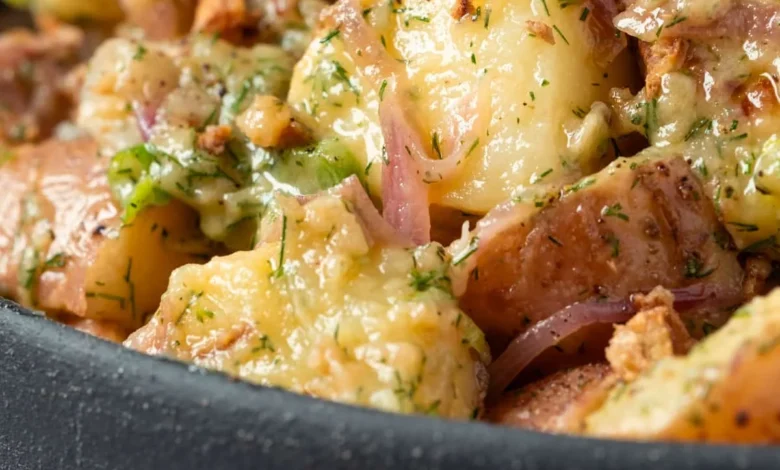
The Evolution of German Potato Salad
Traditionally known as Kartoffelsalat, German potato salad varies significantly by region. While northern variants often incorporate mayonnaise, the southern tradition—and the version most recognized internationally as "German potato salad"—relies on a foundation of beef broth, vinegar, oil, and mustard. The shift toward a vegan interpretation involves replacing animal-based fats and broths with high-quality vegetable stocks and plant-derived flavor enhancers. This transition is reflective of a broader trend in global gastronomy, where chefs and home cooks alike are re-engineering classic regional staples to accommodate plant-based diets without sacrificing the structural integrity or depth of flavor associated with the original recipes.

Culinary Composition and Nutritional Profile
The composition of this salad is defined by its reliance on waxy potato varieties, which hold their shape during the cooking process. Unlike starchy potatoes that break down into mash, waxy potatoes provide the necessary texture to withstand the warm, acidic dressing.

From a nutritional standpoint, this dish offers a lighter profile compared to mayonnaise-based alternatives. A standard serving contains approximately 283 kilocalories, with a balanced macronutrient distribution. The inclusion of fresh dill and red onions provides a significant source of antioxidants and vitamins. The dressing, typically emulsified with Dijon mustard, vinegar, and maple syrup, achieves a balance between acidity and sweetness that aids in digestion and enhances the natural earthiness of the potatoes. The use of smoky seasonings, such as hickory salt, adds a complex, umami-rich profile that mimics the depth usually provided by bacon in traditional preparations.

Chronology of Preparation
The preparation process follows a systematic approach designed to maximize flavor absorption:

- Thermal Preparation: Potatoes are boiled in salted, cold water. Starting with cold water ensures even heat penetration to the center of the potato.
- Structural Slicing: Once tender, the potatoes are sliced into quarter-inch rounds. This specific thickness allows the potatoes to remain intact while maximizing surface area for the vinaigrette.
- Sautéing and Emulsification: Red onions are sautéed until translucent, forming the aromatic base of the dressing. Vinegar and maple syrup are then added and brought to a simmer, creating a reduction that binds the components.
- Assembly: The olive oil and mustard are whisked in after the heat is removed to prevent the oil from breaking. The warm potatoes are then gently folded into the dressing, followed by the addition of green onions, fresh dill, and smoky seasonings.
Regional Variations and Cultural Significance
Historically, Kartoffelsalat served as a staple for rural communities, where potatoes were readily available and inexpensive. The dish became a symbol of home-cooked comfort across Germany, with variations often dictated by local agriculture. In some regions, the addition of diced pickles provides a crunchy contrast, while others favor the inclusion of warm bacon fat. The modern, veganized version honors this history by maintaining the serving temperature—warm or at room temperature—which is critical for the activation of the dressing’s flavors. Culinary historians note that serving the dish warm allows the potato starches to absorb the acidity of the vinegar more effectively than when served cold, a key factor in the dish’s flavor profile.

Economic and Dietary Implications
The rise of such recipes is not merely a lifestyle choice but a reflection of changing economic and health landscapes. With the increasing cost of animal products, vegetable-forward side dishes have seen a surge in popularity. Furthermore, the dietary shift toward fiber-rich, lower-cholesterol meals has bolstered the status of potato-based salads in the culinary mainstream.

According to culinary analysts, the "make-ahead" nature of this salad—where the flavor profile improves after resting in a refrigerator—makes it a highly efficient option for commercial catering and large-scale meal planning. The shelf stability, typically ranging between four to five days, reduces food waste and provides a practical solution for meal-prepping households.

Institutional Perspectives on Plant-Based Transitions
Nutritionists and dietitians have increasingly pointed to the importance of "whole-food" plant-based recipes in reducing the reliance on processed alternatives. By focusing on fresh herbs like dill and natural sweeteners like maple syrup, this recipe avoids the synthetic preservatives often found in store-bought salads.

Industry experts suggest that the successful adaptation of cultural staples like German potato salad is the most effective way to encourage wider adoption of plant-based eating. When a recipe is rooted in tradition rather than being a brand-new creation, it provides a sense of familiarity that reduces the barrier to entry for non-vegan consumers.

Best Practices for Storage and Service
To maintain the quality of the dish, it is recommended that the salad be stored in an airtight container. While it can be consumed cold, reheating it gently in a microwave or on a stovetop helps to soften the dressing and revive the aromatics. This flexibility in serving temperature makes it a versatile addition to any menu, whether as a complement to grilled plant-based proteins or as a primary component of a salad-focused meal.

Broader Culinary Impact
The continued refinement of this recipe—and others like it—highlights the ongoing innovation within the vegan culinary sector. As consumers demand more from their side dishes, the focus has shifted toward complexity, texture, and the integration of high-quality, whole-food ingredients. The success of this specific iteration of German potato salad serves as a case study for how traditional recipes can be preserved and evolved to meet the demands of a 21st-century audience. By balancing historical technique with modern dietary awareness, this dish remains a timeless staple of the global kitchen.