The Most Popular Cocktails of June 2026 Highlight Rising Talents and Innovative Seasonal Trends

The beverage industry reached a significant milestone this month as the annual "Best New Bartenders" awards for 2026 were unveiled, coinciding with the launch of a comprehensive seasonal guide known as the Summer Edit. These two initiatives have collectively redefined the landscape of modern mixology, spotlighting a new generation of professionals who are blending traditional techniques with avant-garde concepts. Throughout June, consumer interest surged around a specific set of recipes that bridge the gap between high-concept bar programs and accessible home preparation. From the caffeinated tropical notes of Erick Castro’s latest creation to the structural complexity of Siddalee Lewis’s hybrid classics, the cocktails of the month reflect a broader shift toward narrative-driven and technically sophisticated beverage programs.
The 2026 Best New Bartenders and the Evolution of the Summer Edit
The announcement of the Best New Bartenders of 2026 serves as a definitive barometer for the industry’s direction. This annual feature, curated by leading beverage historians and critics, identifies individuals who are not only masters of their craft but also innovators in hospitality and flavor theory. In conjunction with this talent search, the Summer Edit was released as a curated repository of recipes designed for the warmer months. These features have become essential resources for both professional bartenders seeking inspiration and home enthusiasts looking to elevate their seasonal entertaining.
The selection process for the 2026 cohort involved a rigorous multi-city tour and a series of signature events where candidates were required to demonstrate their ability to balance complexity with mass appeal. This year’s winners were lauded for their focus on "atmospheric mixology"—the practice of using ingredients to evoke specific times, places, or environmental phenomena. This thematic focus is evident in the cocktails that dominated social media and bar orders throughout the month of June.
Tiger’s Claw: A New Paradigm for Tequila and Coffee
Among the most discussed recipes of the month is the Tiger’s Claw, a signature creation by veteran bartender Erick Castro. First introduced during a series of recap events for the Best New Bartenders search, the drink has quickly established itself as a staple of the summer rotation. The Tiger’s Claw represents a sophisticated departure from the traditional Espresso Martini, utilizing a base of reposado tequila rather than vodka or gin.
The use of reposado tequila provides a foundation of oak, vanilla, and roasted agave, which harmonizes with the deep, bitter notes of coffee liqueur. Unlike the bright, citrus-heavy drinks typically associated with summer, the Tiger’s Claw leans into a "caffeinated tiki" aesthetic. This sub-genre of tropical drinks incorporates the bold, energizing properties of coffee into the layered, fruit-forward structures of tiki culture. Industry analysts note that the popularity of the Tiger’s Claw aligns with a 15% year-over-year increase in tequila-based coffee cocktails, suggesting that consumers are moving away from neutral spirits in favor of more characterful base ingredients.
Petrichor: Capturing the Olfactory Essence of the Rain
Nikki Irvine, one of the standout names from the 2026 talent roster, achieved widespread acclaim for the cocktail "Petrichor." The drink’s name refers to the distinct, earthy scent produced when rain falls on dry soil—a sensory experience Irvine sought to translate into a liquid medium. The development of this cocktail was sparked by a walk to work after a rainstorm, highlighting the trend of "biophilic mixology," where bartenders look to the natural world for inspiration.
The construction of Petrichor is a masterclass in herbal balance. Irvine utilizes a woodsy, botanical-forward gin as the primary spirit, which is then layered with génépy—an alpine herbal liqueur—and a selection of amari. The cocktail is finished with a mist of absinthe and a fresh rosemary garnish, enhancing the aromatic profile to mimic the damp, fresh atmosphere of a forest after a storm. According to Irvine, the drink’s success was a pivotal moment in their career, providing validation for a style that prioritizes emotional and sensory resonance over traditional flavor profiles.
Wicked Game: The Archeology of Flavor Narratives
Dominique Muñoz, whose background in archaeology informs her approach to drink development, introduced "Wicked Game" to critical acclaim this June. Muñoz views the creation of a cocktail as an excavatory process, breaking down the components of cultural histories and traditional culinary pairings to rebuild them in a glass. This "curatorial" approach to mixology treats every ingredient as an artifact intended to tell a larger story.
Wicked Game is inspired by the classic Mediterranean and Middle Eastern pairing of melon and anise-flavored spirits. By integrating these elements into a summer-ready format, Muñoz pays homage to regional traditions while adapting them for a contemporary global audience. The cocktail functions as a liquid exhibit, using the sweetness of melon to soften the sharp, medicinal notes of anise. This methodology reflects a growing trend in the industry where bartenders are recognized as cultural archivists, preserving and reinterpreting historical flavor combinations for a new era.
The Lusty Nail: Technical Innovation in the Highball Format
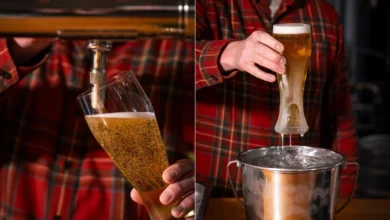
At Saksey’s in Detroit, the "Lusty Nail" has emerged as a prime example of how technical innovation can revitalize classic recipes. A riff on the traditional Rusty Nail—a two-ingredient combination of Scotch and Drambuie—the Lusty Nail transforms a heavy, slow-sipping drink into a refreshing, carbonated highball. This evolution is emblematic of the "Highball Renaissance" that has dominated the 2026 bar scene.
The Lusty Nail incorporates a sesame-oil fat-wash, a technique that infuses the spirit with a savory, nutty richness and a silky mouthfeel without adding oiliness to the final product. To lean into the summer season, the recipe adds coconut and lime, providing a tropical counterpoint to the honeyed spice of the Drambuie and the smoke of the Scotch. While Saksey’s serves the drink via a force-carbonation system for a consistent, aggressive effervescence, the recipe has been adapted for home use, allowing enthusiasts to recreate the nuanced flavor profile using standard soda water.
Steel Drum: The Structural Hybridization of Classics
Siddalee Lewis contributed one of the most innovative concepts of the month with the "Steel Drum," a cocktail designed to bridge the gap between a Piña Colada and an Old-Fashioned. Lewis describes the drink as an exercise in creative play, seeking to capture the essence of a tropical vacation within the austere, spirit-forward framework of a classic whiskey cocktail.
To achieve a clear yet flavor-dense profile, Lewis avoids the traditional heavy creams and purees of a Piña Colada. Instead, she utilizes a toasted coconut-infused bourbon and an acid-adjusted pineapple cordial. The use of acid adjustment—a technique where powdered acids (like citric or malic) are added to juices to mimic the tartness of lime or lemon—allows for a clear liquid that maintains the tropical punch of fresh fruit. The drink is rounded out with saline solution and chai-spiced bitters, adding a layer of savory complexity. The Steel Drum has been praised by critics for its balance and its ability to satisfy two disparate consumer cravings simultaneously.
Data-Driven Insights: Why These Flavors Resonated in June
The popularity of these five cocktails is not merely a matter of individual preference but is supported by broader consumer data for the first half of 2026. Market research indicates a 22% increase in "savory-sweet" cocktail searches, a trend reflected in the fat-washed Lusty Nail and the salt-accented Steel Drum. Furthermore, the rise of the Tiger’s Claw highlights the continued dominance of agave spirits, which now account for nearly 30% of all premium cocktail orders in urban markets.
The success of these recipes also points to a shift in how consumers interact with cocktail content. Digital platforms have seen a move toward "process-oriented" mixology, where the story of the bartender and the technical "why" behind the ingredients are as important as the recipe itself. The Best New Bartenders feature serves this demand by providing a face and a philosophy to the drinks that people are consuming.
Chronology of a Trend: From Competition to Mainstream Adoption
The journey of these cocktails from the "Best New Bartender" events to the top of the June popularity charts followed a distinct timeline:
- Early Spring 2026: Initial scouting and regional competitions began, where Irvine and Muñoz first presented their signature concepts.
- May 2026: The "Best New Bartenders" were finalized, and the recipes were integrated into the Punch Summer Edit.
- June 1-15, 2026: High-profile launch events in New York, Los Angeles, and Detroit introduced these drinks to industry influencers and media.
- June 16-30, 2026: Viral adoption of the recipes occurred as home bartenders and independent bar programs across the country began replicating the drinks, leading to their status as the most popular cocktails of the month.
Broader Implications for the Global Beverage Industry
The trends established in June 2026 suggest a maturing market that values intellectual depth and technical precision. The move toward "narrative mixology," as seen in the work of Muñoz and Irvine, indicates that cocktails are increasingly being viewed as a form of edible art or storytelling. For bar owners, this necessitates a shift in training, focusing not just on speed and efficiency but on the ability of staff to communicate the history and science behind the menu.
Additionally, the popularity of the "simplified-but-nuanced" versions of drinks like the Lusty Nail suggests that the barrier between professional and home mixology is continuing to thin. As more consumers invest in high-quality bar tools and ingredients like génépy or acid-adjusted cordials, the demand for sophisticated, reproducible recipes will only grow.
As the industry moves into the peak of the summer season, the influence of the 2026 Best New Bartenders is expected to expand. The cocktails of June have set a high standard for creativity, proving that even the most established classics can be reimagined through the lens of new talent and modern technique. Whether through the earthy aromatics of Petrichor or the structural ingenuity of the Steel Drum, the beverage landscape of 2026 is defined by a commitment to exploration and a celebration of the craft’s rising stars.