Klaten, Indonesia – Anemia, particularly iron deficiency anemia, has long been recognized primarily as a health concern. However, its ramifications extend far beyond mere fatigue or reduced hemoglobin levels, significantly impacting educational attainment, the quality of human resources, and even a nation’s economic growth. This complex issue, which has plagued Indonesia for decades, was recently highlighted at a talkshow held at the Danone Specialized Nutrition factory in Prambanan, Central Java.
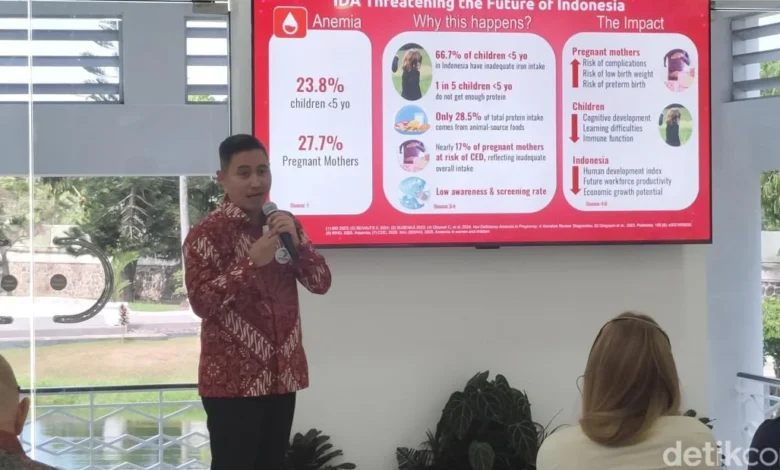
Dr. dr. Ray Wagiu Basrowi, MKK, PhD, Medical & Scientific Affairs at Danone Indonesia, emphasized that iron deficiency anemia has been a persistent health challenge in Indonesia since before the nation’s independence. Despite over 80 years of efforts, the condition remains prevalent, affecting approximately one in four toddlers and one in four pregnant and breastfeeding mothers. "What is feared about iron deficiency anemia in children is not just the clinical or health problems," Dr. Ray stated during the event on Wednesday, July 8, 2026.
The Far-Reaching Consequences on Education and the Workforce
Dr. Ray elaborated on how iron deficiency in early childhood not only affects physical health but also hampers cognitive development. International bodies such as the World Health Organization (WHO) and UNICEF have consistently pointed to a higher risk of academic underachievement among children with iron deficiency anemia compared to their peers with adequate iron levels.
Research conducted in Indonesia further substantiates these findings. Studies have revealed that primary school students suffering from iron deficiency anemia exhibit lower working memory scores. Working memory, the brain’s capacity to retain and process information for short periods, is crucial for learning, comprehension, problem-solving, and decision-making. "If a child’s working memory is impaired, their learning process is also disrupted. In the long term, this condition will affect the quality of human resources and productivity when they enter the workforce," Dr. Ray explained. This directly translates to a less capable and less productive future workforce, a critical component of national development.
The Economic Burden of Widespread Anemia
The prevalence of iron deficiency anemia is not merely an individual health issue; it poses a significant threat to national development and economic progress. Dr. Ray asserted, "Iron deficiency anemia is also an economic problem. If a country has a high rate of iron deficiency anemia, the threat to economic advancement becomes greater."
This economic impact stems directly from the quality of human capital. When a substantial portion of the population experiences developmental impairments due to iron deficiency, their learning abilities, productivity, and overall workforce quality are compromised from the outset. This ultimately diminishes a nation’s human capital, a cornerstone of robust economic growth. According to the World Bank, human capital—the knowledge, skills, and health that people acquire—is a key driver of economic development, contributing significantly to productivity and innovation. A nation with a weakened human capital base due to widespread health issues like anemia will struggle to compete on the global stage and achieve sustainable economic prosperity.
Addressing Iron Deficiency Anemia: A Three-Pillar Strategy
Preventing iron deficiency anemia cannot be a reactive measure; it requires proactive interventions that begin even before birth. Pregnant women suffering from anemia face a higher risk of delivering premature babies or infants with low birth weight. These infants are then more susceptible to iron deficiency from the very beginning of their lives, increasing their likelihood of developing anemia later on.
To combat the persistent problem of iron deficiency anemia in Indonesia, experts and various health organizations have collaboratively developed a sustainable three-pillar approach. These pillars encompass enhancing education, strengthening research and innovation, and expanding screening and early detection.
The first pillar, building awareness and improving public education, is foundational. Comprehensive knowledge about the importance of iron, balanced nutrition, prenatal care, and early detection is vital for preventing anemia from its earliest stages. "Good health knowledge ensures more people live healthier lives. Therefore, awareness is the first pillar to ensure Indonesia can overcome iron deficiency anemia," Dr. Ray emphasized. This pillar aims to empower individuals and communities with the information needed to make informed health choices.
The second pillar focuses on strengthening research and innovation. Given that anemia has remained a persistent health challenge for decades, novel approaches supported by robust research are essential to discover more effective technologies, educational methods, and prevention strategies. The findings from this research are intended to inform policy decisions and practical interventions for anemia management in Indonesia. This includes exploring new diagnostic tools, more bioavailable iron supplements, and culturally appropriate dietary interventions.
The third pillar involves expanding screening and early detection. The current coverage of iron deficiency anemia screening for children in Indonesia remains low, leading to many cases going undetected. Therefore, developing more accessible, non-invasive screening methods that can be implemented more broadly is crucial to identify at-risk children before they develop full-blown anemia. Early diagnosis allows for timely intervention, mitigating long-term consequences.
Danone’s Contribution to the Three Pillars
The successful eradication of iron deficiency anemia requires a concerted effort involving multiple stakeholders. Dr. Ray underscored that the resolution of this issue cannot be the sole responsibility of any single entity. Collaboration among governments, healthcare professionals, academics, professional organizations, industries, and the media is paramount for the synchronized implementation of the three pillars.
In line with the first pillar of education, Danone Indonesia has partnered with the Indonesian Midwives Association (IBI) to implement a digital-based educational program. This initiative aims to enhance the knowledge of pregnant women and their families regarding the importance of iron intake and early anemia detection. Through this program, educational resources and screening opportunities have reached over one million mothers and toddlers within a single year.
In the realm of research, Danone Indonesia has collaborated with various universities and researchers across Indonesia, resulting in over 40 scientific publications on nutrition and iron deficiency anemia. Some of these research findings have been adopted as references for anemia prevention programs in schools, demonstrating a direct impact on educational institutions.
For the third pillar of screening, Danone, in collaboration with researchers, has developed the Iron Calculator. This digital tool facilitates non-invasive screening to identify the risk of iron deficiency anemia. According to Dr. Ray, this approach has been utilized for over one million screenings, with a global target of reaching 30 million screenings by 2030. This innovative tool represents a significant step towards making anemia risk assessment more accessible and scalable.
The consistent application of these three pillars is expected to significantly reduce the incidence of iron deficiency anemia in Indonesia, consequently leading to an improved quality of human resources. This, in turn, will have a ripple effect on national productivity, innovation, and overall economic development. The long-term vision is a healthier, more capable, and more prosperous Indonesia, where the debilitating effects of anemia are minimized, allowing every individual to reach their full potential. The commitment to addressing this multifaceted challenge underscores the understanding that investing in the health of its population is a direct investment in the nation’s future.