Jakarta – Sausages, a staple in many households for their convenience and versatility, are increasingly under scrutiny as a significant source of Ultra-Processed Foods (UPFs). While they offer a quick and easy addition to daily meals, concerns are mounting over the high levels of sodium often found within them, impacting public health and dietary awareness.
The spotlight on sodium, or natrium, in processed meats like sausages has intensified due to its pervasive presence. This sodium doesn’t solely originate from added table salt. A substantial portion is derived from a complex array of food additives used by manufacturers to enhance flavor, maintain texture, and crucially, extend shelf life. This often leads to what health experts refer to as "hidden sodium," where daily intake can unknowingly exceed recommended limits, even if the product doesn’t overtly taste salty. While sodium content is technically listed on packaging, it frequently goes unnoticed or is underestimated by consumers, contributing to a gradual overconsumption.
The variability in sodium content across different sausage brands is a critical factor. Manufacturers employ distinct formulations, leading to significant discrepancies in natrium levels from one product to another. These differences can amount to hundreds of milligrams per serving, a distinction that holds considerable weight for individuals who regularly consume processed foods. Understanding these variations is paramount for informed dietary choices, particularly for those concerned about their sodium intake.
Examining Sodium Levels in Popular Chicken Sausages
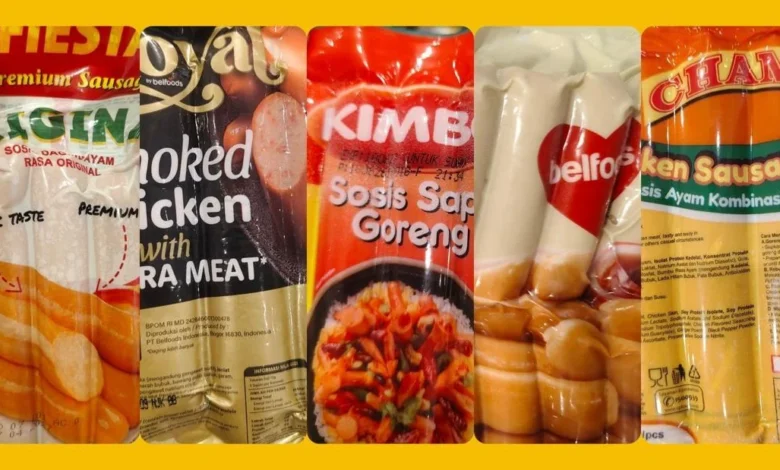
Chicken sausages, a widely popular variant, have been a focal point in recent investigations into sodium content. A comparative analysis of several randomly selected chicken sausage products from various retail outlets in Jakarta revealed significant disparities in their sodium levels.
A primary challenge in conducting such comparisons lies in the varying serving sizes declared by different manufacturers. This inconsistency directly impacts the sodium values presented on nutrition labels. To enable a fair and accurate comparison, these serving sizes needed to be standardized. The following table presents a comparative breakdown of sodium content across several popular chicken sausage brands, normalized per 100 grams for clarity.
| Product | Serving Size (g) | Sodium (mg) | Sodium per 100g (mg) |
|---|---|---|---|
| A | 60 | 610 | 1017 |
| B | 100 | 870 | 870 |
| C | 60 | 360 | 600 |
| D | 50 | 240 | 480 |
| E | 50 | 180 | 360 |
| F | 100 | 880 | 880 |
| G | 75 | 620 | 827 |
The observed sodium content in these chicken sausage products exhibited considerable fluctuation. Some products contained sodium levels that constituted up to 18% of the recommended daily intake of 2,000 mg. Alarmingly, four of the products analyzed exceeded 40% of this daily limit, with one even reaching as high as 51% of the recommended daily sodium intake within a single serving. This highlights the potential for rapid sodium overconsumption through seemingly modest portions of processed sausages.
The Critical Importance of Sodium Restriction
The varying sodium content across different sausage brands can be attributed to several factors, including the amount of salt used and the types and quantities of sodium-containing food additives incorporated into the formulations. The most straightforward method for consumers to ascertain these levels is by meticulously examining the nutrition labels on product packaging.
Restricting sodium intake does not necessitate the complete elimination of salt or processed foods from one’s diet. Instead, it emphasizes maintaining a controlled total daily sodium consumption that adheres to recommended guidelines. The Indonesian Ministry of Health (Kemenkes RI) advises a daily sodium intake not exceeding 2,000 mg.
Adhering to this sodium intake limit is crucial for maintaining healthy blood pressure levels. When the body consumes excessive sodium, it retains more fluid, leading to an increased blood volume. This puts additional strain on the heart, forcing it to work harder, and consequently elevates blood pressure.
Numerous scientific studies have consistently demonstrated that reducing sodium consumption can significantly lower the risk of developing hypertension, heart disease, and stroke. Furthermore, by minimizing excess sodium intake, the kidneys are spared from excessive workload in excreting surplus sodium, thereby preserving their long-term function.
Beyond cardiovascular and renal health benefits, limiting sodium intake can also help mitigate fluid retention, often referred to as edema. This condition can manifest as bloating or swelling in various parts of the body. By moderating the consumption of high-sodium foods, including sausages and other processed items, individuals can more effectively manage their daily sodium intake, thereby safeguarding the health of their heart, blood vessels, and kidneys.
Navigating the "Hidden Sodium" Landscape
The term "hidden sodium" underscores a significant public health concern, particularly with the pervasive presence of Ultra-Processed Foods (UPFs) in modern diets. These foods, often characterized by their long shelf life and convenient preparation, frequently contain a complex matrix of ingredients, including high levels of sodium in forms that are not immediately apparent to the consumer.
The Indonesian Ministry of Health’s recommendation of a 2,000 mg daily sodium intake is a guideline designed to prevent the adverse health consequences associated with excessive consumption. For context, the World Health Organization (WHO) recommends an intake of less than 2,000 mg of sodium (equivalent to less than 5 grams of salt) per day for adults. This global benchmark further emphasizes the importance of monitoring sodium intake, especially in regions where processed food consumption is high.
The implications of exceeding these recommendations are substantial and well-documented. Chronic high sodium intake is a primary driver of hypertension, a condition that affects a significant portion of the global adult population. Hypertension, in turn, is a major risk factor for serious cardiovascular events, including heart attacks and strokes.
Beyond the direct impact on blood pressure, excessive sodium can also contribute to other health issues. For individuals with pre-existing kidney conditions, high sodium intake can exacerbate their problems by increasing the workload on the kidneys. It can also contribute to the development of osteoporosis by increasing calcium excretion in the urine.
The food industry’s reliance on sodium-based additives extends beyond mere preservation and taste enhancement. Certain sodium compounds, such as sodium nitrite and sodium nitrate, are commonly used as curing agents in processed meats like sausages. While they play a role in preventing the growth of harmful bacteria like Clostridium botulinum, their consumption has also been linked to the formation of N-nitroso compounds, some of which are considered carcinogenic. This adds another layer of concern regarding the long-term health impacts of frequent processed meat consumption.
Consumer Awareness and Industry Responsibility
The findings from the comparative analysis of chicken sausages underscore the critical need for enhanced consumer awareness regarding sodium content in processed foods. While manufacturers are obligated to provide nutritional information, the complexity of food labels and the sheer volume of processed items available can make informed decision-making challenging for the average consumer.
Public health campaigns that focus on reading and understanding nutrition labels, particularly the sodium content, are vital. Educating consumers about the recommended daily limits and the potential health consequences of exceeding them can empower individuals to make healthier choices. This includes encouraging the consumption of fresh, whole foods and limiting the intake of UPFs.
Furthermore, there is a growing call for greater industry responsibility in reformulating products to reduce sodium levels without compromising taste or safety. While voluntary efforts by food manufacturers to reduce sodium have been observed in some regions, regulatory interventions or public-private partnerships may be necessary to drive more widespread and impactful changes.
For instance, a trend observed in some developed countries involves phased reductions in sodium content across product categories, allowing consumers’ palates to gradually adapt. Such strategies, coupled with clear labeling and public education, can contribute to a significant reduction in population-wide sodium intake over time.
The analysis also implicitly raises questions about the role of regulatory bodies in monitoring and potentially setting limits on sodium content in processed foods. While the current framework relies on voluntary disclosure, a more proactive approach might be warranted given the public health implications.
Broader Implications for Public Health
The issue of hidden sodium in processed foods like sausages is not an isolated concern but rather a symptom of a larger dietary shift towards convenience-driven, highly processed foods. This trend has been linked to rising rates of obesity, type 2 diabetes, cardiovascular diseases, and certain types of cancer globally.
The implications extend beyond individual health outcomes to encompass significant economic burdens on healthcare systems. The management of chronic diseases associated with poor diet is a substantial cost to governments and individuals alike. Therefore, addressing the sodium content in processed foods can be viewed as a cost-effective public health intervention.
The timeline for addressing this issue is ongoing. Public awareness campaigns have been in place for years, and scientific research continues to highlight the detrimental effects of excessive sodium. However, the ubiquitous nature of processed foods and their marketing influence means that sustained and multi-faceted efforts are required.
In conclusion, the investigation into the sodium content of sausages reveals a concerning reality of high and variable sodium levels, often hidden within these convenient food items. The Indonesian Ministry of Health’s recommended daily sodium intake of 2,000 mg serves as a crucial benchmark for consumers. By understanding the risks associated with sodium overconsumption and actively seeking out lower-sodium options, individuals can take significant steps towards improving their cardiovascular and overall health. The onus also lies on the food industry to prioritize reformulation and transparency, and on public health organizations to continue advocating for healthier food environments.