When the Governor of West Java Sailed to Witness the Birth of Anak Krakatau in 1928

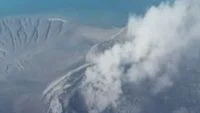
The emergence of Anak Krakatau in 1927 stands as one of the most significant geological phenomena of the 20th century in the Dutch East Indies. Occurring merely 44 years after the cataclysmic 1883 eruption of its predecessor, which devastated the Sunda Strait and claimed over 36,000 lives, the birth of the new volcanic island immediately captured the global scientific community’s attention and stoked public anxiety. Among those drawn to witness this volatile natural spectacle firsthand was Willem Pieter Hillen, the Governor of West Java (Residen Priangan), who embarked on a daring maritime expedition in January 1928 to observe the active submarine crater up close.
This historical account, part of the CNBC Insight series that utilizes past events to illuminate contemporary realities, revisits a time when colonial officials, journalists, and researchers sailed directly into an active volcanic zone. Their harrowing observations, documented in archival newspapers such as the Bataviaasch Nieuwsblad, De Locomotief, and Haagsche courant, offer a vivid window into the unstoppable forces of nature that continually shape the Indonesian archipelago.
The Voyage of the Wega: Setting Sail into the Unknown
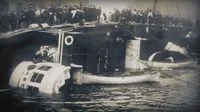
On the evening of Friday, January 20, 1928, a distinguished party of government officials, media representatives, and scientific observers boarded the government steamship Wega at the port of Tanjung Priok in Batavia. Led by Governor Willem Pieter Hillen and accompanied by his wife, alongside the Resident of Bantam, Putman Cramer, the expedition had a singular objective: to document the unprecedented birth of a new volcano rising from the ashes of the 1883 disaster.
Contemporary reports from the Bataviaasch Nieuwsblad edition of January 24, 1928, detailed the composition of the party, highlighting the high-stakes nature of the journey. Traveling during a period of sustained volcanic instability, the delegation navigated the waters of the Sunda Strait toward the remnants of the old Krakatau caldera, where submarine eruptions had been reported repeatedly throughout the month.
Archival records from De Locomotief on January 20, 1928, noted that Anak Krakatau was experiencing continuous minor eruptions driven by a newly awakened underwater vent. As the Wega drew closer to the site after days of sailing from Jakarta, the atmospheric and visual evidence of subterranean turmoil became undeniable.
A Spectacle of Steam and Molten Lava
The first tangible sign of the active volcano appeared from afar, originating from the collapsed northern rim of the old structure. Thick, viscous columns of steam billowed skyward with astonishing force.
A journalist aboard the expedition described the phenomenon in the Haagsche courant on February 20, 1928, writing that the vapor was dense and oily, closely resembling the byproduct of a chemical experiment. The steam possessed an extraordinary momentum, driven upward by immense subterranean pressure, repeatedly surging directly behind Panjang Island as if propelled by a massive pneumatic blower.
The visual drama escalated dramatically once the Wega rounded the southern tip of Panjang Island and maneuvered in front of the Isolated Island (Pulau Terpencil). From this vantage point, the passengers bore witness to the raw fury of a submarine eruption.
Without warning, pitch-black masses of material erupted from the sea, hurtling high into the air before crashing back down to leave temporary white foam on the water’s surface. Through binoculars, the terrified yet captivated onlookers identified the ejected material not merely as water and steam, but as colossal, incandescent boulders of gas-rich lava.
The surrounding ocean reacted violently to the thermal discharge. Seawater instantly reached boiling temperatures, churning into turbulent, vapor-emitting bubbles. The color of the sea transformed continuously—shifting from dark hues to pale blue, emerald green, and a stark, sulfurous yellow near the epicentre of the volcanic activity.
Scientific Context and Volcanic Intensity
The firsthand observations recorded by Governor Hillen’s delegation were corroborated by contemporary volcanological data gathered by researcher Dr. Stehn, who closely monitored the escalating cycle of eruptions. The statistical record of Anak Krakatau’s activity in mid-January 1928 illustrates an astonishing level of subterranean pressure.
On January 15, 1928, Dr. Stehn’s four-hour observation window captured an astounding 217 individual eruptions, of which 18 propelled ejecta to heights exceeding 250 meters. The intensity intensified further the following day, recording 380 eruptions, including 29 that surpassed the 250-meter threshold. By January 17, although the frequency slightly abated, 55 high-altitude eruptions were still documented. The climax of this phase occurred on Saturday morning at approximately 07:30 local time, when a colossal explosion hurled volcanic material an astonishing 1,200 meters into the atmosphere.
These figures underscore the extreme hazards navigated by the Wega expedition. The sheer volume of magma reaching the surface signaled that the Sunda Strait was once again becoming a crucible of planetary transformation.
The Terrifying Beauty of a Nocturnal Eruption
While the daytime observations provided a stark demonstration of geological power, the nocturnal landscape offered a spectacle that left the seasoned officials and journalists utterly awestruck.
As the Wega dropped anchor near Panjang Island, safely positioned relative to the active crater, the surrounding darkness transformed the eruption zone into an apocalyptic theater of red light. Glowing fragments of lava were hurled from the sea like magnesium bombs, illuminating the night sky and casting an eerie reflection across the turbulent waters of the strait.
The Haagsche courant report captured the profound psychological impact on the crew and passengers, noting that watching the terrifying scene unfold from the relative safety of the anchored steamer was an unforgettable, almost harrowing experience.
For Governor Hillen and his party, the journey transcended a standard official inspection. It served as a visceral reminder of the fragile boundary between human civilization and the immense tectonic forces underlying the Dutch East Indies. They had witnessed, from the deck of a government ship, the literal resurrection of Krakatau—an entity that had terrorized generations and continued to forge new land through fire and ash.
Broader Implications and Historical Legacy
The emergence of Anak Krakatau in the late 1920s and the documentation of its early explosive phases provided critical early data for modern volcanology in the Dutch East Indies. Following the catastrophe of 1883, the scientific community maintained heightened vigilance over the Sunda Strait, recognizing that the caldera remained structurally unstable and structurally primed for renewed activity.
The expedition led by Governor Willem Pieter Hillen bridged the gap between colonial administration and scientific curiosity, demonstrating how early 20th-century authorities sought to understand and document natural disasters rather than merely react to them. Today, the legacy of Anak Krakatau—which remains one of the world’s most active and dangerous volcanoes—continues to inform disaster mitigation strategies, tsunami early warning systems, and geological research in modern Indonesia. The harrowing voyage of the Wega remains a historical testament to humanity’s enduring fascination with the volatile forces that shape the Earth’s crust.