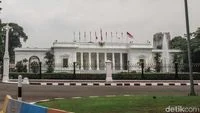
When the General Acted Like a Prime Minister: The Rise and Fall of Soemitro in Soeharto’s Early New Order


The political landscape of Indonesia in the early 1970s was characterized by a delicate balance of power centered firmly around President Soeharto, who had assumed full executive authority following the tumultuous transition of the mid-1960s. Within this tightly controlled environment, a powerful military figure emerged, accumulating influence at a pace that alarmed his peers and ultimately tested the limits of presidential patience. General Soemitro, a brilliant and fiercely ambitious military officer, ascended the ranks with unprecedented speed, ultimately holding a position of strategic dominance that allowed him to command cabinet ministers, coordinate government policy, and project an aura of authority that rivaled the head of state himself. This historical episode, part of the broader CNBC Insight series examining how past dynamics shape contemporary realities, offers a compelling window into the internal frictions of the New Order regime—a system that tolerated few rivals near the apex of power.
The Rise of a Four-Star Prodigy
Born into an era of profound national transformation, Soemitro distinguished himself through exceptional administrative and military capabilities. By 1970, at the remarkably young age of 43, he achieved the rank of full general, commanding four stars. This milestone established a record within the Indonesian Army for that era, cementing his status as a military wunderkind. In his autobiography, Soemitro: Dari Panglima Mulawarman sampai Pangkopkamtib (1994), he reflected on this rapid ascent, noting that his youth combined with his high rank set him apart from his contemporaries.
Building upon this military capital, Soemitro was appointed Commander of the Operational Command for the Restoration of Security and Order, widely known by its Indonesian acronym, Kopkamtib. Established in the wake of the 1965 upheaval, Kopkamtib was designed as an extraordinary security apparatus tasked with stabilizing the nation, neutralizing perceived subversive elements, and maintaining public order. However, the sweeping mandate of Kopkamtib transcended traditional military duties, bleeding deeply into the realms of civil administration, political oversight, and economic planning. Consequently, Soemitro found himself wielding expansive authority that extended far beyond conventional command structures, positioning him as one of the most formidable power brokers in Jakarta.
Shadowing the Executive: The Parallel Government
Armed with the formidable enforcement powers of Kopkamtib, Soemitro began to operate with a degree of autonomy that unsettled traditional bureaucratic channels. Historical accounts from prominent figures of the period illustrate a general who perceived his mandate as an all-encompassing license to direct national governance. According to Jusuf Wanandi in his memoir Menyibak Tabir Orde Baru (2015), Soemitro’s administrative interventions frequently blurred the boundaries between military oversight and executive leadership.
In his regular administrative routines, Soemitro routinely summoned cabinet ministers to his office, directing policy coordination, reviewing legislative proposals, and aggressively reprimanding civilian officials who failed to meet his standards of efficiency. On one notable occasion, Soemitro summoned the Minister of Justice to deliberate on the highly contentious Draft Marriage Law—a domain squarely within the purview of civilian legislative processes. Furthermore, he regularly convened meetings with the government’s premier economic technocrats, led by Widjojo Nitisastro, to review fiscal and developmental policies.
This assertive style created the distinct impression that Soemitro was actively steering the day-to-day operations of the Indonesian government. Wanandi observed that Soemitro’s actions effectively mirrored the role of a prime minister, a constitutional office that did not exist under Indonesia’s presidential system, where executive power was concentrated exclusively in the hands of President Soeharto. While Soemitro consistently maintained that his actions were executed with the prior knowledge or implicit approval of the president, the absence of explicit presidential validation left his actions open to intense political interpretation by rival factions within the palace inner circle.
Clash of the Titans: Soemitro Versus Ali Moertopo
The accumulation of unchecked authority by any single individual within an authoritarian or semi-authoritarian regime invariably triggers counter-reactions from rival power centers. In Soeharto’s New Order, power was rarely centralized in a single subordinate; instead, the president deliberately fostered a system of calculated rivalries among his key assistants to ensure that no single faction could challenge his supreme authority.
Soemitro’s primary antagonist emerged in the form of Major General Ali Moertopo, a trusted personal assistant to the president and the mastermind behind the elite intelligence and political operations unit known as Opsus (Special Operations). Ali Moertopo viewed Soemitro’s sweeping administrative footprint and his independent power base with profound suspicion. Fearing that the general was intentionally positioning himself to eclipse or outright succeed Soeharto, Ali Moertopo’s camp circulated damaging documents and intelligence reports that allegedly exposed Soemitro’s political ambitions for the presidency.
Conversely, Soemitro was equally distrustful of Ali Moertopo, frequently warning his inner circle against the growing influence of the Opsus faction and its perceived efforts to construct an independent political apparatus. This escalating institutional friction threatened to fracture the military and political elite, compelling President Soeharto to intervene directly to restore order among his principal lieutenants.
In late 1973, Soeharto convened a high-stakes reconciliation and arbitration forum, bringing Soemitro and Ali Moertopo face-to-face. During this confrontation, Ali Moertopo aggressively interrogated Soemitro regarding his extra-jurisdictional activities, pointedly questioning his motivations for assuming executive-like powers akin to a prime minister. David Jenkins, in his seminal work Soeharto & Barisan Jenderal Orba: Rezim Militer Indonesia 1975-1983 (2010), notes that while Soeharto had previously valued Soemitro’s administrative efficacy and his perceived capacity to deliver results, the intense rivalry threatened the cohesion of the ruling apparatus.
During the arbitration, Soemitro vigorously denied harbor of any ambition to usurp the presidency, maintaining that his actions were strictly functional and aimed at ensuring administrative efficiency under presidential authority. Nevertheless, the meeting failed to heal the deep institutional fractures, setting the stage for a dramatic political showdown.
The Malari Incident and the Fall of a General
The tipping point for Soemitro’s career arrived with unexpected fury on January 15, 1974, during the state visit of Japanese Prime Minister Kakuei Tanaka. Public discontent over foreign economic dominance, particularly Japanese capital investment, combined with intense domestic political friction, erupted into widespread riots and arson across Jakarta, an event historically known as the Malari Incident (Malapetaka Lima Belas Januari).
As the commander of Kopkamtib, the security apparatus directly responsible for anticipating and neutralizing internal threats, Soemitro found himself in an untenable position. The widespread destruction and loss of life severely damaged the regime’s domestic legitimacy and undermined Soeharto’s standing. In the aftermath of the crisis, political rivals within the presidential palace capitalized on the security failure to pin direct responsibility on Soemitro. According to intelligence historian Ken Conboy in Intel: Inside Indonesia’s Intelligence Service (2008), the fallout from the riots eroded the remaining trust between Soeharto and his ambitious general.
Recognizing that his political capital had evaporated and that his continued presence posed an unacceptable liability to the regime, Soemitro elected to step down. On March 6, 1974, he submitted a formal, written resignation from his position as Pangkopkamtib to President Soeharto. Reflecting on this momentous departure in his memoirs, Soemitro maintained that his resignation was voluntary and executed without direct coercion, famously remarking on his perceived invulnerability at the time: "People talk, I was the strongest person at that time. How could anyone pressure me?"
Despite his assertion of agency in his departure, the reality of the geopolitical shift was absolute. Soemitro, who only months prior had wielded sufficient influence to summon cabinet ministers and dictate bureaucratic procedures, was swiftly marginalized. He was effectively removed from the active political and military mainstream, retreating entirely from public life until his passing in 1998.
Implications and Historical Legacy
The rise and fall of General Soemitro serves as an instructive case study in the mechanics of authoritarian governance and civil-military relations during the formative years of the New Order. It illustrates the inherent dangers faced by ambitious military subordinates who attempt to carve out autonomous operational spaces within a heavily centralized, patrimonial political structure.
Soemitro’s tenure demonstrated that while administrative efficiency and institutional capability are highly prized by authoritarian leaders during periods of state-building and crisis management, any perceived challenge to the supreme leader’s monopoly on political legitimacy is dealt with swiftly and decisively. The institutional fallout from the Soemitro-Ali Moertopo rivalry also reshaped the architecture of Indonesia’s security state, leading to a recalibration of how intelligence and security powers were distributed among Soeharto’s inner circle.
Ultimately, Soemitro’s trajectory underscores a timeless political dynamic: in systems where power flows from an individual rather than institutional norms, proximity to the center can be as perilous as it is empowering. By overstepping the boundaries of his military mandate and projecting the image of a civilian executive, Soemitro triggered the defensive mechanisms of the New Order regime, ensuring his own political obsolescence and leaving behind a cautionary tale for future generations of military and political leaders in Indonesia.