Empowering the Soil: How Mur Dwi Astuti Cultivated Agricultural Resilience and Financial Inclusion in Merauke

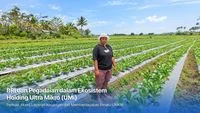
The agricultural landscape of Merauke, Papua, presents a complex myriad of opportunities and formidable challenges for local farmers. While the region boasts vast expanses of fertile soil capable of producing substantial rice yields, those who work the land must constantly contend with unpredictable weather patterns, erratic water scarcity during prolonged dry seasons, and persistent pest infestations. For Mur Dwi Astuti, a determined female farmer operating in this remote eastern frontier of Indonesia, these systemic agricultural hurdles were further compounded by a common yet critical barrier: limited access to financial capital. Despite these initial obstacles, Mur’s journey from a small-scale cultivator managing a modest plot of land to a resilient agribusiness entrepreneur illustrates a compelling narrative of financial literacy, strategic borrowing, and rural empowerment. Her trajectory underscores the profound impact that structured microfinance ecosystems can have on grassroots economic development, particularly when supported by integrated financial institutions such as Indonesia’s Ultra Micro (UMi) Holding, which encompasses Bank Rakyat Indonesia (BRI), Pegadaian, and Permodalan Nasional Madani (PNM).
The Chronology of Growth: From Pawn Services to Microcredit
Mur’s journey toward financial self-sufficiency and business expansion did not happen overnight; rather, it evolved through a carefully navigated, phased approach. In the early stages of her agricultural enterprise, before she established formal relationships with mainstream banking institutions, Mur relied on alternative financial instruments to sustain her daily operations and bridge liquidity gaps. Her initial foray into formal financial management began with the gold-pawn service offered by Pegadaian. For Mur, utilizing this service served a dual purpose: it provided immediate, accessible cash liquidity required to purchase essential farming inputs, and it acted as a practical stepping stone for learning how to manage financial obligations responsibly.
As her farming enterprise gained operational traction and her technical expertise in rice cultivation improved, Mur’s capital requirements naturally escalated. Managing a single hectare of land no longer sufficed to meet the growing market demands or to justify the increasing costs of labor, fertilizers, and pest control. After operating successfully at her initial scale for more than a year, Mur sought a larger, more structured financial injection to support her expansion goals. This pivotal moment led her to the People’s Business Credit program, commonly known as Kredit Usaha Rakyat (KUR) Mikro, facilitated by PT Bank Rakyat Indonesia (Persero) Tbk.
Choosing the KUR Mikro BRI scheme was a strategic decision driven by the program’s favorable terms, notably the absence of stringent collateral requirements that often disenfranchise smallholders. Furthermore, the application process was streamlined by proactive field officers from BRI, who engaged with Mur directly, answering her queries and guiding her through the administrative steps with notable efficiency. This seamless communication reduced the traditional friction often associated with rural banking, allowing Mur to secure the necessary funding without getting bogged down by bureaucratic delays.
Expanding Horizons: Tripling Farmland Amid Environmental Adversity
With the infusion of capital from the KUR Mikro BRI, Mur successfully expanded her operational footprint, scaling her cultivated land from a single hectare to an impressive three hectares. This expansion represented a threefold increase in her production capacity, enabling her to plant larger volumes of rice and generate higher gross revenues during favorable harvest seasons. However, agricultural expansion in Papua is inextricably linked to the whims of nature. Scaling up operations did not insulate Mur from the perennial risks associated with farming in Merauke; instead, it amplified her exposure to environmental vulnerabilities.
According to Mur, the success of a harvest remains heavily tethered to seasonal shifts. During optimal weather conditions, the fields yield abundant crops that compensate for the hard labor invested. Conversely, unfavorable weather cycles—particularly severe droughts during the dry season—severely restrict the availability of water, rendering irrigation systems ineffective and stunting crop growth. Furthermore, unmitigated pest attacks continue to pose a constant threat to crop yields, requiring constant vigilance and financial outlay for protective treatments.
Despite these environmental headwinds, the additional capital injected through the KUR program allowed Mur to absorb these operational shocks more effectively. She utilized the microcredit funds to cover a wide spectrum of agricultural expenses, ranging from the foundational costs of land preparation and seed acquisition to wage payments for local farm laborers and the rental or maintenance of agricultural machinery. This comprehensive financial backing transformed her enterprise from a subsistence-level operation into a commercially viable, productive agricultural unit.
Transforming Financial Habits Through Institutional Mentorship
Beyond mere capital infusion, one of the most transformative aspects of Mur’s engagement with BRI was the financial literacy and mentorship component embedded within the lending program. Historically, many smallholder farmers and ultra-micro entrepreneurs struggle not only with a lack of initial capital but also with the structural discipline required to manage business cash flows effectively. Mur openly acknowledged that prior to receiving guidance from BRI officers, she experienced significant challenges in segregating personal finances from business revenues and budgeting for future operational cycles.
Through structured advisory support provided during the loan disbursement and monitoring phases, Mur learned the critical discipline of financial retention. She began consciously setting aside a portion of her harvest revenues to serve as self-funded capital for subsequent planting seasons, reducing her absolute reliance on external debt over the long term. This newfound capacity to save and reinvest systematically altered her approach to business management. For Mur, the ability to manage money efficiently became just as important as the physical labor of planting and harvesting. It instilled a sense of economic agency and resilience, proving that financial inclusion is most effective when paired with capacity-building and practical financial education.
The Broader Implications: Women in Agriculture and the Ultra Micro Holding Ecosystem
Mur Dwi Astuti’s narrative transcends an individual success story; it serves as a microeconomic reflection of broader national strategies aimed at poverty alleviation, gender equality in rural economies, and financial deepening. In many developing agricultural regions, female farmers face systemic disadvantages in land ownership, credit access, and agricultural extension services. By successfully navigating the financial landscape, expanding her land holdings to three hectares, and mastering financial management, Mur challenges traditional gender norms in rural sectors. Her experience exemplifies the empowering adage she champions: with genuine willingness to work and learn, women can successfully lead and scale agricultural enterprises.
From a structural perspective, Mur’s trajectory validates the operational thesis behind Indonesia’s Ultra Micro (UMi) Holding. Established to integrate the resources of BRI, Pegadaian, and PNM, the holding entity is specifically designed to create a continuous, frictionless financial pipeline for grassroots entrepreneurs. Corporate Secretary of BRI, Dhanny, emphasized that Mur’s journey perfectly illustrates the intended mechanics of this ecosystem. By transitioning fluidly from Pegadaian’s gold-pawn services for immediate liquidity to BRI’s KUR Mikro for business expansion, rural entrepreneurs are provided with a clear, supportive pathway to grow and "move up-class" (naik kelas) as their financial maturity and business scale increase.
Expert Analysis: Assessing the Socioeconomic Impact
Economic analysts point out that the integration of ultra-micro and microfinance services into remote agricultural centers like Merauke plays a critical role in stabilizing regional food security and boosting local economies. Agriculture remains a cornerstone of Indonesia’s GDP and a primary source of employment in outer islands. However, the high mortality rate of small agricultural enterprises is frequently traced back to liquidity traps and vulnerability to climate shocks.
By providing tiered, accessible credit without prohibitive collateral demands, financial institutions mitigate the initial market entry barriers for marginalized producers. Furthermore, the inclusion of mandatory financial literacy training addresses the human capital deficit that often undermines credit utilization. When farmers learn to manage cash flows, optimize input usage, and build emergency reserves, the overall systemic risk of non-performing loans decreases, creating a mutually beneficial relationship between lenders and rural borrowers.
Nevertheless, experts caution that financial inclusion alone cannot fully insulate farmers from systemic environmental threats such as climate change. To ensure the long-term sustainability of enterprises like Mur’s, microfinance initiatives must be complemented by robust public-private investments in climate-resilient agricultural infrastructure, such as modern irrigation systems, drought-resistant seed varieties, and comprehensive agricultural insurance schemes. Without these structural safeguards, farmers remain excessively vulnerable to macro-environmental shifts, regardless of their financial management capabilities.
Conclusion: A Call for Action and Continued Growth
Today, despite lingering challenges concerning seasonal water availability and climate variability, Mur Dwi Astuti stands as a testament to the transformative power of perseverance and structured financial support. Having successfully transitioned from a tentative borrower to a confident agribusiness operator managing a three-hectare farm, she looks toward the future with an expanded risk appetite and a proactive mindset. Her journey has transformed her perception of banking institutions from distant corporate entities into collaborative partners in her economic development.
Encouraged by her own progress, Mur actively advocates for fellow farmers and small-scale entrepreneurs in Merauke and beyond. She urges her peers not to shy away from formal financial institutions, provided they maintain the dedication required to meet their obligations and utilize funds productively. As the Holding Ultra Mikro continues to refine its outreach and deepen its penetration across Indonesia’s outermost regions, stories like Mur’s provide a blueprint for inclusive economic growth—proving that when capital meets determination, even the most challenging soils can yield sustainable prosperity.