The Evolution of the Negroni: From Italian Classic to Global Cocktail Phenomenon

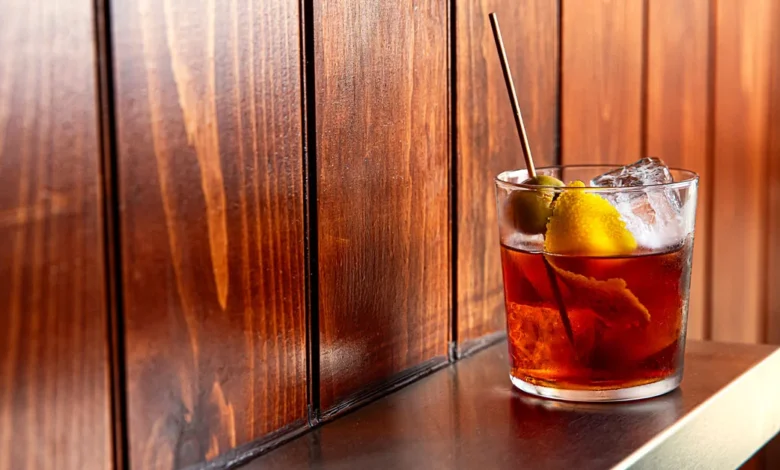
The Negroni stands as the definitive pillar of the Italian aperitivo tradition, a drink defined by its uncompromising balance and architectural simplicity. Comprising equal parts gin, sweet vermouth, and Campari, this crimson-hued cocktail has transcended its Florentine origins to achieve global ubiquity. In recent years, however, the drink has moved beyond its canonical form, serving as a creative sandbox for the world’s most innovative bartenders. From smoky mezcal adaptations to avant-garde experiments like the Root Beer Negroni, the evolution of the Negroni demonstrates how a rigid, three-ingredient formula can be continuously deconstructed and reimagined without losing its core identity.

A Historical Foundation: The Genesis of the Negroni
The lore surrounding the Negroni is as intoxicating as the drink itself. Most historians trace the cocktail to Caffè Casoni in Florence, Italy, around 1919. The story goes that Count Camillo Negroni, a frequent patron, requested that his bartender, Fosco Scarselli, strengthen his Americano—a drink of Campari, sweet vermouth, and club soda—by substituting the soda for gin. The resulting mixture was an immediate success, marking the birth of a drink that would eventually become one of the most ordered cocktails in the world.
For decades, the Negroni remained a staple of the European café scene, favored for its appetite-stimulating qualities. By the mid-20th century, the drink had migrated across the Atlantic, finding a foothold in the burgeoning cocktail bars of North America. However, it was the "cocktail renaissance" of the early 21st century that truly cemented the Negroni’s status. As craft bars began prioritizing historical recipes, the Negroni emerged as a litmus test for a bartender’s technique. Its simplicity meant there was nowhere to hide; the quality of the spirits and the precision of the stir were paramount.

The Anatomy of Innovation: Why the Formula Persists
The structural integrity of the Negroni is what makes it so resilient to change. The interplay of bitterness (Campari), sweetness (vermouth), and proof (gin) creates a sensory profile that is difficult to replicate with other ingredients. Because of this balance, bartenders have found that they can swap the primary spirit—or even the bittering agent—without collapsing the drink’s foundation.
This adaptability has led to a surge in regional and thematic variations. The "Mezcal Negroni," for example, replaces gin with mezcal, introducing an earthy, smoky depth that contrasts sharply with the medicinal sweetness of the Campari. This variation has become so popular that it is now considered a "modern classic" in its own right, frequently appearing on menus from Mexico City to London.

A Chronology of the Modern Riff
The shift toward radical experimentation began in earnest during the 2010s. During this period, the industry saw a move away from strict adherence to classic ratios.
- The 2010-2015 Era: Bartenders began experimenting with "fat-washing" and infusions. The introduction of the "Cosmogroni"—a fusion of the 1990s Cosmopolitan and the Negroni—signaled a willingness to bridge the gap between "serious" cocktails and mass-market pop culture drinks.
- The 2016-2020 Period: Technical precision took center stage. Innovations like the "Negroni de Nubes" introduced complex textures, such as rice-washing, which provided a velvety mouthfeel that challenged the traditional perception of the cocktail as a sharp, bracing beverage.
- The 2021-Present Era: The current landscape is defined by efficiency and whimsy. Techniques like microwave-assisted infusions, as seen in the "Nuked Negroni," have sparked debate about the role of technology in the craft cocktail space. Similarly, the emergence of the "Root Beer Negroni" reflects a broader trend of nostalgic flavoring, where classic cocktails are used to evoke childhood memories or specific comfort-food profiles.
Data and Trends in Modern Mixology
Market research indicates that the Negroni’s popularity has remained steady, with it consistently ranking in the top five most-ordered cocktails globally according to the annual Drinks International report. The surge in "low-ABV" and "aperitivo" culture has further bolstered its relevance. As consumers move toward lower-alcohol consumption, the Negroni’s format—which can be easily modified with tonic or sparkling water—positions it as an ideal candidate for moderation-focused menus.

Furthermore, the "Dirty Negroni," which introduces olive brine, represents a significant shift in palate preference. It highlights a departure from the purely bitter-sweet profile toward a more savory, umami-forward experience. This trend aligns with the rise of savory cocktails in fine-dining establishments, where the drink is often paired with food rather than consumed as a standalone pre-dinner beverage.
Perspectives from the Industry
Industry leaders often cite the Negroni as the ultimate educational tool. "The Negroni teaches you about balance," says one prominent New York-based mixologist. "When you start tweaking the ratios or swapping ingredients, you learn how the botanical profile of a gin interacts with the specific herbs in a sweet vermouth. It is the most important lesson in liquid architecture."

Conversely, purists argue that the proliferation of "Negroni-style" drinks risks diluting the cultural significance of the original. There is a concern that labeling any three-ingredient drink a "Negroni" confuses consumers and diminishes the specific history of the Campari-vermouth-gin triumvirate. Despite this, the consensus remains that the drink’s longevity is secured by its ability to evolve.
Broader Implications and Future Outlook
The continuous reinvention of the Negroni is indicative of a broader shift in culinary and beverage culture: the democratization of the "classic." In the past, recipes were guarded and static; today, they are collaborative, open-source projects. This evolution suggests that the future of the cocktail lies not in the creation of entirely new drinks, but in the sophisticated modification of those that have already stood the test of time.

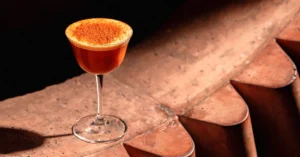
As the industry moves forward, we can expect to see more "hybrid" cocktails. The success of the "Misi’s Negroni Sour," which uses egg white to transform the drink into a frothy, elegant creation, points toward a future where texture is just as important as flavor. We are also likely to see more regional spirits taking the place of gin—such as Pisco, Aquavit, or even non-alcoholic distillates—as the definition of what constitutes a "classic" continues to expand.
Ultimately, the Negroni remains the most reliable barometer of the cocktail world’s health. Whether it is served in a dimly lit, traditional bar in Milan or a high-tech laboratory in Brooklyn, its ability to surprise, challenge, and satisfy remains unparalleled. It is not merely a drink; it is a canvas, and as long as there are ingredients to play with, the Negroni will continue to change, adapt, and endure. As we look toward the next decade, the only certainty is that the "canonical" version will always have a place on the menu, even as the list of its descendants continues to grow.