The Ultimate Connoisseur Guide to Wine and Steak Pairing Strategies for Every Cut

The harmonious pairing of wine and steak represents one of the foundational milestones in any oenophile’s culinary education. While the general convention of matching dry red wines to beef is widely understood, the nuanced interaction between specific bovine cuts, preparation methods, and varietal chemistry offers a vast landscape for gastronomic exploration. As the culinary arts have evolved, chefs, sommeliers, and food scientists have mapped out how the chemical compounds within wine—specifically tannins, acidity, alcohol, and fruit profiles—interact with the proteins, fats, and textures of various beef cuts. This comprehensive analysis examines the structural dynamics of pairing dry reds with America’s most popular steak cuts, providing a data-driven framework for elevating the dining experience.
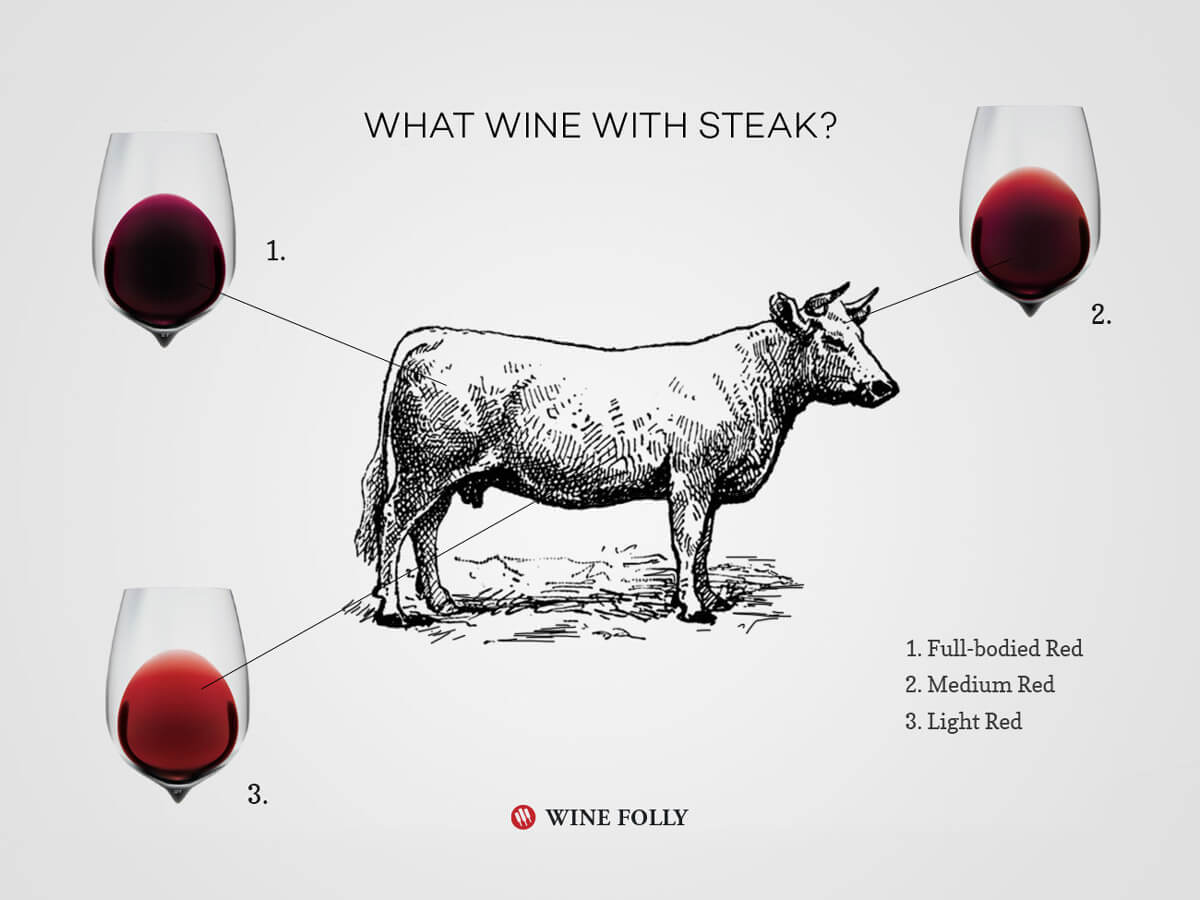
The foundational principle of steak and wine pairing relies on structural alignment: leaner cuts of meat harmonize best with lighter, more elegant wines, whereas rich, heavily marbled cuts demand bold, high-tannin reds capable of slicing through dense animal fats. Tannins, which are naturally occurring polyphenol compounds found in grape skins, seeds, and stems, bind to the proteins and fats in beef. This binding action cleanses the palate, softening the astringency of the wine while rendering the rich mouthfeel of the meat smoother and more balanced.

Beyond tannins, acidity plays a critical role. Wines with bright acidity act as a palate cleanser, cutting through heavy rendered fats and balancing the savory, umami characteristics of well-browned beef crusts. Conversely, highly tannic wines paired with extremely lean meats can strip the palate of moisture, resulting in a metallic or overly astringent finish. Understanding these biochemical interactions allows diners to move beyond arbitrary rules and tailor their wine selections to the exact specifications of the steak on their plate.
Sirloin: The Versatile Workhorse
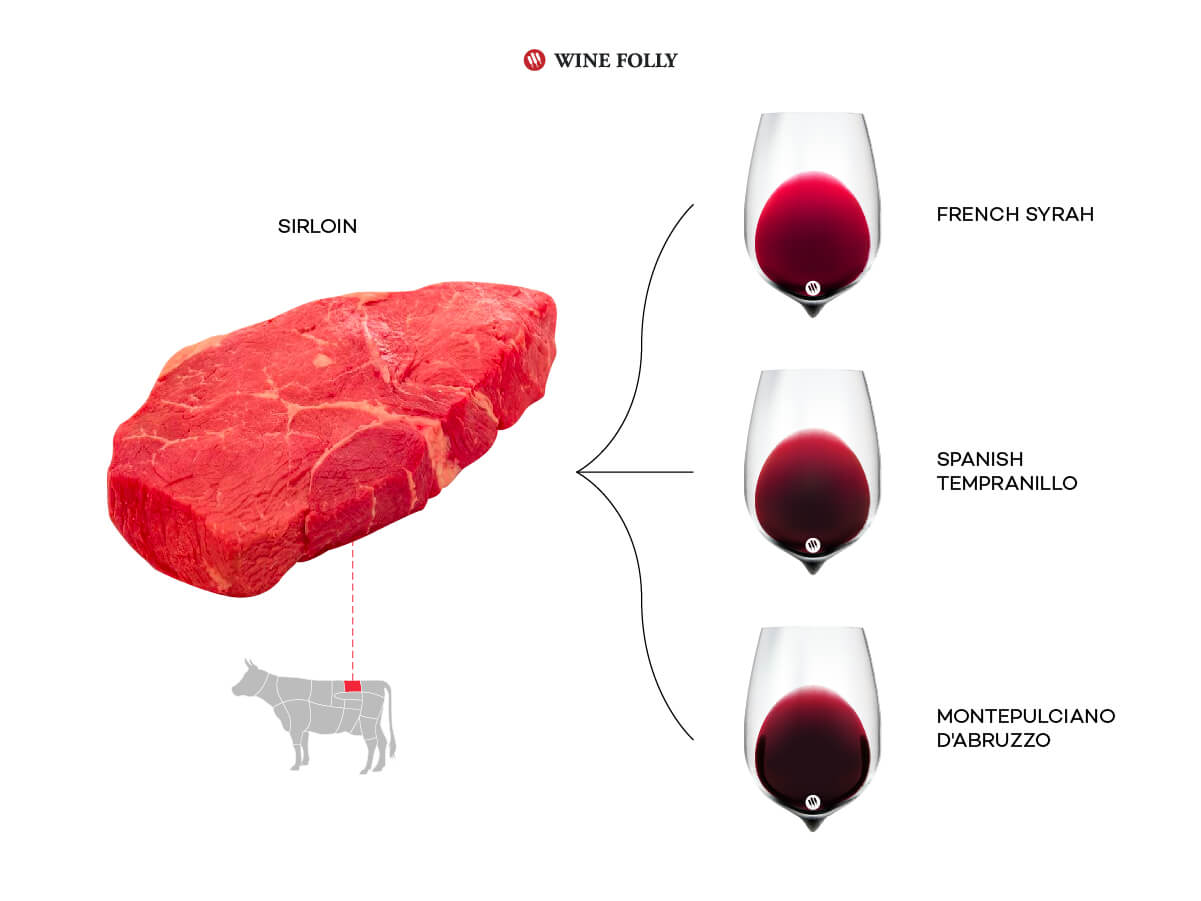
As one of the most widely consumed cuts in contemporary dining, the sirloin offers a balance of beefy flavor and moderate leanness. Featuring light fat marbling and typically bordered by a thin strip of external fat, the sirloin is remarkably adaptable. Culinary professionals note that sirloin responds exceptionally well to dry-heat methods such as grilling, cast-iron searing, and oven roasting, though open-flame grilling remains the preferred preparation to render its outer fat cap.
Because sirloin can be seasoned with simple kosher salt and cracked black pepper or draped in complex wine-reduction sauces, the accompanying wine must possess a versatile profile. Medium-to-full-bodied red wines with approachable tannins and bright red-fruit characteristics serve this cut best. These selections provide enough structural integrity to match the beef’s natural iron-rich flavor without overwhelming the palate. When diners apply herb-heavy marinades or robust peppercorn sauces to a sirloin, sommeliers recommend pivoting toward wines with higher acidity to bridge the gap between the savory crust and the glass.
Ribeye and Bone-In Cuts: Managing Richness and Marbling
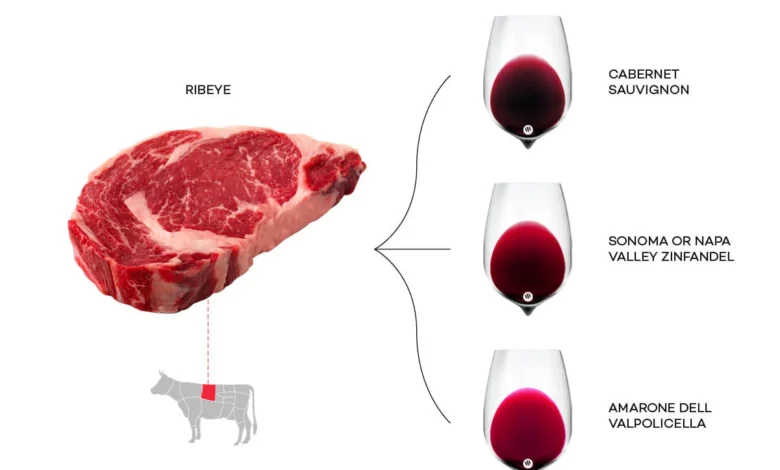
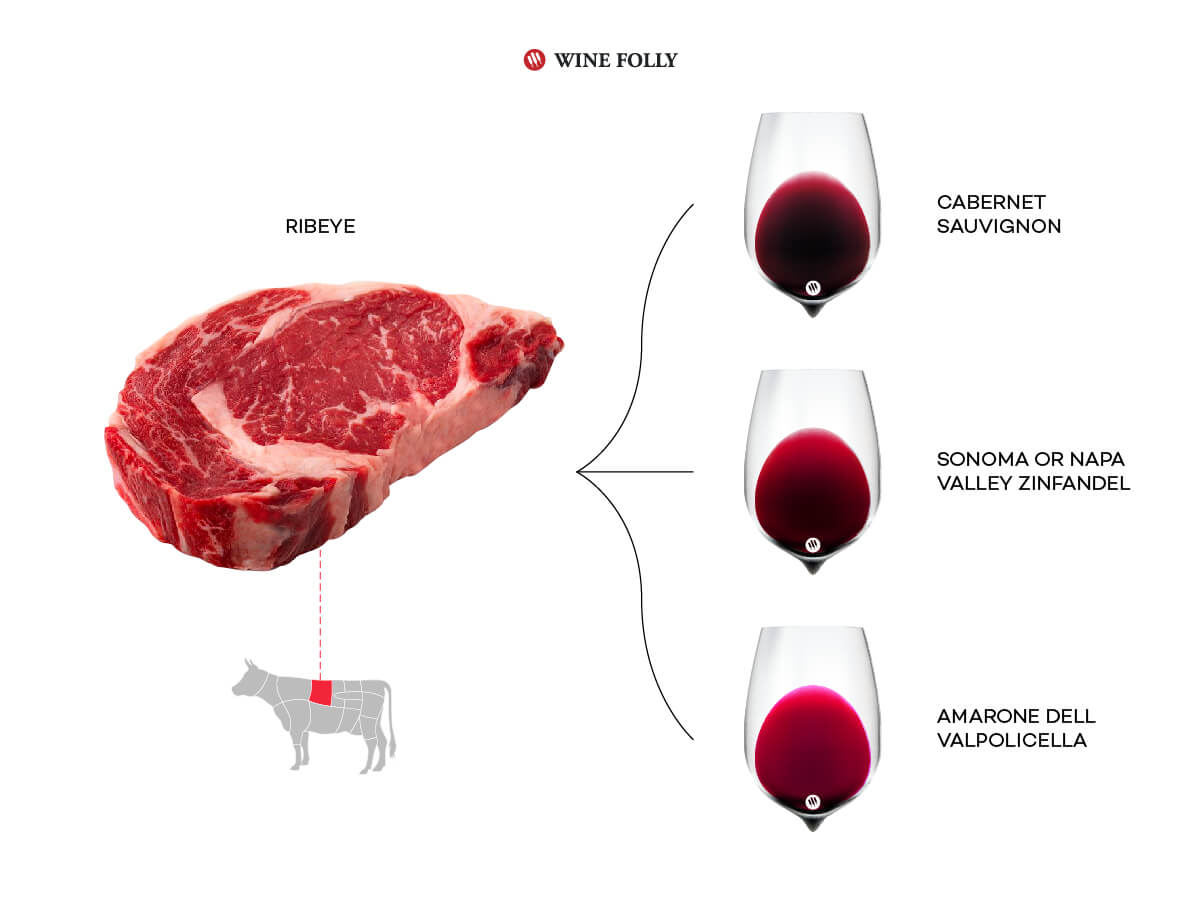
For enthusiasts prioritizing unadulterated flavor and tenderness, the ribeye stands paramount. Sourced from the upper rib section of the steer, the ribeye is celebrated for its intricate web of intramuscular fat, known as marbling. This high fat content melts during the cooking process, infusing the muscle fibers with moisture and imparting a deeply buttery, rich taste profile. Bone-in variations introduce additional flavor compounds derived from the marrow during cooking, though the physical presence of the bone requires more attentive temperature management to ensure even doneness.
The heavy fat profile of a ribeye fundamentally changes the pairing equation. Wines lacking sufficient structure will taste flat and watery when confronted with the lipid density of a prime ribeye. Consequently, pairings for this cut must feature either elevated levels of drying tannins to dissolve the fat or intensely concentrated fruit profiles that provide a striking, complementary contrast. Bold, full-bodied reds with structured palates successfully stand up to the richness of the meat, ensuring that neither the food nor the wine overwhelms the senses.
Porterhouse and T-Bone: Balancing Dual Textures
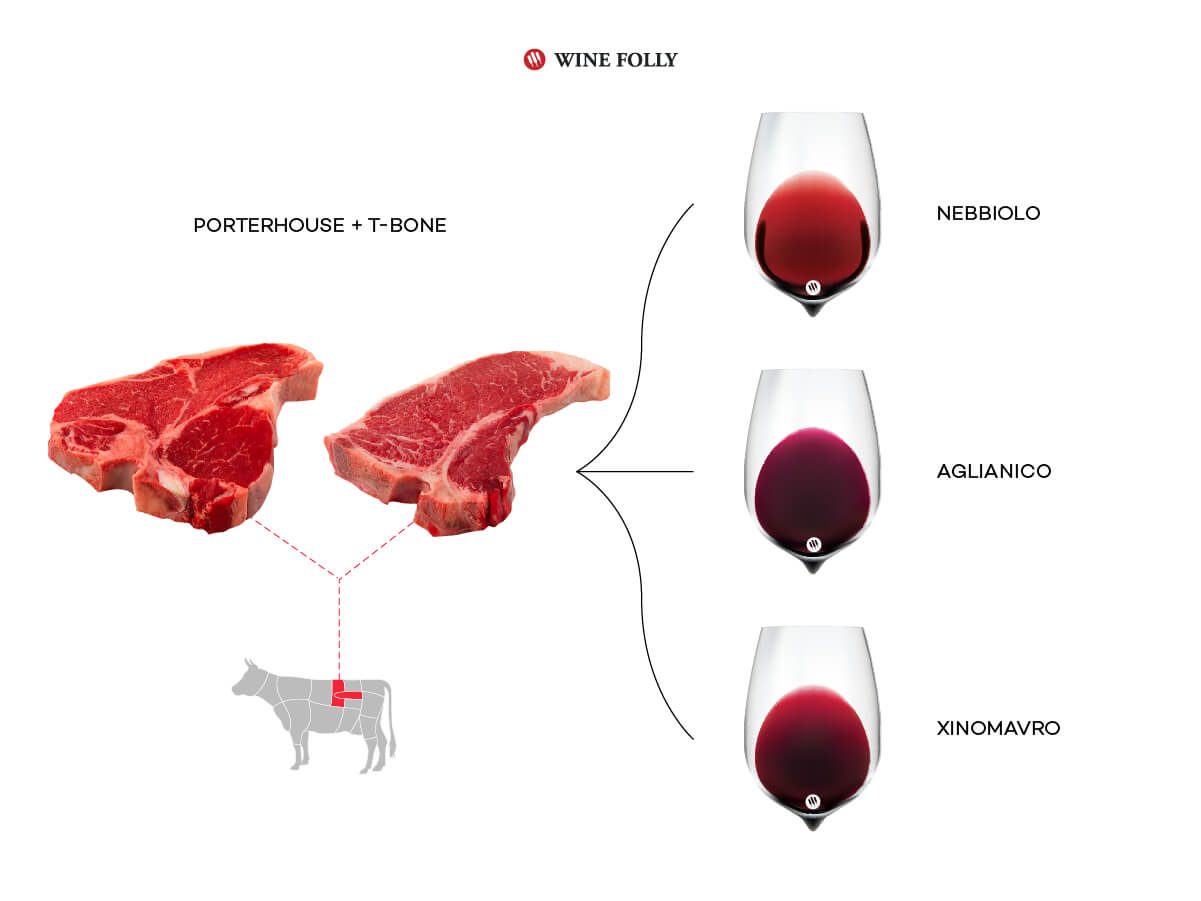
The Porterhouse and the T-Bone represent a unique anatomical intersection, featuring two distinct muscle groups separated by a T-shaped lumbar vertebra. On one side of the bone lies the strip loin, known for its firm texture and deep, beefy flavor profile. On the other side sits the tenderloin, prized for its melt-in-the-mouth tenderness. While structurally similar—with the Porterhouse distinguished simply by a larger portion of the tenderloin—both cuts present a dual challenge and opportunity for wine pairing.
Because these cuts combine lean, delicate tenderness with firmer, more robust exterior meat, the ideal wine must bridge two distinct mouthfeels. Aromatic red wines with complex flavor profiles and moderate-to-high structural tannin complement this duality. These wines offer sufficient depth to match the strip side while maintaining enough elegance to respect the subtlety of the filet, creating a cohesive tasting experience across the entire plate.
Filet Mignon: The Pinnacle of Lean Tenderness
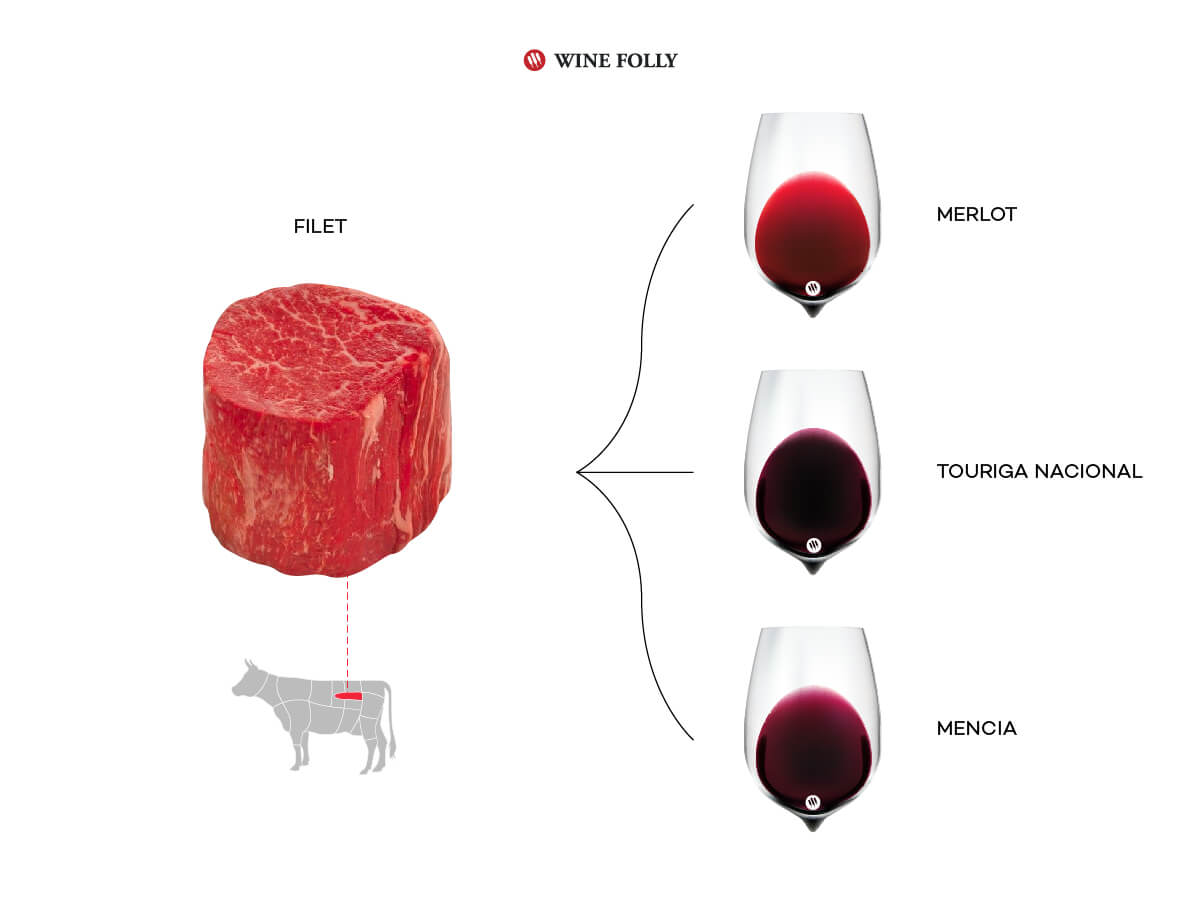
Widely regarded as the most luxurious cut on the market, the filet mignon is harvested from the psoas major muscle, which gets very little exercise. This anatomical reality results in a cut that is exceptionally tender but inherently low in intramuscular fat and connective tissue. Because of its subtle flavor profile, the filet is frequently served with rich accompaniments such as béarnaise sauce, red wine reductions, or simple butter-basting in a hot cast-iron skillet.
Pairing wine with filet mignon requires a delicate touch. Heavy, aggressive high-tannin wines will easily overpower the subtle, velvety nature of the meat. Instead, sophisticated, nuanced red wines that stay within their structural lane are required. These selections deliver complementary earthy, floral, or red-fruit notes that enhance the natural flavors of the beef without masking its delicate texture.
Strip Loin: Flavor, Grain, and Structural Defense
Known regionally as the New York strip, shell steak, or Kansas City strip, this short loin cut offers an optimal balance of robust beef flavor and moderate marbling. Featuring a thicker muscle grain and a notable strip of external fat, the strip loin benefits greatly from high-heat cast-iron searing, where the Maillard reaction creates a deeply savory crust.
The structural density and pronounced grain of the strip loin demand a wine with both strong fruit concentration and firm acidity. The wine must possess enough backbone to cut through the rendered fats while harmonizing with the intense, savory notes developed during the searing process. Red wines featuring vibrant fruit extraction, pronounced acidity, and steady tannins perform exceptionally well, cutting through the savory layers and cleansing the palate between bites.
Rump Steak: Muscle Density and Flavor Concentration
Sourced from the rear of the animal, the rump steak originates from a hard-working muscle group. This anatomical history yields a cut that is firmer and leaner than ribeye or strip steaks, yet rich in deep, traditional beef flavor. To overcome its denser texture, rump steak is frequently marinated, slow-cooked, or sliced thinly against the grain.
When pairing wine with rump steak, the culinary preparation dictates the strategy. If the steak has been subjected to an acidic or wine-based marinade, the selected wine must match those integrated flavors to avoid a disjointed palate. Generally, structured red wines with earthy undertones and savory herbal notes support the natural firmness of the meat, transforming a challenging, value-oriented cut into a deeply satisfying dining experience.
Flank and Skirt: Navigating Toughness and High Heat
Flank and skirt steaks are long, flat cuts derived from the abdominal muscles of the steer. Characterized by long muscle fibers and minimal fat, these cuts are prone to becoming tough and dry if overcooked. However, when properly handled—typically through rapid, high-heat grilling or effective wet marinades—they yield an intensely beefy flavor that makes them staples in global cuisine.
The pairing objective for flank and skirt steaks is to complement chewy, savory beef without exacerbating its structural toughness. Wines featuring lively acidity and approachable fruit profiles provide the necessary brightness to elevate these working-class cuts. By balancing the char from the grill and the savory juices of the meat, the right wine turns a potentially rustic meal into a vibrant, highly palatable experience.
Brisket: Low, Slow, and Smoke-Infused Dynamics
While traditionally classified as a barbecue staple rather than a classic grill steak, brisket warrants inclusion in comprehensive pairing guides due to its unique fat-to-protein composition. Harvested from the breast of the cow, brisket consists of heavily exercised muscles packed with connective tissue. Transforming this tough cut requires low-temperature, extended smoking over wood fires—frequently utilizing hickory, oak, or fruitwoods—until the collagen breaks down into gelatin.
The integration of wood smoke fundamentally alters the pairing paradigm. The wine must not only contend with rich, rendered fats and gelatinous textures but also interact directly with volatile smoke compounds absorbed during a 12-to-16-hour cook. Robust red wines featuring dark fruit characteristics, smoky undertones, and integrated oak aging provide the chemical alignment necessary to bridge the gap between heavy smoke, sweet barbecue rubs, and rich beef.
Concluding Analytical Perspectives
Ultimately, while biochemical principles provide a reliable framework for pairing wine and steak, individual palate preference remains the ultimate arbiter of culinary success. The guidelines outlined above serve as a baseline for understanding how tannins, acidity, fat, and protein interact in the dining room. Diners are encouraged to utilize these pairings as a foundation for personal experimentation, keeping in mind that the most successful pairing is invariably the one that brings the greatest enjoyment to the individual consumer.