The emergence of the Arepa Burger represents a significant intersection between traditional South American staples and the globalized fast-casual dining sector. By replacing the conventional wheat-based hamburger bun with the Colombian arepa—a pre-cooked cornmeal cake—culinary innovators have successfully introduced a gluten-friendly alternative that challenges the long-standing dominance of the bread-based sandwich. This fusion dish, which originated in home kitchens and has gained traction in fusion-focused restaurants across the United States and Latin America, serves as a testament to the adaptability of regional ingredients within a modern, health-conscious, and flavor-diverse market.

The arepa itself is a foundational element of Colombian and Venezuelan cuisine, with roots tracing back to indigenous cultures long before the arrival of European influence. Traditionally served as a breakfast staple or a side dish, the arepa is crafted from ground maize, water, and salt. Its transformation into a structural vessel for a protein-rich patty is not merely a novelty; it is a strategic culinary evolution that addresses changing dietary preferences. As consumer demand for alternatives to processed flour increases, the corn-based arepa provides a structurally sound, nutrient-dense, and flavor-neutral base that complements the savory profile of seasoned beef.
The Anatomy of the Fusion
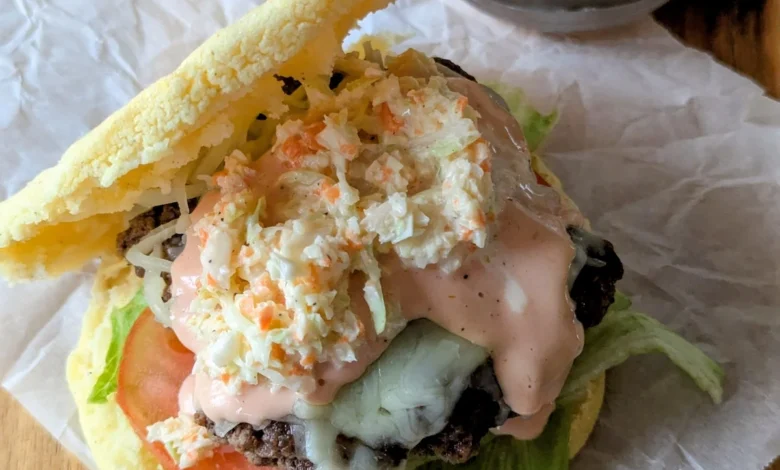
From a culinary perspective, the Arepa Burger requires a specific technical approach to ensure the structural integrity of the dish. Unlike a soft brioche or sesame seed bun, the arepa possesses a distinctive texture profile: a crispy, golden exterior achieved through pan-searing or grilling, and a dense, soft interior. When utilized as a bun substitute, the arepa must be prepared with sufficient thickness to contain the juices of the meat while maintaining enough structural tension to be consumed by hand.

The preparation process typically involves the hydration of pre-cooked cornmeal, which is then shaped into circular patties. These are grilled until a crust forms, providing a necessary contrast to the tenderness of the beef patty. Culinary experts note that the addition of traditional toppings—such as salsa rosada (a mixture of mayonnaise and ketchup), fresh tomato, lettuce, and occasionally coleslaw—further grounds the dish in its Colombian heritage. By layering these ingredients, the Arepa Burger bridges the gap between the American "grab-and-go" convenience and the complex flavor profiles inherent in Latin American street food.
Historical Context and Evolution
The popularity of the Arepa Burger can be traced to the broader trend of "fusion gastronomy" that gained momentum in the early 21st century. While localized versions of corn-based sandwiches have existed in Colombia for decades, the formalization of the "Arepa Burger" as a distinct menu item began appearing in international food blogs and fusion eateries around 2010.

This evolution is part of a wider shift in the global food industry toward regional representation. As international travel and the digital exchange of culinary ideas have accelerated, consumers have become increasingly interested in authentic regional flavors adapted for contemporary convenience. The movement from home-kitchen experiments, often championed by food bloggers and culinary enthusiasts, to commercial menu placement marks a transition from niche cultural food to mainstream consumption.
Nutritional and Dietary Implications
A comparative analysis of the Arepa Burger versus a traditional fast-food hamburger reveals notable nutritional shifts. A standard flour-based bun is often high in refined carbohydrates and gluten. In contrast, the arepa, being corn-based, offers a naturally gluten-free alternative. Data from nutritional databases indicate that while the caloric density remains comparable depending on the size of the protein patty, the arepa typically provides a higher satiety factor due to the density of the maize.

Furthermore, the ingredients often paired with the Arepa Burger—fresh vegetables, avocado-based sauces, and high-quality proteins—align with a "whole food" philosophy that many modern diners prioritize. The shift away from ultra-processed buns toward simple, maize-based components is viewed by some dietitians as a positive step in reducing reliance on refined sugars and preservatives often found in commercial mass-produced bread.
Economic and Market Impact
The rise of the Arepa Burger has had a measurable impact on the supply chain for corn products. As the dish gains popularity in urban centers with high populations of Latin American immigrants and food-curious consumers, demand for high-quality, pre-cooked cornmeal has seen a steady uptick. This shift has benefited suppliers who specialize in Latin American staples, helping to move these items from the "ethnic" aisle of the grocery store to mainstream shelf visibility.

For small business owners and restaurant entrepreneurs, the Arepa Burger offers a unique market differentiator. In a saturated market of traditional burger joints, adding a fusion item that is both familiar and exotic allows businesses to capture a wider demographic. Industry analysts suggest that the "experience-based" dining trend, where consumers seek dishes with a story or a cultural narrative, significantly favors items like the Arepa Burger.
Global Culinary Trends and Future Outlook
The trajectory of the Arepa Burger is indicative of a broader pattern: the "Latinization" of standard American menu items. This is not the first instance of such a merger; the success of tacos, ceviche, and churros in the international market paved the way for more complex fusion dishes. However, the Arepa Burger is distinct in its direct challenge to the "American Hamburger," an icon of global food culture.

Looking forward, the potential for further innovation within this niche remains high. Chefs are currently experimenting with variations, including the incorporation of cheese into the arepa dough (arepas de queso), the use of vegetarian or vegan protein patties, and the addition of exotic fruit-based salsas. These iterations suggest that the dish is not merely a passing fad, but a legitimate new category in the landscape of global sandwich culture.
Expert Perspectives
Food historians and industry critics often point to the Arepa Burger as a prime example of culinary synthesis. By maintaining the core architecture of the burger—a patty, toppings, and a carb-based shell—while swapping the regional identity of that shell, the dish satisfies the human preference for novelty within a familiar framework.

"The brilliance of the Arepa Burger lies in its simplicity," says a prominent food critic, noting that the dish does not attempt to reinvent the concept of a meal, but rather honors a regional staple by giving it a modern platform. "It is a respectful, functional, and deeply flavorful update to a dish that has remained largely stagnant for half a century."
Broader Societal Impact
The widespread adoption of the Arepa Burger also reflects a changing social climate regarding immigrant cultures and their influence on national cuisines. As these dishes cross the threshold from home-cooked meals to restaurant staples, they facilitate a cultural dialogue. The act of eating a dish from another culture, particularly one that has been adapted to the local palate, serves as a bridge for cultural integration.

In major metropolitan areas, the presence of the Arepa Burger on menu boards alongside traditional cheeseburgers signifies a maturation of the local food scene. It suggests a population that is increasingly comfortable with culinary diversity and eager to explore the nuances of global flavors. This normalization of Latin American ingredients is a clear indicator of the diversifying tastes of the modern consumer base.
Conclusion
The Arepa Burger is more than just a creative culinary hack; it is a manifestation of global food evolution. By bridging the gap between traditional Colombian corn-based cuisine and the universal appeal of the burger, it provides a compelling case for the value of fusion cooking. As it continues to gain popularity, the Arepa Burger will likely remain a fixture of both home kitchens and professional menus, serving as a permanent, if delicious, testament to the enduring power of culinary innovation. Its continued success rests not only on its flavor, but on its ability to satisfy the modern demand for food that is both rooted in history and ready for the future.