Solutions for Local Slaughter: Small Abattoirs in Local Meat Supply Chains – Groundswell 2026

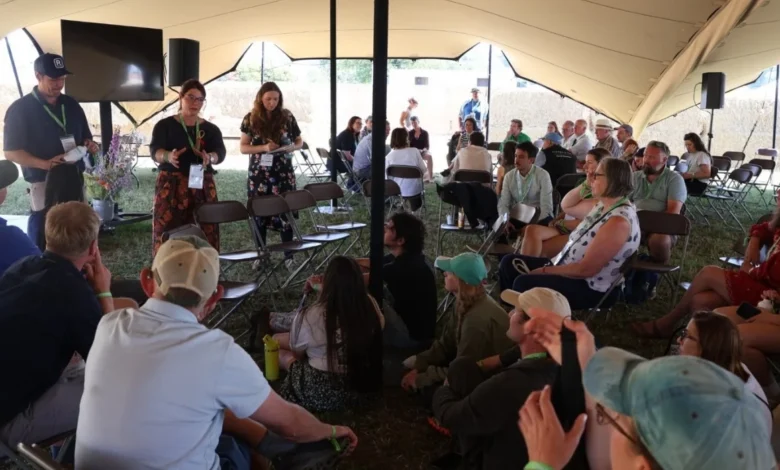
The collapse of the small abattoir network in the United Kingdom has long been identified as a critical bottleneck for the growth of sustainable, localized food systems. As producers increasingly seek to market meat directly to consumers, the lack of accessible slaughter facilities—often requiring livestock to be transported vast distances—undermines both the economic viability of small-scale farming and the environmental credentials of "farm-to-fork" supply chains. At the Groundswell 2026 regenerative agriculture festival, the Sustainable Food Trust (SFT) convened a high-level panel to address these systemic failures, exploring potential pathways for the revival of local slaughter infrastructure.
The Context: A Shrinking Infrastructure
The decline of the small abattoir sector is not a new phenomenon; it is the result of decades of consolidation, stringent regulatory tightening, and shifting market dynamics. Data from the Food Standards Agency (FSA) suggests that the number of red meat abattoirs in the UK has plummeted by over 80% since the 1970s. This concentration of the industry into a few, large-scale facilities has created a "monoculture" of meat processing that leaves farmers vulnerable to supply chain shocks and significantly increases the carbon footprint of livestock transport.
During the Groundswell 2026 session, chaired by Megan Perry, SFT’s Head of Policy and Campaigns, industry experts emphasized that without a decentralized network of slaughterhouses, the transition to truly sustainable agriculture remains stalled. The panel explored the multifaceted challenges involved in reversing this trend, ranging from the prohibitive costs of regulatory compliance to the technical difficulties of staffing small-scale, remote facilities.
Financial and Operational Hurdles
A primary focus of the discussion was the financial viability of launching new, small-scale abattoirs. The capital expenditure (CAPEX) required to meet modern hygiene and animal welfare standards is often beyond the reach of independent farmers or community cooperatives. Participants highlighted that current business models are frequently strained by the "deadweight" costs of high-compliance overheads, which do not scale linearly with lower throughput.
The conversation identified a need for innovative funding mechanisms, including a mix of government grants, community-led investment, and private philanthropic support. The panel noted that many prospective operators are deterred by the complexity of the planning process, which can take years and require significant upfront legal and environmental consultancy fees. To address this, the Abattoir Sector Group (ASG) has developed a comprehensive "Playbook," designed to provide a roadmap for those navigating the bureaucratic labyrinth of establishing new infrastructure.
The Regulatory and Veterinary Bottleneck
Regulation emerged as perhaps the most contentious point of the session. Attendees questioned the proportionality of existing veterinary oversight for small-scale operations. In many instances, the cost of Official Veterinarians (OVs) represents a disproportionate percentage of an abattoir’s daily turnover. Smaller facilities, which lack the volume of large industrial plants, often struggle to absorb these mandatory costs, leading to a "regulatory squeeze" that forces closure.
The dialogue underscored the necessity for a more flexible approach to risk-based inspection. While the preservation of food safety and animal welfare standards remains non-negotiable, participants argued that the "one-size-fits-all" regulatory framework currently enforced by the FSA is ill-suited to the nuance of local, low-throughput environments. There was a consensus that government policy must pivot toward supporting, rather than penalizing, the existence of smaller facilities.
Recruitment: The Human Capital Crisis
Beyond the physical infrastructure and the regulatory framework, the sector faces a critical shortage of skilled labor. Butchery and slaughtering are highly technical professions, yet the industry struggles to attract young professionals due to perceived lack of job security and the physically demanding nature of the work.
The panel discussed the urgent need for specialized training programs and apprenticeships that focus specifically on the small-scale slaughter environment. Unlike high-speed industrial lines where roles are hyper-specialized, the small-abattoir worker must be a generalist, proficient in all stages of the process. This requires a different educational approach, one that integrates ethical animal handling with rigorous food safety standards. Industry leaders called for increased collaboration with agricultural colleges to promote these roles as essential, high-skill positions within the food security landscape.
Innovations in Mobile Slaughter
One of the most promising avenues discussed was the development and deployment of mobile abattoir units. These units offer the potential to bring the slaughterhouse to the farm, effectively eliminating the stress of long-distance transport for animals and significantly reducing the logistics costs for producers.
Despite their potential, mobile abattoirs face significant hurdles in the UK. Current legislation is still largely designed around fixed-site facilities, creating grey areas regarding waste disposal, veterinary inspection, and environmental permitting for mobile operations. The session participants urged regulators to establish a dedicated framework for mobile units that recognizes their unique contribution to animal welfare and reduced carbon emissions. The successful implementation of these units could prove to be the "missing link" for remote farming communities that are currently underserved by the fixed-site network.
The Role of Niche Markets: Poultry and Game
The discussion also touched upon the specific challenges faced by poultry and game producers. These sectors often operate under different regulatory requirements than red meat, yet they face similar issues regarding access to local processing. The "fragmented" nature of these supply chains—where production is often seasonal or small-batch—makes the traditional, large-scale processing model even less viable.
Experts noted that for game and poultry, the focus should be on creating "micro-hubs" that can handle small volumes efficiently. This approach would allow smallholders to add value to their products on-site, keeping more of the profit within the local economy rather than losing it to transport and third-party processing fees.
Lessons from North Cotswold Abattoir
A recurring theme throughout the session was the practical application of these strategies, with the North Cotswold Abattoir cited as a key case study. The facility has become a beacon for the industry, demonstrating that with the right combination of community backing, strategic planning, and a commitment to quality, a small abattoir can not only survive but thrive.
The North Cotswold model serves as a proof-of-concept for the "Playbook" advocated by the ASG. By focusing on local demand, fostering strong relationships with local farmers, and maintaining a high level of transparency, the facility has successfully integrated itself into the regional food economy. The session participants agreed that the success of North Cotswold is replicable, provided that the broader policy environment is conducive to such decentralized enterprises.
Future Implications for Food Security
The implications of the current slaughterhouse crisis extend far beyond the farming community. As the UK looks to improve its food security and reduce its reliance on complex, fragile global supply chains, the ability to process food locally is paramount. The concentration of slaughter capacity creates single points of failure; if a large plant experiences a shutdown—whether due to disease, labor disputes, or technical failure—the entire supply chain ripples with the impact.
The transition toward a more resilient, localized food system requires a fundamental shift in how the government and the public value small-scale infrastructure. This includes:
- Policy Reform: Moving toward a tiered regulatory system that supports small-scale operators through lower administrative burdens while maintaining safety.
- Infrastructure Investment: Directing public funds toward the development of regional "slaughter hubs" that can serve a cluster of local farms.
- Market Development: Encouraging consumers and retailers to prioritize meat that has been processed through short, transparent, and local supply chains.
Conclusion
The Groundswell 2026 session on small abattoirs highlighted a sector at a crossroads. While the obstacles—ranging from prohibitive costs to rigid regulation—are significant, there is a growing momentum for change. Through the collaborative efforts of organizations like the Sustainable Food Trust and the Abattoir Sector Group, the knowledge base required to build a more localized, ethical, and efficient slaughter network is being codified and shared.
As the industry moves forward, the focus must remain on the integration of these solutions. It is not enough to simply provide a "Playbook" or to invest in a single mobile unit; there must be a systemic commitment to viewing local slaughterhouses as essential public infrastructure, much like roads or water systems. By securing the future of small abattoirs, the UK can ensure the long-term viability of its regenerative agriculture sector, providing consumers with high-quality, traceable meat while minimizing the environmental impact of its production. The road ahead is challenging, but the discussions at Groundswell 2026 confirm that the appetite for reform is stronger than ever.