The Essential Reading List: A Deep Dive into the Future of Food, Health, and Environmental Stewardship

As the calendar turns toward a new year, the discourse surrounding global food systems has reached a critical juncture. The convergence of climate volatility, public health crises linked to ultra-processed diets, and systemic inequities in agricultural distribution has prompted an outpouring of critical literature. From the microscopic study of the gut microbiome to the macro-political structures governing prison nutrition and global supply chains, the following curated selection of works provides a comprehensive roadmap for understanding the complex interplay between the soil, the plate, and the planet.
The Biological Imperative: Soil Health and Human Nutrition
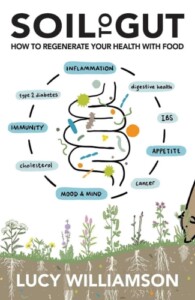
Dr. Lucy Williamson’s Soil to Gut: How to Regenerate Your Health with Food offers a scientific bridge between agricultural practices and human physiology. Dr. Williamson, a veterinarian turned public health nutritionist, posits that the modern "epidemic of hidden hunger"—where individuals remain calorically satiated but nutritionally depleted—is a direct consequence of soil degradation.

Current agricultural data suggests that intensive monocropping and reliance on synthetic chemical inputs have led to a measurable decline in the nutrient density of crops over the last 50 years. Dr. Williamson’s work serves as an evidence-based manual for reversing this trend, arguing that by restoring soil ecosystems, we inherently improve the nutrient cycle that sustains human health. Her approach emphasizes the gut microbiome as the primary interface through which food interacts with our long-term wellness, urging a transition away from hyper-processed, market-driven diets toward a model of regenerative consumption.
The Environmental Toll of Industrialized Agriculture
In Eat the Planet Well: How to Fix Our Toxic Food System – One Meal at a Time, renowned environmentalist David Goulson pivots from his seminal work on insect decline to address the systemic toxicity of global food production. Goulson provides a damning analysis of the industrial model, detailing how pesticide reliance and the degradation of biodiversity are not merely environmental concerns, but direct threats to global food security.
Goulson’s analysis includes a chronological mapping of the industrialization of food, noting that the rapid rise of ultra-processed food consumption in the UK and US has correlated with a surge in non-communicable diseases. He argues that the "toxic" nature of the system is twofold: it harms the human consumer through poor nutrition and synthetic additives, and it simultaneously destroys the natural capital—pollinators, soil health, and water quality—required for future harvests. His work serves as an essential call to action for policy shifts toward organic, nature-positive farming.
Gender, Agency, and the Rebuilding of Food Systems
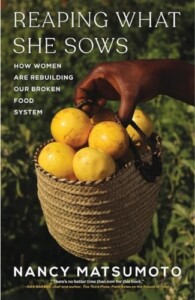
While much of the literature on food systems focuses on policy, Reaping What She Sows by Nancy Matsumoto highlights the essential, often marginalized role of women in agricultural reform. Matsumoto documents how, in the face of "Big Food" oligarchies and late-stage capitalism, women have emerged as the primary architects of alternative, localized food networks.
The book provides a compelling sociological analysis of how systemic exclusion from male-dominated agricultural institutions has driven women to develop resilient, cooperative, and highly innovative food solutions. From racial justice initiatives in agriculture to the development of vertical cooperatives, Matsumoto’s research underscores that the transformation of the food system is already underway, led by grassroots organizations that prioritize social equity alongside ecological sustainability. Her narrative serves as a reminder that consumer choice, when directed toward these ethical supply chains, acts as a primary catalyst for systemic change.
Adaptive Agriculture in a Changing Climate
The environmental reality of the mid-2020s—characterized by record-breaking heatwaves and drought—has necessitated a rethink of traditional gardening. Harry Holding’s Eat Your Garden: Edimentals as a Beautiful, Low-Effort Way to Grow Food addresses the need for climate-resilient horticulture.
Holding introduces the concept of "edimentals"—plants that serve both ornamental and nutritional functions. This approach is rooted in the principles of permaculture, focusing on perennial crops that require less water and soil disturbance than traditional annual vegetables. By integrating edible species into standard landscaping, Holding argues that homeowners can improve local biodiversity while reducing the carbon footprint associated with commercial food distribution. Data from recent climate studies supports this shift; perennial root systems are significantly more effective at carbon sequestration and moisture retention than the shallow root systems of many common annual crops.
The Ethics of Institutional Nutrition
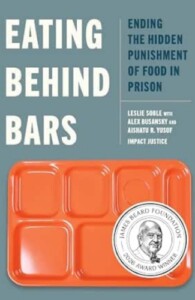
A sobering, award-winning investigation, Eating Behind Bars: Ending the Hidden Punishment of Food in Prison, exposes the severe systemic failures in the American penal system’s food distribution. Authors Leslie Soble, Alex Busansky, and Aishatu R. Yusuf document a system that frequently relies on substandard, nutritionally void, and unsafe food as a means of control.
The investigation, which draws on testimony from incarcerated individuals, prison staff, and public health officials, highlights the irony of prison farms that produce high-quality food for the mass market while denying the same to those working the land. The book serves as a policy blueprint for change, showcasing successful pilot programs—such as the "Chefs in Prisons" initiative in Maine—where the integration of fresh, locally sourced food has been shown to reduce recidivism and improve the mental health of both staff and residents. The authors argue that food should be treated as a fundamental human right, even within the confines of the justice system.
Terroir, Microbes, and Traditional Knowledge
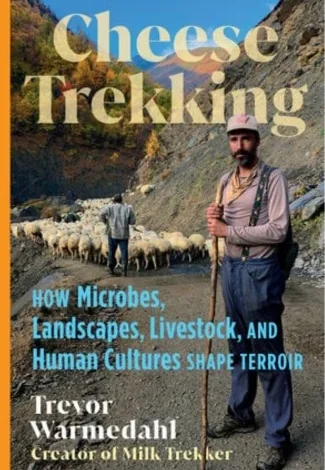
Trevor Wamedahl’s Cheese Trekking offers an anthropological and biological look at "terroir"—the environmental and cultural factors that shape the flavor and quality of food. By examining artisanal cheesemaking traditions from the Mongolian steppe to the Italian Mediterranean, Wamedahl illustrates the "four layers of terroir": livestock genetics, location-based environmental factors, microbial communities, and human cultural knowledge.
The book is a critique of the modern tendency toward standardization. Wamedahl argues that the use of packaged starter cultures and mass-production techniques strips food of its unique identity and nutritional complexity. By documenting traditional methods that rely on wild microbial ecosystems, he provides a scientific argument for preserving small-scale, heritage production methods. For the reader, this provides a clearer understanding of why supporting small-scale producers is essential for maintaining global food heritage.
Historical Context and the Future of Food Policy
The history of food is also a history of social control and class disparity. In First Helpings: A History of Children and Food, Deborah Albon and Amy Palmer provide a rigorous academic analysis of how British society has fed its youngest members from the medieval period to the present. Their work highlights the persistent struggle over "the right way" to feed a child, covering issues ranging from breastfeeding debates to the state’s responsibility in providing school meals.

This historical lens is vital for understanding contemporary debates regarding food poverty. By linking the Victorian history of street-selling children to modern UK food bank usage, Albon and Palmer underscore that hunger is rarely an accident; it is a political choice. This analysis is bolstered by recent policy critiques, such as Honor May Eldridge’s The Future of Food Policy in the UK, which calls for an urgent integration of food security and food sovereignty. Eldridge argues that in an era of political instability and climate change, food policy must be future-proofed by prioritizing resilience over short-term economic efficiency.
Imagining the Future: Radical Optimism
Perhaps the most essential contribution to this year’s reading list is Rob Hopkins’ How to Fall in Love with the Future. In a landscape of climate anxiety, Hopkins offers a toolkit for "radical imagination." He argues that the current narrative of environmental doom is not only depressing but paralyzing. By using the mental exercise of "time travel," he encourages readers to envision a world where current crises have been resolved through collective action.
Hopkins provides real-world examples of this future already in practice: the school systems in France that procure 80% of their food from local organic gardens, and the car-free urban planning seen in districts like Vauban, Germany. His work emphasizes that while the climate crisis requires urgent, systemic change, it also requires a shift in human perception. We must be able to visualize a better world to build it.
Broader Implications and Moving Forward
The consensus across these diverse works is clear: the current trajectory of global food systems is unsustainable. Whether the issue is the chemical depletion of soil, the social inequity of prison food, or the loss of agricultural biodiversity, the solution requires a move toward decentralized, regenerative, and highly local systems.
As these authors demonstrate, the power to initiate this shift resides in the hands of producers, policymakers, and consumers alike. The coming year will likely see these issues move from the fringes of environmental discourse to the center of global political debate. For those looking to engage with this transition, these texts provide the necessary intellectual foundation to advocate for a food system that is truly restorative, equitable, and capable of nourishing the world for generations to come.