The Legal and Economic Trap: How Restrictive Grocery Covenants Fuel Food Deserts and Stifle Community Development

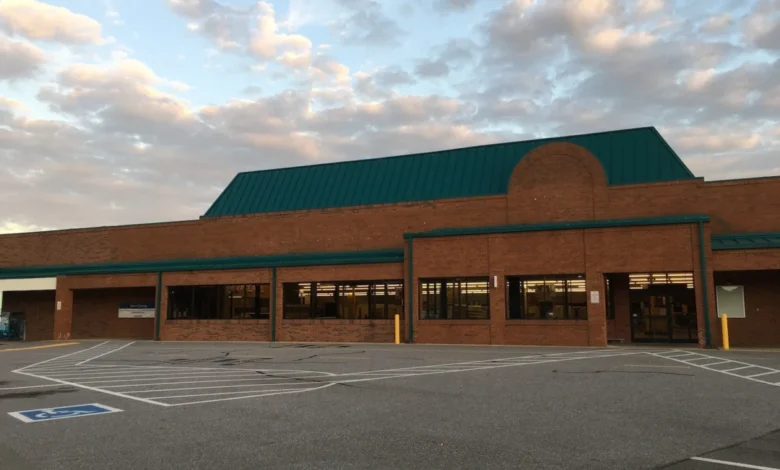
The architecture of modern American cities is often shaped by unseen legal instruments that dictate daily survival, most notably within low-income neighborhoods and marginalized communities. While public discourse surrounding food deserts frequently focuses on transportation barriers, income inequality, and the literal distance to the nearest fresh produce, a more insidious and entirely legal mechanism operates quietly in the background: the restrictive covenant. Buried deep within commercial real estate leases and property deeds, these legal clauses are routinely deployed by major supermarket chains to block competitors, manipulate local real estate markets, and insulate their profit margins at the direct expense of public health and economic vitality.
The Origin of the Problem: A Student’s Journey in New Haven
The human impact of this corporate strategy became acutely apparent to Karissa Kang, a first-year law student at Yale University who arrived on campus with a penchant for home cooking and no personal vehicle. Hailing from Atlanta—a metropolis saturated with diverse shopping options like Publix and Kroger—Kang was immediately struck by the glaring lack of options in New Haven, Connecticut. Aside from a single Stop & Shop located roughly half a mile from the university campus, her neighborhood lacked full-service grocery choices.
More perplexing to Kang was a distinct demographic divide: her fellow law students consistently bypassed the neighborhood Stop & Shop entirely, driving out of town to shop at a Trader Joe’s instead. This daily observation prompted a foundational question: Why did this sector of the city rely on a single national grocery chain?
To answer this, Kang began investigating the broader structural dynamics of the American grocery industry. What she uncovered was a complex web of anti-competitive practices, chief among them being restrictive covenants. These provisions, embedded in property deeds and lease agreements, dictate permissible and prohibited uses of a given parcel of land, sometimes binding the property indefinitely. By tying the hands of future landowners and tenants, large chains ensure that once they invest in a brick-and-mortar storefront spanning thousands of square feet, no competing supermarket can easily rise from the ashes to challenge their market share.
Socioeconomic Realities and Food Insecurity in Urban Centers
New Haven’s grocery landscape mirrors broader nationwide disparities. The city faces a non-Yale poverty rate hovering near 26 percent, while its food insecurity rate stands at twice the national average. Extensive public health research consistently demonstrates a direct correlation between physical access to grocery stores—particularly in Black, Indigenous, and People of Color (BIPOC) communities—and nutritional outcomes. In New Haven, the Black population experiences a poverty rate exceeding 27 percent, and approximately one in three residents in low-income zones grapples with food insecurity.
When major grocery chains exploit legal loopholes to restrict competition, they exacerbate these already precarious socioeconomic conditions. The mechanism typically functions in one of two ways. First, when a grocery chain chooses to abandon a location—often relocating to a more profitable suburban or affluent district—it may sublease the property under strict conditions. The departing chain can legally bar any incoming tenant from operating a grocery store, bodega, farm stand, or any other food-providing enterprise within that space.
A prominent historical example of this occurred in 2012 in Stonington, Connecticut, where Stop & Shop—a subsidiary of the Dutch multinational conglomerate Ahold Delhaize—refused to sublease a vacant storefront as a food retailer following a relocation. While the company did not officially comment on the practice, such maneuvers effectively trap neighborhoods in prolonged states of restricted food access.

Land Banking and the Strategic Suppression of Competition
Beyond lease restrictions, major grocery corporations frequently engage in strategic land acquisition, colloquially known as land banking, to preemptively block rivals. By purchasing surrounding parcels of land capable of supporting competing supermarkets, a dominant chain can effectively lock out market entrants as long as it retains ownership. Even if the corporation eventually decides to offload the property, it frequently appends a deed restriction explicitly forbidding the buyer from utilizing the land for any food-related retail, including specialty butcher shops, fish markets, fruit stands, or wholesale clubs.
A clear illustration of this tactic unfolded on Cape Cod, where Stop & Shop acquired an 11-acre parcel in Eastham, Massachusetts, for $1.3 million. The purchase was allegedly executed to prevent a competing supermarket from establishing a footprint nearby. The company subsequently sold the land back to the town for $1.6 million, encumbered by a rigid deed restriction. As reported by local media outlet The Provincetown Independent, the clause barred the community from utilizing any portion of the property for a food supermarket, superstore, warehouse store, convenience store, or any commercial activity involving the sale of food or food products for off-premises consumption.
In other instances, corporations choose to let acquired land sit entirely vacant rather than sell it. For a decade in Greenfield, Massachusetts, Stop & Shop paid a local realtor specifically to prevent the development of a property that could have potentially housed a competing supermarket. Laurie Beyranevand, director of the Center for Agriculture and Food Systems at Vermont Law School, notes that vacant storefronts and sprawling, unused parking lots not only diminish surrounding property values and elevate crime risks, but also rob communities of land that could otherwise serve vital public functions, such as healthcare clinics or senior centers.
The Antitrust Dilemma and Federal Inaction
For decades, consumer advocates and legal scholars have argued that restrictive covenants constitute a violation of federal antitrust laws. However, the legal defense mounted by corporate grocers has largely found favor in the courts. In 2010, a Walmart corporate representative articulated the industry’s stance to The Sheboygan Press, stating, "We welcome competition in the marketplace, but what we can’t be doing is providing infrastructure for our competitors in the same market."
Stop & Shop is far from alone in utilizing these provisions. Industry giants including Albertsons, its subsidiary Safeway, and Walmart—the largest grocer in the United States—frequently employ these tactics. According to a comprehensive report by the Institute for Local Self-Reliance (ILSR), U.S. consumers spend approximately 25 percent of their total grocery budgets at Walmart, a statistic the report’s authors cite as evidence of widespread corporate antitrust enforcement failure.
Despite the clear anti-competitive nature of restrictive covenants, federal regulatory bodies like the Federal Trade Commission (FTC) have historically viewed retail grocery consolidation as a secondary priority. Karissa Kang argues that federal antitrust legislation offers the most straightforward remedy, characterizing the issue as fundamentally black and white due to the explicit intent of these covenants: blocking market rivals.
Some legal experts suggest that if the FTC were compelled to act, it might invoke the Robinson-Patman Act, a rarely enforced piece of New Deal-era legislation designed to protect small and independent businesses from discriminatory pricing and predatory practices by dominant corporate entities.
Municipal Responses and the Limitations of Local Ordinances
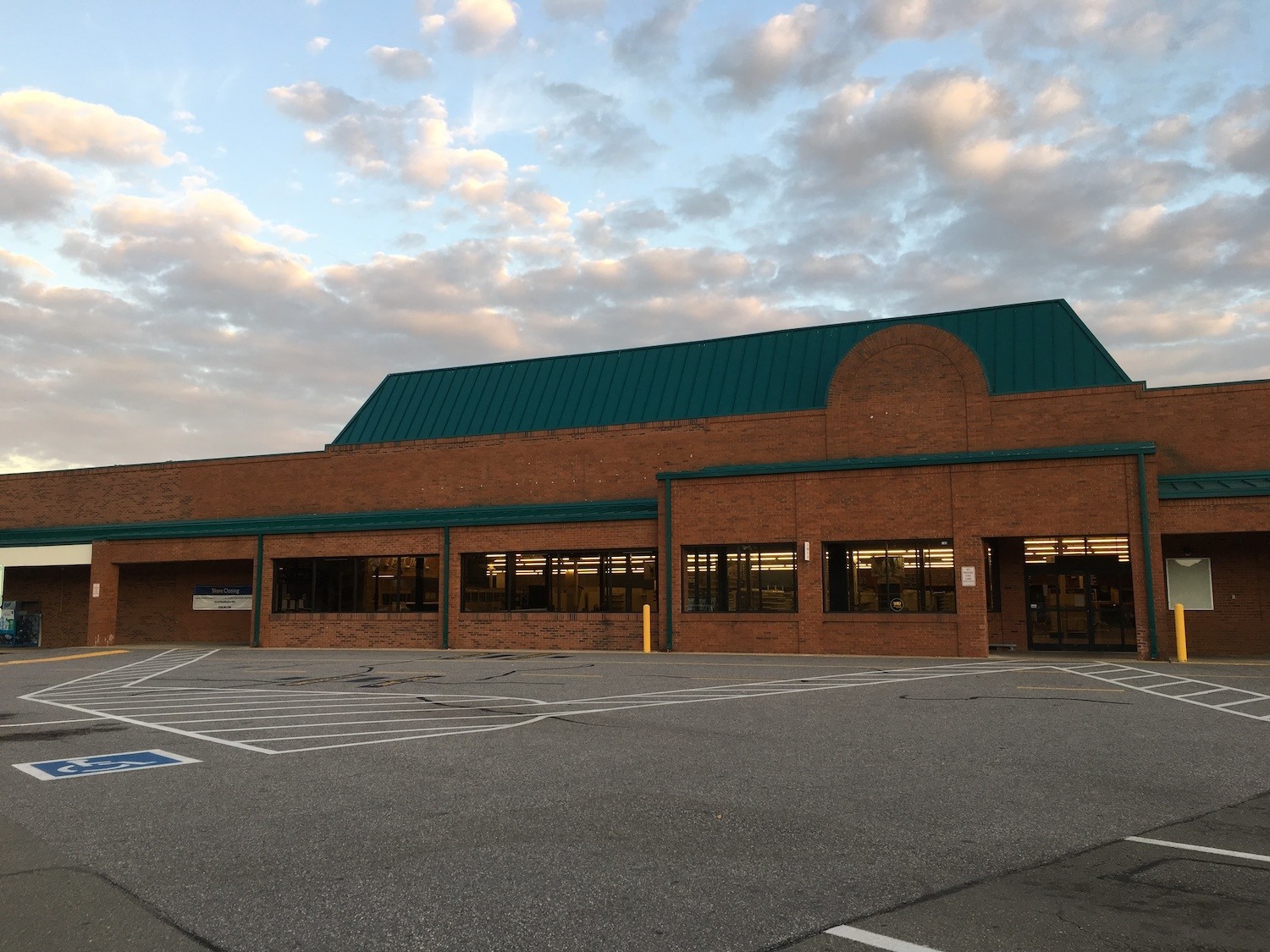
In the absence of robust federal oversight, a handful of municipalities have taken matters into their own hands. In 2018, Washington, D.C., made national headlines by passing legislation explicitly prohibiting restrictive covenants in commercial leases.
Nevertheless, legal analysts point out significant limitations to municipal-level interventions. Local ordinances are inherently piecemeal, creating a fragmented patchwork of regulations across state lines. Furthermore, municipal laws cannot be applied retroactively to existing leases and deeds, meaning that thousands of legacy covenants remain legally binding. Additionally, communities typically remain unaware that a restrictive covenant exists until a grocery store departs and attempts to block subsequent tenants fail.
To counteract these systemic vulnerabilities, experts advocate for proactive zoning laws and comprehensive land-use regulations. Vermont’s longstanding Act 250 serves as a potential model, requiring large-scale commercial developments to undergo rigorous regulatory review before securing approval. Such frameworks can theoretically prevent grocery chains from hoarding land parcels and sitting on vacant properties. Other proposed policy solutions include empowering local governments to mandate adaptive reuse plans before a supermarket is permitted to abandon a facility, or authorizing municipal entities to condemn and repurpose abandoned retail spaces.
The Broader Economic Spiral: From Mom-and-Pop Shops to Corporate Dependency
The negative impacts of dominant supermarket chains extend far beyond physical food access and property vacancies. When a major chain enters a market, its immense purchasing power allows it to undercut local, independent grocers, systematically driving them out of business. Once these small-scale vendors are displaced, the likelihood of their return is virtually nonexistent.
This dynamic initiates a downward economic spiral. The incoming corporate supermarket typically employs community members in low-wage positions, effectively forcing local residents to shop where they work. If the corporation subsequently decides to shutter the location due to shifting profit margins, both the local food source and the community’s primary employment opportunities vanish simultaneously. When compounded by a restrictive covenant that bars future grocers from occupying the space, the economic vitality of the neighborhood is thoroughly compromised.
Looking Ahead: The Fragility of Urban Food Networks
In neighborhoods like Central New Haven—which endured a complete absence of national grocery chains for an entire year prior to Stop & Shop’s arrival in 2011—the presence of a supermarket is often celebrated as a major civic victory. Yet, the underlying fragility of such retail arrangements remains a profound source of anxiety for residents and policy advocates alike.
While students like Karissa Kang possess the mobility to travel beyond their immediate neighborhoods for basic necessities, vulnerable populations—the elderly, individuals with disabilities, and those without reliable transportation—are left entirely exposed to the corporate decisions of distant retail conglomerates. As the legal debate surrounding restrictive covenants slowly gains traction in academic and policy circles, the fundamental question facing American cities remains unresolved: When basic nutritional access is subordinated to corporate real estate strategies, who ultimately bears the cost?