The Global Shrimp Industry Faces a New Frontier of Zoonotic Risk as Emerging Eye Disease Linked to Aquaculture Raises Public Health Alarms

In April 2026, the iconic American seafood chain Red Lobster launched a strategic trial revival of its famous "Endless Shrimp" promotion. The move was a direct response to what corporate leadership described as "endless guest requests," aimed at revitalizing a brand that had struggled with waning foot traffic and significant financial instability. While the promotion saw only modest success in its 2026 iteration, it served as a stark reminder of the American consumer’s insatiable appetite for crustaceans—an appetite that had previously led the company to file for bankruptcy in 2024 after the same all-you-can-eat deal resulted in staggering operational losses. However, beneath the surface of this marketing ploy lies a burgeoning public health crisis. As Americans consume a record 1.5 billion pounds of shrimp annually, a new scientific discovery has linked the intensive practices of global aquaculture to a novel zoonotic virus capable of causing permanent vision loss in humans.
The Economic and Ecological Cost of the Shrimp Craze
The United States has seen a dramatic shift in dietary preferences over the last decade, with seafood—and shrimp in particular—becoming the most consumed marine protein in the country. To meet this demand, the industry has become heavily reliant on international markets. Approximately 75 to 90 percent of all seafood consumed in the U.S. is imported, with the vast majority of shrimp originating from industrial-scale farms in India, Ecuador, Indonesia, Vietnam, and Thailand.
This global supply chain is built upon a foundation of intensive aquaculture that environmentalists have long criticized. To create space for shrimp ponds, massive swaths of coastal mangrove forests are frequently razed. These ecosystems are vital for coastal protection and carbon sequestration; their destruction not only destabilizes local environments but also leads to significant pollution. Shrimp farms often operate as "factory farms in the water," where thousands of crustaceans are packed into muddy, stagnant ponds. To prevent mass die-offs in these cramped conditions, operators frequently utilize high doses of antibiotics and chemicals, contributing to the global rise of antibiotic-resistant "superbugs" and contaminating local groundwater and river systems.
A New Zoonotic Milestone: The CMNV Virus
While the environmental impacts of shrimp farming have been documented for years, March 2026 brought a new and more direct threat to human health. A group of international researchers published a landmark study revealing that a common aquatic pathogen, Covert Mortality Nodavirus (CMNV), has successfully made the jump from shrimp to humans. This spillover event marks an unfortunate milestone in medical history: it is the first recorded instance of a virus originating in farmed aquatic animals directly causing disease in the human population.
CMNV is not a new virus in the marine world. According to Mansour Samadpour, a prominent microbiologist and co-founder of the Institute for Environmental Health, the virus has been endemic in wild krill populations for decades. It is known to infect a wide array of aquatic species, including finfish, crabs, and mollusks. However, the conditions of modern aquaculture—specifically the crowding of genetically homogenous animals in waste-filled environments—have allowed the virus to proliferate and mutate.
The human disease resulting from CMNV infection is known as Persistent Ocular Hypertension Viral Anterior Uveitis (POH-VAU). It is characterized as a chronic inflammatory condition of the eye that leads to dangerously high intraocular pressure. If left untreated, or in severe cases, the disease can cause irreversible damage to the optic nerve, resulting in permanent vision impairment or total blindness.
Chronology of the Crisis and the Red Lobster Connection
The timeline of the current concern is a confluence of corporate strategy and emerging epidemiology:
- May 2024: Red Lobster files for Chapter 11 bankruptcy. The company cites several factors, including a $11 million loss in a single quarter attributed to the "Ultimate Endless Shrimp" promotion becoming a permanent menu item, which overwhelmed the chain’s margins.
- 2024–2025: Post-bankruptcy restructuring focuses on streamlining the supply chain, yet the reliance on imported farmed shrimp remains high due to cost constraints.
- March 2026: Research is published showing that over 28 percent of farmed shrimp samples from certain major exporting regions tested positive for CMNV. The study confirms the link between the virus and POH-VAU in humans, particularly among workers handling raw shrimp.
- April 2026: Red Lobster reintroduces Endless Shrimp as a limited-time trial. While the company monitors guest satisfaction, public health experts begin raising the alarm about the safety of the broader shrimp supply chain.
- Present Day: Public health agencies are under increasing pressure to update testing protocols for imported seafood as the prevalence of POH-VAU begins to be tracked globally.
The Mechanics of Transmission and Human Risk
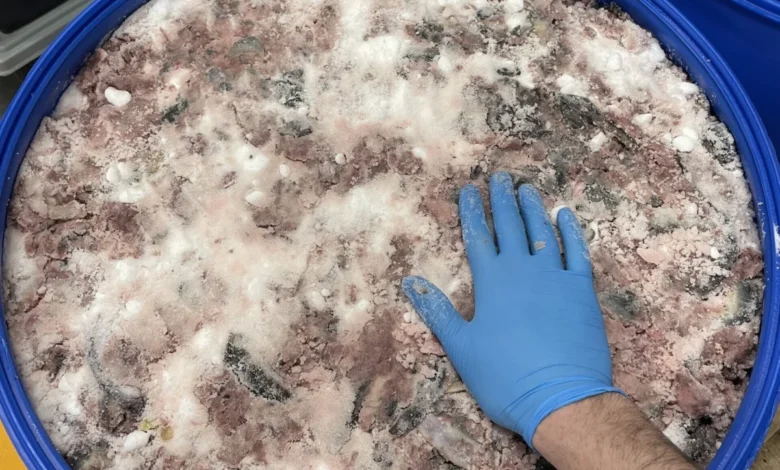
POH-VAU is currently classified as an emerging foodborne infectious disease. While the most significant risk appears to be for workers in the shrimp processing industry who handle raw products daily, the risk to home consumers and restaurant patrons cannot be ignored. The virus is highly resilient; however, it is susceptible to heat. Experts emphasize that while the virus can be killed through thorough cooking, the handling of raw shrimp in domestic kitchens remains a primary point of concern.
The disease is particularly insidious because it is chronic. Unlike a typical bacterial infection that the immune system might clear after a period of illness, POH-VAU persists. Patients have reported that the symptoms recur periodically, even after treatment with specialized antiviral medications. To date, most confirmed cases have been localized to regions with high concentrations of shrimp processing facilities, such as China. However, microbiologists warn that the global nature of the seafood trade means the virus is likely already present in other major exporting nations, potentially going undetected by less robust public health surveillance systems.
Regulatory Gaps and the Complexity of the Supply Chain
The emergence of POH-VAU has highlighted significant vulnerabilities in the United States’ food safety infrastructure. The Food and Drug Administration (FDA) is tasked with overseeing the safety of imported foods, but the scale of the task is overwhelming. Current data suggests that only about 2.2 percent of all imported food products are physically tested for pathogens at American ports.
Andrew deCoriolis, executive director of the nonprofit Farm Forward, points out that the opacity of the seafood supply chain makes targeted regulation nearly impossible. Shrimp is traded as a global commodity, often changing hands multiple times before reaching a dinner plate. A batch of shrimp might be farmed in Vietnam, shipped to Thailand for processing and packaging, and then exported to the U.S. labeled as a product of Thailand. This "laundering" of origin makes it difficult for regulators to implement effective bans or "green lists" for specific farms or regions.
The FDA has stated that it considers the risk to U.S. consumers to be "extremely low" and maintains that it uses various tools, including import alerts, to monitor safety. One such alert currently restricts aquacultured shrimp from China and Hong Kong unless the firms are on a pre-vetted list. Yet, critics argue that these measures are insufficient to address a virus like CMNV, which is not currently part of routine screening protocols.
A "One Health" Approach to Future Pandemics
Public health experts like Neil Vora, a former CDC epidemic intelligence officer, argue that the rise of POH-VAU is a symptom of a larger, systemic failure. He advocates for a "One Health" approach—a strategy that recognizes that the health of humans is inextricably linked to the health of animals and the environment.
"We are seeing more and more outbreaks of new infectious diseases in new circumstances," Vora notes. He points to the intensive confinement of animals—whether they are chickens in a poultry barn or shrimp in an aquaculture pond—as the primary driver of these zoonotic leaps. When thousands of animals are kept in unsanitary, high-stress conditions, it creates a "viral stew" where pathogens can mutate and eventually infect the humans who handle or consume them.
The challenge is compounded by declining morale and funding at the Centers for Disease Control and Prevention (CDC). Vora and other advocates warn that the United States is becoming less prepared to detect and respond to emerging threats. "Surveillance is the backbone of public health," Vora says. "When it’s functioning well, you don’t hear about it. But when it fails, the price is paid in human lives."
Implications for the Seafood Industry and Consumers
The revelation of the CMNV threat may eventually force a reckoning within the global aquaculture industry. Laura Lee Cascada, founder of the Aquaculture Accountability Project, suggests that aquaculture has been unfairly marketed as a "clean" and "sustainable" alternative to land-based factory farming. In reality, she argues, it often duplicates the worst aspects of industrial agriculture in an aquatic environment.
For the seafood industry, the financial stakes are high. A widespread outbreak or a shift in consumer perception regarding the safety of shrimp could have devastating economic consequences for major retailers and restaurant chains like Red Lobster. As the company attempts to recover from its 2024 bankruptcy, the shadow of a potential health crisis adds a new layer of complexity to its turnaround strategy.
For the individual consumer, the advice from health experts is clear: caution is paramount. While the risk of contracting POH-VAU from a cooked shrimp cocktail at a restaurant remains statistically low, the handling of raw seafood requires stricter hygiene. Experts recommend:
- Thorough Cooking: Ensuring shrimp reaches an internal temperature that kills viral pathogens.
- Protective Gear: Using gloves when handling raw shrimp, especially for those with open wounds on their hands.
- Cross-Contamination Prevention: Keeping raw seafood and its juices away from other foods and surfaces.
- Informed Sourcing: Seeking out seafood from suppliers with transparent and sustainable farming practices, though this remains difficult in the current market.
As the global population continues to grow and the demand for protein increases, the story of the Endless Shrimp and the CMNV virus serves as a cautionary tale. It underscores the urgent need for a shift in how the world produces food, moving away from high-density industrial systems toward more sustainable, transparent, and health-conscious methods. Without such a shift, the "endless" demand for cheap seafood may come at a price that far exceeds the cost of the meal.