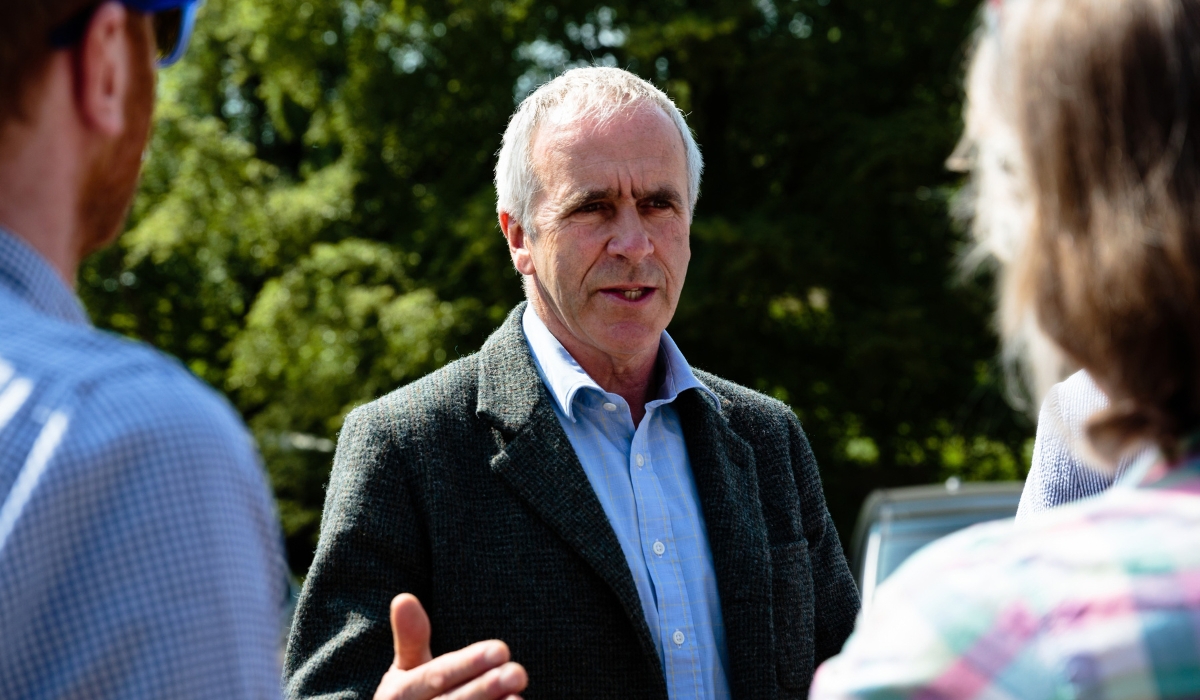
The global movement toward sustainable agriculture has reached a critical inflection point, marked by a series of high-level engagements and grassroots mobilizations over the past thirty days. Patrick Holden, CEO and founder of the Sustainable Food Trust (SFT), has spent the last month traversing international borders to bridge the gap between traditional farming wisdom and modern corporate accountability. From the coastal classrooms of Ireland to the urban hubs of New York and the historic piazzas of Turin, these events signal an accelerating transition in how food is produced, tracked, and perceived by both consumers and industry giants.
A Chronology of Engagement: From Ballymaloe to Turin
The month began in East Cork, Ireland, at the Ballymaloe Cookery School. Holden was invited to address the inaugural cohort of the school’s six-week Food and Farming course. The demographic shift observed at the event—a student body primarily in their 20s and 30s—underscores a growing trend of young professionals pivoting toward agricultural careers. This influx of human capital into the sector is supported by the school’s reported long waiting lists, suggesting that the "back to the land" movement is transitioning from a niche lifestyle choice into a robust vocational path.
Following the Irish engagement, Holden traveled to Scotland for a summit co-hosted by The King’s Foundation, the SFT, and the Circular Bioeconomy Alliance (CBA). The event, centered on "Harmony in Food and Farming," attracted a diverse array of stakeholders, including the UK’s Secretary of State for Environment, Food and Rural Affairs, Angela Eagle, and health researcher Chris van Tulleken, author of Ultra-Processed People. The inclusion of both government officials and public health advocates suggests that the policy conversation is increasingly linking agricultural practices to national health outcomes.
The international tour continued to upstate New York for the Real Organic Conference. Here, the discourse shifted toward the technical and philosophical boundaries of the industry. Sharing a panel with organic horticulturalist Eliot Coleman, the discussion focused on the tension between the established organic movement and the rapidly emerging "regenerative" agricultural sector.
The final leg of the month’s travel took place in Turin, Italy, for the biennial Terra Madre Salone del Gusto. The event, which serves as a global nexus for the Slow Food movement, saw a massive turnout. The significance of the gathering was heightened by the passing of Slow Food founder Carlo Petrini earlier this year, an event that prompted a formal message of condolence from King Charles, underscoring the political and cultural weight of the sustainable farming movement.
The Regenerative Debate: Defining Sustainability
A central theme across these engagements has been the ambiguity surrounding the term "regenerative agriculture." While the term has gained traction among food retailers and multinational corporations, its practical definition remains inconsistently applied.
Industry analysis indicates that while many farms have begun adopting regenerative practices, there is a lack of standardization regarding the use of synthetic inputs. For instance, farms may adopt cover cropping or minimal tillage—key tenets of soil health—while simultaneously utilizing synthetic fertilizers or herbicides such as glyphosate. This discrepancy presents a transparency challenge for consumers.
The SFT argues that without a standardized measurement framework, "regenerative" risks becoming a label susceptible to greenwashing. The Global Farm Metric (GFM), a project spearheaded by the SFT, seeks to provide a universal language for measuring farm outcomes. By assessing metrics related to soil carbon sequestration, biodiversity, water quality, and social impact, the GFM aims to provide a verifiable baseline that would allow retailers and consumers to differentiate between superficial branding and substantive environmental improvement.
Corporate Shifts and the Beacon Farms Initiative
During New York Climate Week, the Sustainable Markets Initiative (SMI) provided a platform to discuss the SFT’s "Beacon Farms" project. The initiative, which highlights farms successfully implementing sustainable practices, serves as a proof-of-concept for the broader industry.
Following the success of approximately 50 Beacon Farms in the UK and the recent expansion into Ireland, plans are now underway to introduce the framework to the United States. This expansion is critical, as the US agricultural market remains one of the largest in the world. By partnering with organizations that share a focus on re-connecting consumers with food production, the SFT aims to scale the visibility of regenerative models, effectively moving them from the margins of agriculture to the mainstream of corporate supply chains.
Data and Policy Implications
The broader implications of these developments are significant. As food prices fluctuate and climate-related disruptions impact crop yields, the need for resilient farming systems is no longer merely an environmental concern but a matter of national food security.

Data from the Intergovernmental Panel on Climate Change (IPCC) suggests that agricultural systems are responsible for roughly one-quarter of global greenhouse gas emissions. However, the potential for these same systems to act as carbon sinks is substantial. The transition to regenerative and organic practices is supported by recent studies indicating that soils managed with high organic matter content are more resilient to extreme weather events, including both droughts and floods.
Furthermore, the involvement of senior representatives from major food retailers at the Scotland summit suggests that the "demand-pull" for sustainable products is increasing. Retailers are facing mounting pressure from shareholders and consumers to reduce Scope 3 emissions—the emissions occurring in their supply chains. Consequently, the push for regenerative farming is shifting from an ethical preference to a logistical and risk-management necessity.
The Path Forward
The convergence of farmers, policymakers, and corporate leaders at these global events indicates that the barriers to entry for sustainable farming are shifting. However, the transition remains fraught with challenges. The most immediate is the need for a unified definition of success.
If the industry can achieve a consensus on how to measure "sustainability"—as advocated by Holden and the GFM—it will provide the necessary infrastructure for markets to reward farmers for the ecosystem services they provide, such as water filtration, biodiversity preservation, and carbon storage.
As the SFT looks toward the next year, the expansion of the Beacon Farms project into the American market will be a key indicator of whether these European-led sustainability frameworks can be adapted to the massive scale of North American industrial agriculture. The enthusiasm observed at Terra Madre and the Real Organic Conference suggests that the intellectual and social foundation for this change is already in place. The task remaining is the operationalization of these concepts into a standard, transparent, and globally recognized system of agricultural production.
Ultimately, the events of the past month underscore that the global food system is at a turning point. Whether through the academic rigor of agricultural courses in Ireland or the international policy forums in New York, the message remains consistent: the future of farming depends on our ability to value nature as much as we value yield. For Patrick Holden and the Sustainable Food Trust, the focus for the coming months will be to ensure that this global momentum translates into tangible, measurable change on the ground.