Beyond the Checkout Aisles: How Independent Grocers and Community Markets Are Reshaping Local Food Economies


The political landscape across the United States has undergone a seismic shift, driven largely by voter frustration over the persistent cost-of-living crisis and
affordability concerns. Recent midterm elections signaled what political analysts are terming a "Blue Tsunami," characterized by dramatic electoral changes at local, state, and federal levels. At the center of this voter discontent is the steep price of daily essentials. Over the past year alone, food inflation has ticked upward by approximately 2.5 percent, straining household budgets across the country.
Compounding this financial pressure, at least 5 million low-income Americans have recently lost their eligibility for Supplemental Nutrition Assistance Program (SNAP) benefits. These federal funds are crucial for helping families defray the rising costs of groceries. As the safety net frays, traditional food banks and charitable pantries report historically high demand, struggling daily to keep their communities adequately fed.
While millions of consumers flounder under these economic pressures, the retail grocery sector remains heavily consolidated. A handful of corporate giants—including Walmart, Costco, Kroger, and Albertsons—control an overwhelmingly large slice of the market. These mega-corporations continue to reap enormous profits even as their customer base faces mounting financial precarity.
In response to this functional oligopoly, local and state governments are increasingly pushing back. Municipalities are exploring novel interventions, such as New York’s initiative to open five public grocery stores that subsidize essential items like milk, fresh produce, and meats. Meanwhile, state legislatures in places like Rhode Island and California have enacted bans on restrictive covenants—legal tools historically used by dominant supermarket chains to block competitors from opening in certain areas, thereby creating artificial food deserts.
Yet, within the broader discourse on food affordability and access, a critical question remains: What role do independent grocers play, and can they survive in an ecosystem dominated by retail behemoths?
The Promise and Peril of Independent Grocers
A recent whitepaper published by the community health nonprofit Fair Food Network (FFN) sought to address this exact question. Titled to examine the potential of independent stores to balance affordability, access, fairness, and local economic impact while maintaining financial viability, the report highlights the unique structural advantages and vulnerabilities of the indie model.
According to FFN’s research, independent grocery models show remarkable promise in supporting both local communities and regional farmers. However, they cannot survive on goodwill alone. They require a robust suite of supports from municipal governments, philanthropic funders, and federal programs to build resilient supply chains, keep operating costs manageable, and pay their employees living wages.
Even with institutional backing, independent retail remains a high-risk endeavor. A prime example is Boston’s wildly popular five-store chain, Daily Table, which fell victim to pandemic-era economic pressures and ultimately closed its doors in 2025.
Defining an "independent grocer" is inherently complex due to the vast spectrum of operations that fall under the umbrella. The category spans everything from traditional family-run bodegas and multi-store local mini-chains like Long Island’s King Kullen, to mission-driven nonprofits like New York City’s proposed public grocers, for-profit ethnic supermarkets, cooperatives, and large regional giants like Publix and H-E-B.
Despite their operational differences, the most successful independent grocers share a common philosophy. As FFN senior fellow Noah Fulmer notes, these businesses are fundamentally interested in giving the communities they operate within a greater voice and control over their food supply.
A New Movement in Food Access and Community Wealth
Fulmer points to a burgeoning movement among independent grocers designed to address not just raw affordability, but a broader dearth of access to culturally connected fresh produce and locally grown perishables within walking or short driving distance.
A prime model of this approach is the Hmong Village in St. Paul, Minnesota. Operating as a seven-day, 200-vendor indoor farmers market, Hmong Village has organically fostered an entire local food economy. It provides consumers with access to a wide variety of small, community-run businesses tailored directly to local needs.
This structure exemplifies what grocery industry analyst Erroll Schweitzer describes as "keeping income and value in the community." This localized retention of capital stands in stark contrast to discount giants like Aldi. Owned by international corporate entities, such chains often extract wealth from the neighborhoods they enter while offering lower wages and experiencing high employee turnover rates.
Similar grassroots innovations have emerged nationwide. In Kansas City, Balls Food Stores bypassed uncooperative major distributors by building its own warehouse, allowing local farmers to drop off produce directly for distribution across its 25-metro-area supermarket footprint.
Similarly, in Ann Arbor, Michigan, founders Kathy Sample and Bill Brinkerhoff launched Argus Farm Stop twelve years ago. Envisioned as a hybrid between a traditional farmers market and a brick-and-mortar grocery store, Argus explicitly eschews out-of-season imports like bananas and citrus in favor of 100 percent regional products sourced from more than 300 small, in-state farms and producers, operating year-round.
Overcoming Logistical Hurdles for Farmers and Consumers
Traditional farmers markets, while culturally vibrant, often fail to meet the day-to-day shopping needs of the average consumer. As agriculture reporter Sarah Mock has observed, regular working people simply do not have the time or inclination to piece together their weekly groceries across town on Saturday mornings through multiple separate transactions, dealing with unpredictable selections and premium prices, only to still require a trip to a conventional supermarket for household staples.
Models like Argus, Hmong Village, and Balls Food Stores directly mitigate these friction points. For Argus, the primary mission is economic viability for small-scale farmers. Producers sell directly to the store without middlemen, setting their own retail prices and retaining 70 percent of total sales.
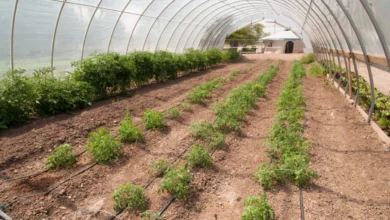
This direct-to-consumer infrastructure provides a vital lifeline during off-peak months. While Michigan farmers utilize hoop houses to grow crops year-round, conventional farmers markets typically shutter from January through May. For Argus, these historically dead months account for one-third of their annual produce sales, turning zero-revenue periods into reliable income streams for growers.
Nevertheless, founders Sample and Brinkerhoff are realistic about pricing. Selling food at its true cost of production naturally results in higher price tags than heavily subsidized or mass-produced goods found at corporate discounters like Walmart. To bridge this affordability gap for low-income shoppers, Argus partners with local social service agencies such as Jewish Family Services and Food Gatherers to distribute weekly produce boxes. They also offer targeted discounts funded by the Fair Food Network, accept federal SNAP benefits, and participate in matching programs like Double Up Food Bucks, which effectively cuts the cost of fresh produce in half for eligible participants.
Maintaining financial solvency as an independent operator requires creative diversification. Argus manages to pay starting wages above $17 an hour—alongside comprehensive medical, retirement, and paid time off benefits for full-time staff—by eliminating traditional wholesalers, leveraging nonprofit partnerships, and operating two adjoining cafes that serve as the primary revenue engine for the business.
Structural Reforms Needed to Support Independent Retailers
Industry experts argue that the survival of independent grocers on a macro scale requires structural policy interventions. Erroll Schweitzer emphasizes the urgent need for federal antitrust enforcement to prevent corporate giants from bullying suppliers into granting preferential pricing tiers that systematically box out smaller competitors. A comprehensive federal review of retail and wholesale supply partnerships is essential to ensure independents can access the same inventory and competitive rates as their mega-chain counterparts.
Beyond regulatory reform, independent grocers must increasingly band together into formal purchasing cooperatives to maximize their collective buying power. Established models already exist across various sectors, including the Independent Natural Food Retail Association, the National Co+op Grocers, and the National Grocers Association.
Organizations like the Fair Food Network continue to step in by offering collaborative networks, technical assistance, grants, and low-interest loans to prospective indie founders, helping them navigate complex operational hurdles such as staffing, energy costs, and supply chain logistics.
Ultimately, industry advocates emphasize that operating an independent grocery store is rarely a path to extreme wealth accumulation; rather, it is a mission driven by community dedication. With the right mix of municipal financing, protective antitrust regulations, and robust public-private partnerships, independent grocers can successfully anchor more stable, resilient, and equitable local food economies for the future.