The Ultimate Homemade Veggie Cream Cheese Recipe That Rivals Any New York Bagel Shop


As holiday gatherings and weekend family brunches approach, culinary hosts frequently encounter the logistical challenge of feeding large crowds efficiently and affordably. Particularly in the Northeast—where the traditional weekend bagel spread remains a staple of social gatherings—supplying an array of specialty spreads can quickly strain a grocery budget. Specialty cream cheeses purchased from local delis or specialty shops routinely command premium prices, often exceeding four to five dollars per small container. For households with a penchant for a thick, generous shmear, these costs accumulate rapidly. In response to these economic and gastronomic pressures, home cooks are increasingly turning to scratch-made alternatives that deliver artisan quality at a fraction of the commercial cost.
A newly popularized recipe developed by culinary creators offers a definitive solution to this common entertaining dilemma. By combining a carefully curated selection of fresh produce with high-grade commercial cream cheese, home cooks can replicate—and arguably surpass—the complex flavor profiles found at premier bagel establishments. The formulation avoids the common pitfalls of commercial iterations, which often rely on artificial flavorings or suffer from watery consistencies caused by poorly drained mix-ins. Instead, this method relies on precise culinary techniques to achieve a balance of refreshing crunch, savory depth, and vibrant color, proving that homemade alternatives can rival professional preparations.
Anatomy of an Artisan Schmear: Ingredient Selection and Flavor Balance
The success of any vegetable-infused cream cheese hinges entirely on the selection, preparation, and integration of its constituent produce. Commercial iterations frequently force consumers into a culinary compromise, requiring them to choose between the bright, herbaceous bite of a scallion spread or the garden-fresh crunch of a mixed vegetable schmear. This recipe resolves that dichotomy by integrating a multifaceted flavor matrix that incorporates carrots, celery, spinach, roasted red peppers, and scallions into a single cohesive base.
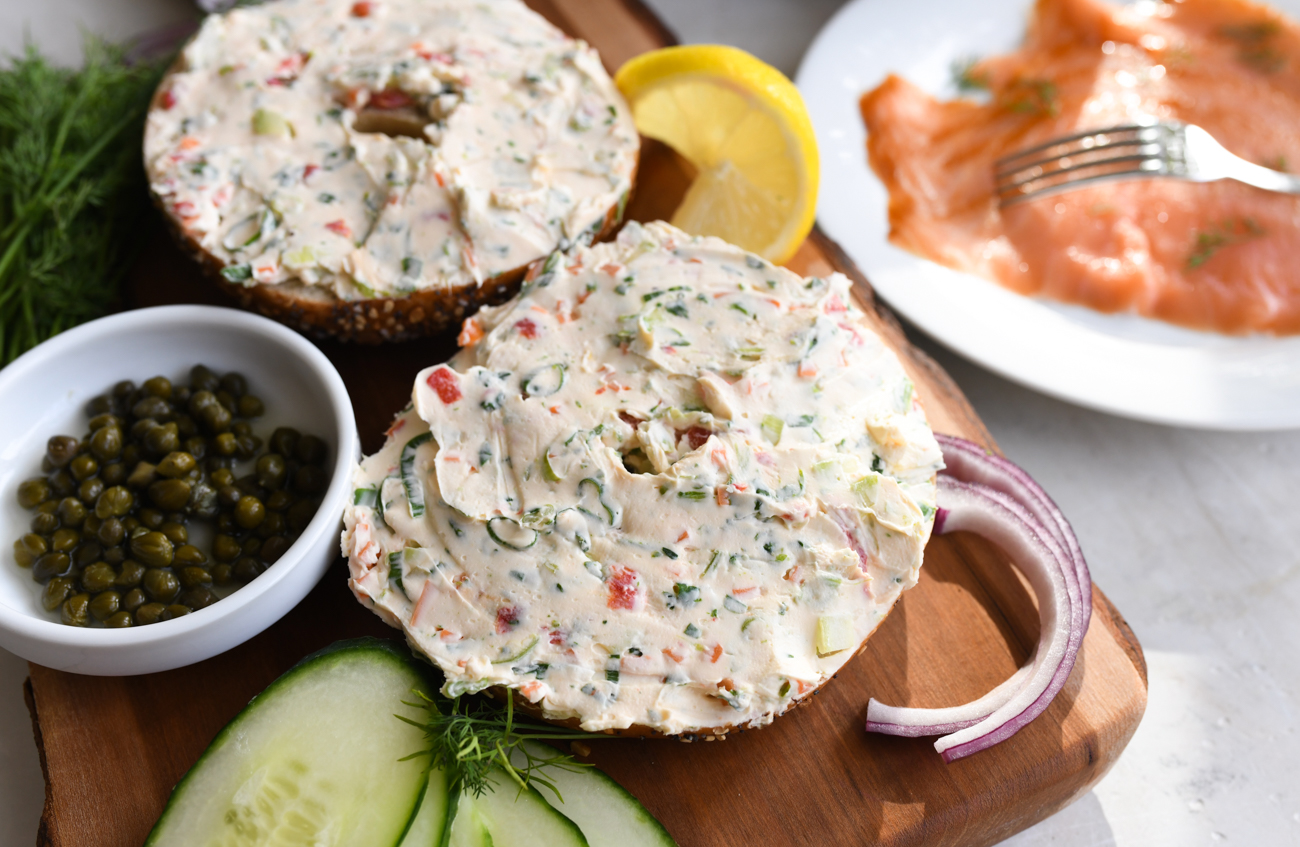
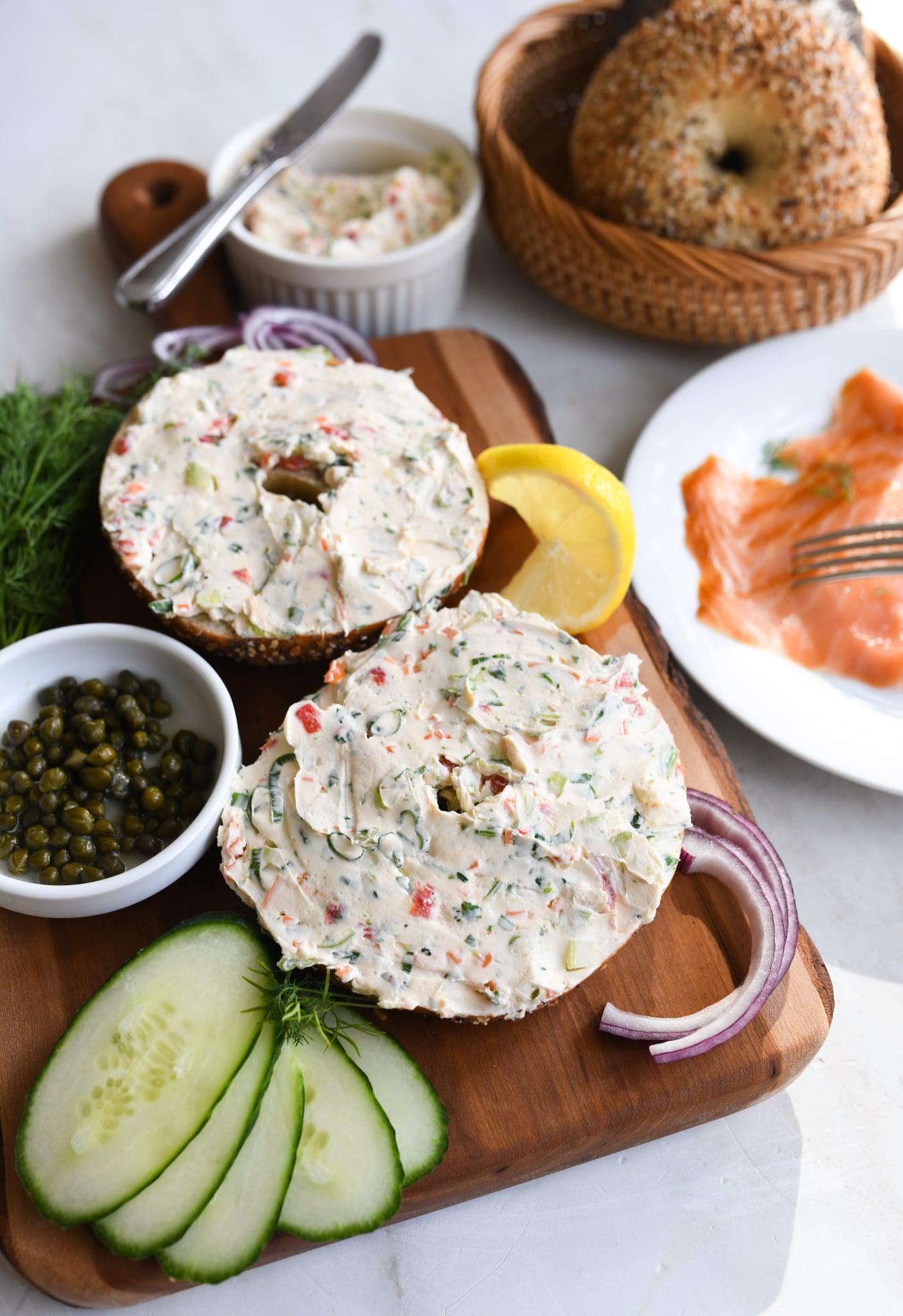
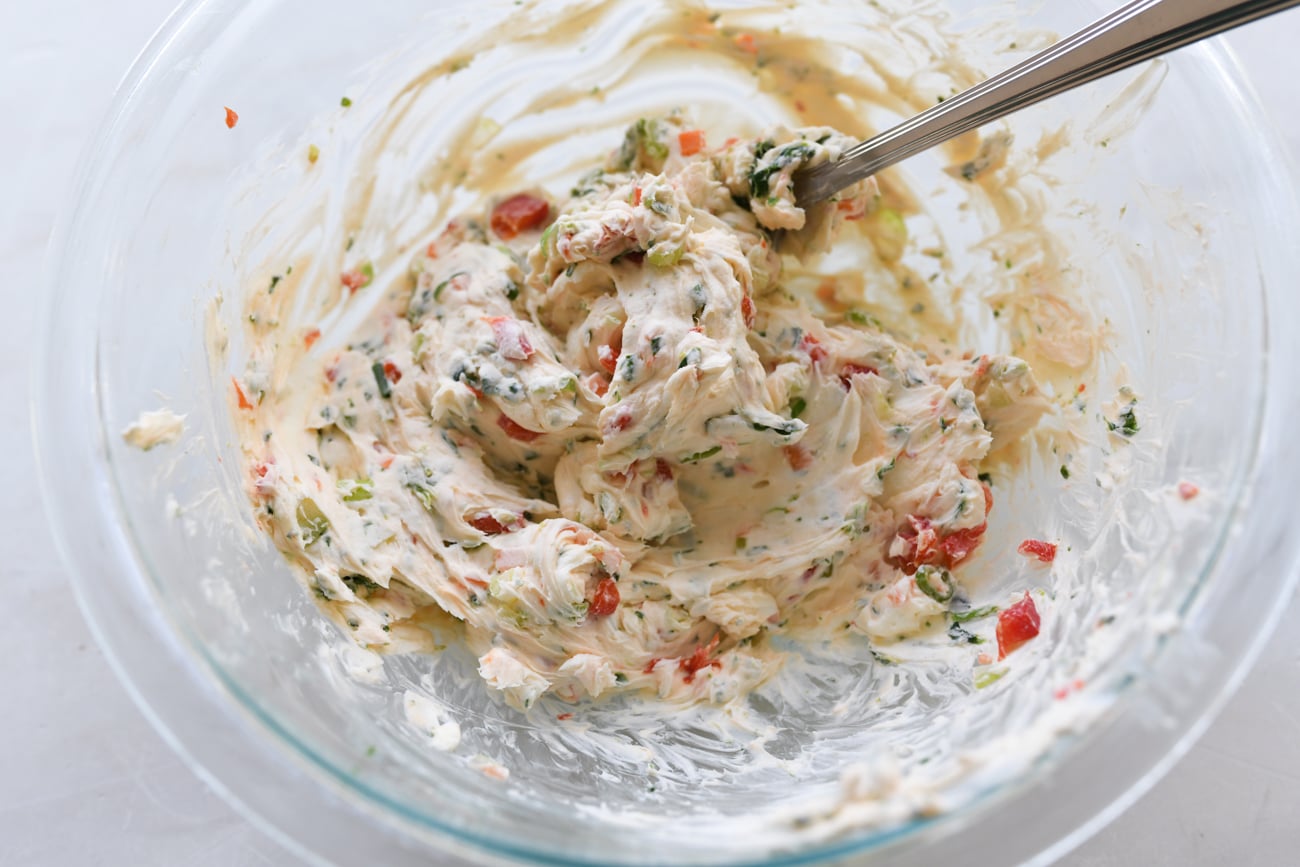
The flavor architecture begins with the foundational crunch of finely minced carrots and celery, which provide a clean, refreshing texture reminiscent of high-end bakery offerings. However, the true stroke of culinary brilliance in this formulation lies in the inclusion of roasted red bell peppers and spinach. While raw vegetables can introduce excessive moisture that destabilizes the emulsion of the cream cheese, well-drained jarred roasted red peppers impart a subtle, smoky sweetness and a vibrant visual contrast without compromising the structural integrity of the spread. Similarly, frozen spinach—once thoroughly thawed and wrung of excess liquid—adds earthy substance and nutritional value, mimicking the dense, satisfying mouthfeel of premium deli schmears.
To achieve the desired onion-forward bite without the sharp pungency of raw yellow or red onions, the recipe incorporates thinly sliced scallions. This multi-layered vegetable profile ensures that every bite delivers a complex progression of flavors: the initial herbaceous snap of the scallion, the mid-palate sweetness of the roasted pepper and carrot, and the rich, velvety finish of the dairy base.
Culinary Methodology: Technique Over Machinery
Achieving the authentic texture of a specialty bagel shop spread requires a deliberate departure from modern kitchen conveniences. While food processors and electric hand mixers offer speed, their high-rpm blades tend to pulverize delicate produce into an undesirable puree, releasing unwanted cellular water and imparting a dull, uniform discoloration to the cream cheese.
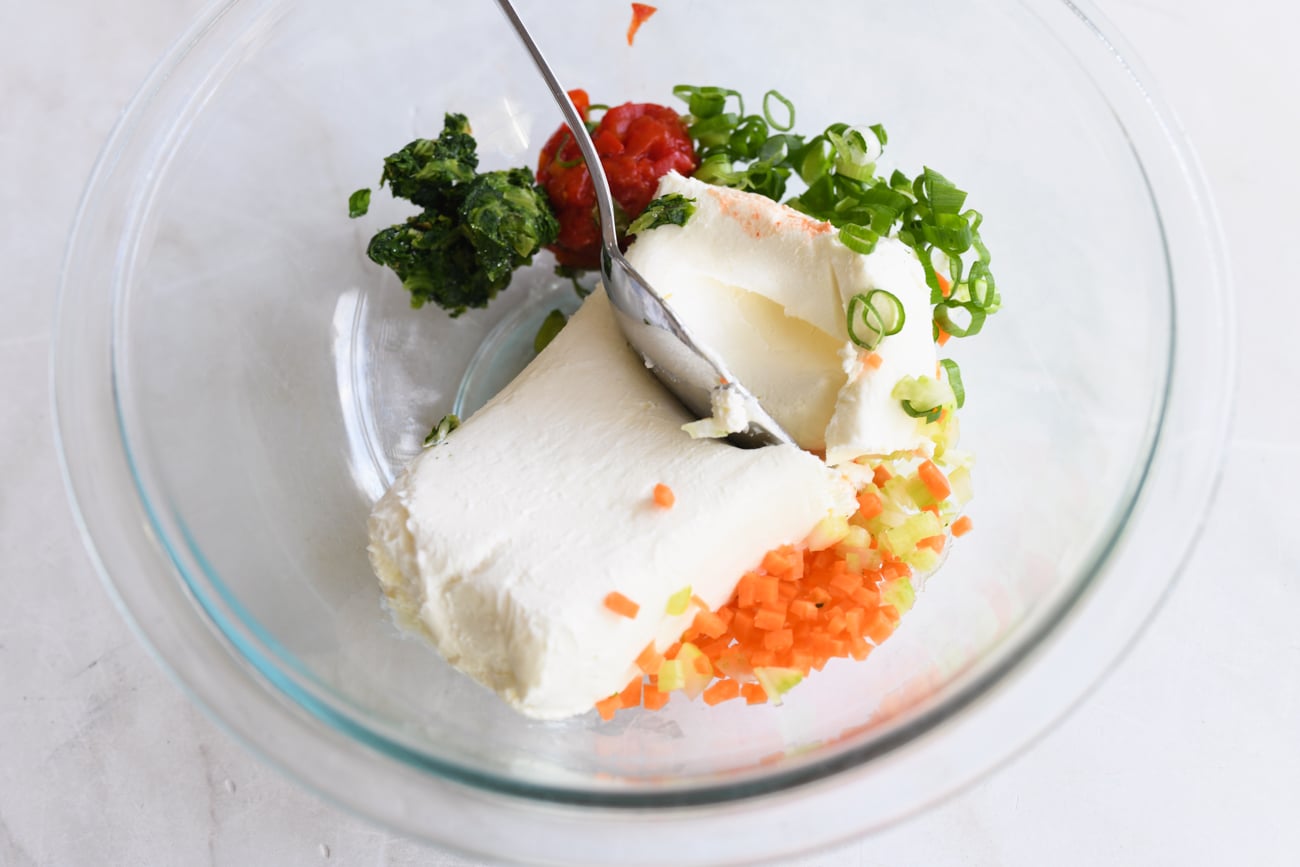
Culinary experts recommend a strictly manual approach. The preparation begins with meticulous knife work: carrots must be sliced thinly on an angle, julienned into precise matchsticks, and subsequently minced crosswise into microscopic bits. Celery undergoes a similar reduction, cutting lengthwise into whisper-thin strips before being cross-minced. Scallions require simple, uniform slicing without the need for longitudinal halving, preserving their structural integrity and visual appeal within the white matrix.
The moisture management of the spinach and roasted peppers represents a critical operational phase. Utilizing frozen spinach streamlines the process, but dictates absolute rigor in liquid extraction. Culinary protocol demands that the thawed spinach be encased in a clean dishcloth or heavy-duty paper towel and subjected to forceful manual wringing until virtually all residual water is expelled. The roasted red pepper must undergo a comparable surface-drying process before being finely diced.
Once the produce is properly prepped, it is folded gently into the softened dairy base alongside a precise measurement of salt. Mixing must be executed exclusively by hand using a sturdy spoon. This manual folding action ensures an even distribution of solid particles throughout the fat emulsion while preserving the individual textures and visual identity of each vegetable component. For those seeking an elevated flavor profile, optional enhancements—such as a few dashes of Tabasco sauce or finely minced, deseeded jalapeño peppers—can be incorporated during the final mixing stage to introduce a controlled, warming heat.
The Economics of Scratch-Made Dairy Spreads
From an economic perspective, preparing specialty cream cheese at home offers substantial savings for hosts catering to groups of four or more. Commercial specialty cream cheeses are frequently subject to significant markups, reflecting the labor and packaging costs associated with small-batch commercial production. Conversely, purchasing standard blocks of high-grade commercial cream cheese—such as Philadelphia brand or traditional whipped varieties like Temptee—during promotional sales periods allows consumers to build a cost-effective pantry reserve. Unopened blocks of quality cream cheese maintain their structural and sensory integrity in refrigerated storage for up to several months, providing households with immediate readiness for impromptu weekend brunches or holiday open houses.
From a nutritional standpoint, a standard four-serving batch of this vegetable cream cheese yields predictable dietary metrics per serving, registering approximately 203 calories, 4 grams of carbohydrates, 4 grams of protein, and 20 grams of total fat, of which 11 grams are saturated. While dairy-heavy spreads are inherently rich, the incorporation of nutrient-dense vegetables introduces valuable micronutrients, including notable levels of Vitamin A (derived primarily from the carrots and spinach) and modest contributions of dietary fiber and calcium.
Operational Timeline and Storage Best Practices
Timing is a critical operational factor when executing this recipe for events or family gatherings. Unlike fermented or heavily preserved commercial food products, homemade vegetable-infused dairy spreads possess a limited optimal window for consumption. Food safety and culinary quality guidelines dictate that while the raw ingredients can be staged in advance, the final mixture achieves its peak sensory profile within three to four days of preparation.
Culinary strategists advise against attempting to produce excessively large batches intended for long-term refrigeration. The high moisture content inherent in fresh vegetables—despite rigorous draining techniques—will eventually migrate into the surrounding dairy matrix over time, potentially leading to syneresis (the separation of liquid from a gel) and a degradation of textural crispness. Consequently, the optimal operational timeline requires assembling the spread the night before a planned event. This overnight resting period allows the savory and aromatic compounds from the scallions, roasted peppers, and carrots to thoroughly permeate the fat molecules of the cream cheese, resulting in a more unified and robust flavor profile by morning service.
For gatherings exceeding four participants, doubling the base recipe is strongly recommended to accommodate the generous consumption rates typical of traditional bagel service. By scaling the ingredients proportionally while maintaining the manual mixing protocols, hosts can efficiently supply sufficient quantities without sacrificing artisan quality.
Broader Culinary Implications and Cultural Significance
The resurgence of scratch-made pantry staples reflects a broader cultural shift among contemporary consumers toward kitchen resourcefulness, economic pragmatism, and culinary craftsmanship. As specialty food prices fluctuate in response to broader macroeconomic pressures, home kitchens are increasingly functioning as decentralized artisanal workshops. The ability to replicate commercial-grade specialty items—ranging from cultured butter and fermented hot sauces to custom schmears—demonstrates a growing consumer desire for quality control, ingredient transparency, and economic self-reliance.
Furthermore, the ritual of the weekend bagel spread holds significant cultural weight, particularly within communities influenced by traditional northeastern culinary traditions. By mastering foundational techniques such as precise knife work, moisture management, and emulsion preservation, home cooks can elevate routine family breakfasts into memorable culinary experiences. This vegetable cream cheese recipe exemplifies how attention to detail, high-grade base ingredients, and deliberate manual execution can transform humble, accessible grocery items into an artisanal centerpiece worthy of any festive morning gathering.