The emergence of no-knead bread recipes has fundamentally altered the landscape of home baking, and the latest iteration—a vegan cinnamon bread—represents a significant advancement in egg-free and dairy-free pastry science. This culinary development, centered on a high-hydration dough and a Dutch oven baking technique, offers a solution for home bakers seeking the texture of artisanal loaves without the labor-intensive requirements of traditional kneading. By leveraging the principles of fermentation and steam-regulated baking, this recipe provides a blueprint for achieving bakery-quality results in a domestic environment.

The Science of No-Knead Baking
The fundamental challenge in vegan baking is replicating the structural integrity typically provided by eggs and dairy. Conventional bread relies on the development of gluten through manual manipulation, a process that can be physically demanding and time-consuming. However, the no-knead method shifts the burden of labor from the baker to the passage of time. Through a slow fermentation process, gluten networks form naturally, provided the dough maintains sufficient hydration.

In the case of this specific vegan cinnamon bread, the formulation utilizes instant yeast as the primary leavening agent. The inclusion of maple syrup serves a dual purpose: it acts as a flavor enhancer and provides the necessary sugars to fuel the yeast’s metabolic activity. The absence of traditional butter is compensated for by the use of plant-based fats, which maintain the required crumb structure while ensuring the loaf remains soft and moist throughout its shelf life.

The Role of Thermal Regulation
The success of this bread is heavily dependent on the use of a Dutch oven. This piece of kitchen equipment is essential for creating a micro-environment that mimics the conditions of a professional steam-injected hearth oven. When the dough is placed into the preheated cast iron vessel, the moisture within the bread evaporates, creating a localized high-humidity environment.

This steam is critical for two reasons: it delays the setting of the crust, allowing the loaf to achieve maximum volume (the "oven spring"), and it promotes gelatinization of the starches on the surface, resulting in a thin, crispy, and deeply caramelized crust. For a cinnamon-swirl variation, the Dutch oven also facilitates the even distribution of heat, ensuring that the cinnamon-sugar filling permeates the dough without burning.

Chronology of Preparation
The preparation process is categorized by long, passive rest periods, which are characteristic of modern, low-stress bread making.

- Mixing Phase: The dry ingredients—flour, yeast, and salt—are combined with liquid components, typically consisting of water and maple syrup. The resulting dough is shaggy and requires minimal intervention, merely enough to incorporate all dry flour pockets.
- Initial Fermentation: The dough undergoes a primary rise, which can last anywhere from one to several hours depending on ambient temperature. During this stage, the yeast produces carbon dioxide, which is trapped by the maturing gluten structure.
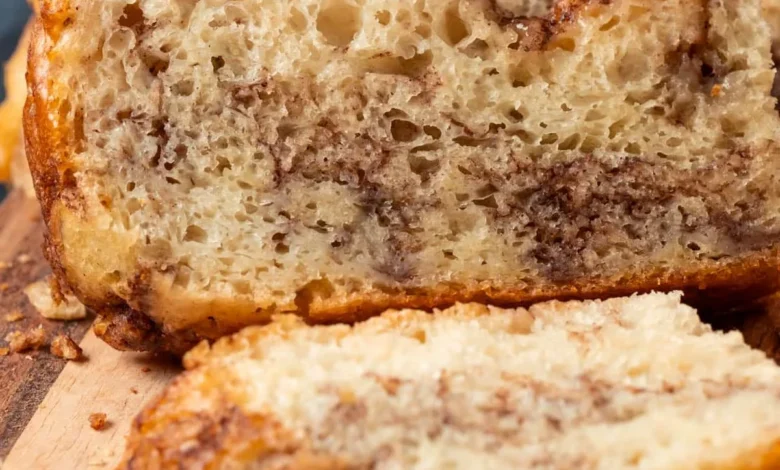
- Lamination and Shaping: Unlike traditional loaves, this recipe incorporates the cinnamon-sugar swirl during the shaping process. By layering the filling between segments of dough and using a skewer to create a marbled effect, the baker ensures that every slice contains an equal distribution of the spiced filling.
- Final Proofing: The shaped dough is placed into the prepared Dutch oven for a final proofing period, allowing it to expand one last time before entering the oven.
- Baking: The loaf is baked at high temperatures. The lid remains on the Dutch oven for the majority of the baking time to trap steam, and is removed in the final stages to allow for the browning and crisping of the exterior.
Comparative Nutritional Analysis
While bread is a staple carbohydrate source, the nutritional profile of this vegan cinnamon loaf is distinct from standard commercial varieties. A standard 16-serving batch yields approximately 173 kilocalories per serving. The macronutrient breakdown includes approximately 32 grams of carbohydrates, 3 grams of protein, and 4 grams of fat.

When compared to conventional cinnamon rolls or enriched sweet breads, which often utilize eggs and butter, this vegan alternative is typically lower in saturated fats. Furthermore, by opting for unrefined sweeteners like maple syrup, the glycemic impact can be moderated compared to breads utilizing high-fructose corn syrup or refined white sugar. However, as with all baked goods, the primary nutritional value is derived from the flour base, and individuals with specific dietary requirements should account for the moderate sugar content.

Economic and Dietary Implications
The rise in popularity of vegan baking is not merely a lifestyle trend but a response to growing consumer demand for allergen-friendly and environmentally conscious food products. The global plant-based bakery market has seen consistent growth, projected to expand as more consumers adopt flexitarian or vegan diets.

From an economic perspective, no-knead bread recipes are particularly attractive. They require minimal equipment and fewer expensive ingredients than traditional enriched pastries, which often call for high-cost fats and emulsifiers. The ability to produce high-quality, artisanal-style bread at home provides a cost-effective alternative to premium bakery-bought items.

Storing and Preservation Strategies
A common critique of preservative-free, homemade bread is its limited shelf life. This recipe is designed for immediate consumption, with optimal texture retention occurring within the first 24 hours. Because the bread lacks the chemical preservatives found in mass-produced loaves, it is susceptible to staling through starch retrogradation.

To mitigate this, the following storage hierarchy is recommended:

- Day 1: Store at room temperature in a breathable container.
- Day 2–3: The bread is best consumed as toast. The application of heat helps to re-gelatinize the starches, restoring the soft texture.
- Long-term: Freezing is the most effective method for preservation. Slicing the loaf before freezing allows for the retrieval of individual portions, which can be placed directly into a toaster. This method preserves the structural integrity of the crumb and ensures minimal waste.
The Broader Impact on Home Baking
The accessibility of this recipe reflects a broader democratization of culinary skills. By removing the technical barrier of kneading, home bakers are empowered to experiment with complex flavor profiles, such as the cinnamon-sugar swirl, without the fear of failure associated with traditional bread making.

As professional kitchens and home cooks continue to bridge the gap in quality, the integration of plant-based ingredients into standard recipes will likely continue to evolve. This vegan cinnamon bread serves as a testament to the fact that rigorous culinary technique can be successfully adapted to meet modern dietary preferences, resulting in products that are both accessible and of high sensory quality. Whether utilized for a quick breakfast or a dessert, the success of this loaf underscores the effectiveness of simple, science-backed methods in the modern kitchen.