The Mathematical Waffle: How a Decade-Long Culinary Project Culminates in a Parametric Generator Dedicated to Amedeo Avogadro

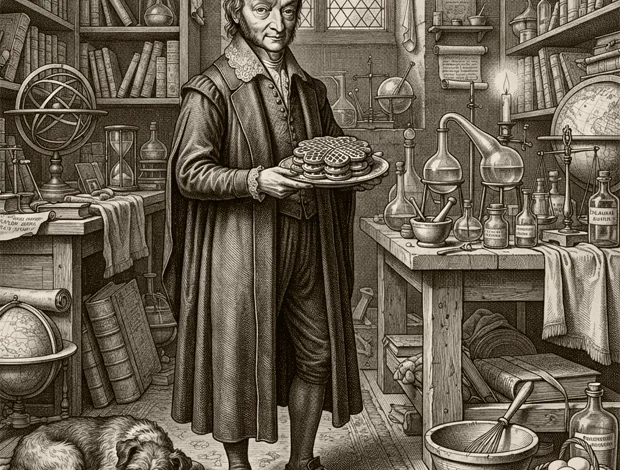
The intersection of culinary arts and molecular science has reached a whimsical yet mathematically rigorous milestone with the launch of Avogadro, a parametric waffle recipe generator released to the public on August 9, 2026. Unveiled precisely on the 250th anniversary of the birth of the renowned Italian physicist and chemist Amedeo Avogadro, the digital tool is designed to decode the precise chemistry of Scandinavian heart-shaped waffles. Built on a dataset of approximately 1,000 traditional Norwegian and Nordic recipes, the generator abandons static databases in favor of real-time computational modeling, allowing users to construct millions of billions of theoretical batter formulations using custom ingredient selections and adjustable sensory sliders.
The Genesis of a Culinary Algorithm
The conceptual foundation of the Avogadro project dates back more than a decade to 2014, when the initial framework was drafted as a series of rudimentary interface mockups and a basic Microsoft Excel model. For years, the project remained dormant, constrained by the technological and logistical challenges of standardizing qualitative culinary traditions. Traditional Scandinavian waffle-making has long relied on tacit knowledge—the passing down of intuitive practices where historical texts instructed bakers simply to add flour until the batter achieved the proper consistency.
This reliance on unwritten expertise presented a significant empirical challenge: defining the boundary between what constitutes a functional waffle batter and what fails structurally. By analyzing roughly 1,000 traditional recipes, the developer behind the project sought to reverse-engineer these implicit guidelines into explicit parameters. The resulting platform bridges the gap between historical baking traditions and modern algorithmic data processing, providing a systematic approach to a domestic craft that has historically resisted strict mathematical quantification.
Navigating the Generator: Standard Versus Expert Modes
Avogadro operates entirely on the fly, calculating ingredient proportions in grams and scaling outputs dynamically based on the number of eggs designated by the user. Rather than retrieving pre-existing recipes from a static repository, the software computes batters dynamically as adjustments are made. Users can select from a wide array of core components, categorized broadly into liquids, dairies, fats, eggs, starches, and sweeteners.

To accommodate varying degrees of culinary familiarity, the platform offers two distinct operational environments: Standard Mode and Expert Mode. Standard Mode is tailored for general users, featuring a streamlined ingredient list and a restricted set of controls that guarantee structurally sound, foolproof results. In contrast, Expert Mode grants unfettered access to the complete inventory of ingredients, all eight behavioral sliders—which govern traits such as sweetness, richness, and tanginess—and a broader selection of pre-programmed presets. This advanced interface invites experimentation into uncharted culinary territory, occasionally generating unconventional batter compositions that diverge significantly from standard commercial mixes.
A central feature of the user interface is the waffle heart quality indicator. This diagnostic tool provides immediate feedback, evaluating whether a given combination of ingredients and slider positions will yield a functional batter while simultaneously measuring how closely the resulting composition aligns with traditional regional waffles. Notably, the developer emphasizes that unconventional formulations are not inherently inferior, pointing out that several commercial mixes successfully occupy the outer fringes of the quality spectrum.
Connecting the Kitchen to Avogadro’s Constant
The nomenclature and release date of the generator pay homage to Lorenzo Romano Amedeo Carlo Avogadro, Count of Quaregna and Cerreto, who was born in Turin, Italy, on August 9, 1776. Avogadro is internationally celebrated for his pioneering 1811 hypothesis—now known as Avogadro’s law—which posits that equal volumes of all gases, at the same temperature and pressure, contain the same number of molecules. This foundational concept paved the way for the establishment of the mole as a fundamental unit of measurement in chemistry, quantifying the number of constituent particles in a substance.
The numerical scale of the waffle generator draws a deliberate parallel to Avogadro’s constant, which is approximately $6.022 times 10^23$ units per mole. Through the permutation of its various ingredient selections and control settings, the Avogadro waffle generator spans a theoretical design space of approximately $10^24$ distinct control settings. This calculation implies that the software’s parameter space encompasses roughly 1,660 moles’ worth of potential waffle batters.
Despite the staggering magnitude of this theoretical domain, practical limitations moderate the output. Rounding conventions and the automated pruning of trace ingredients mean that numerous distinct control settings ultimately resolve into identical batter profiles. Furthermore, many parameter combinations land outside the realm of physical feasibility, resulting in non-viable batter mixtures flagged by the absence of functional lobes on the quality indicator interface. Nevertheless, the vast parameter space ensures that prolonged experimentation frequently produces entirely novel recipes previously unseen in any cookbook.
Technical Architecture and User Feedback

Designed with cross-platform accessibility in mind, Avogadro adapts its layout depending on the viewing device. On desktop configurations, the interface presents a unified dashboard where ingredient adjustments, slider modifications, and the live-updating quality indicator are visible simultaneously. On mobile devices and smaller screens, the layout transitions to a column-based navigation system, maintaining real-time responsiveness as modifications are introduced.
Because testing a fraction of the $10^24$ possible configurations is physically impossible, the developer characterizes the algorithm as an informed statistical estimation of what constitutes correct batter consistency. Consequently, the project relies heavily on crowdsourced user feedback to refine its underlying models. Bakers who encounter logical errors, unexpected ingredient interactions, or structurally absurd outputs are encouraged to submit detailed bug reports alongside direct URLs to their generated recipes. Similarly, the discovery of exceptionally successful flavor profiles contributes to the ongoing qualitative calibration of the platform.
Implications for Culinary Science and Gastronomy
The public release of Avogadro marks a noteworthy contribution to the burgeoning field of computational gastronomy and molecular food science. By translating qualitative culinary traditions into quantifiable parametric models, tools of this nature challenge traditional divisions between empirical science and domestic arts. The project demonstrates how complex datasets—derived in this case from regional baking heritage—can be modeled, manipulated, and explored via digital interfaces.
As home cooks and culinary enthusiasts begin to engage with the platform, the broader implications center on the democratization of recipe development. Rather than relying on trial-and-error experimentation or static culinary literature, users can systematically explore the mathematical boundaries of flavor and texture. Whether utilized to reproduce traditional Norwegian heart waffles with precise consistency or to engineer entirely experimental formulations, the Avogadro generator provides a unique bridge between historical commemoration and modern computational food science, inviting the global baking community to participate in a vast, data-driven culinary experiment.