The Chemistry of Comfort: Introducing Avogadro, a Parametric Waffle Generator Marking 250 Years of Scientific Legacy

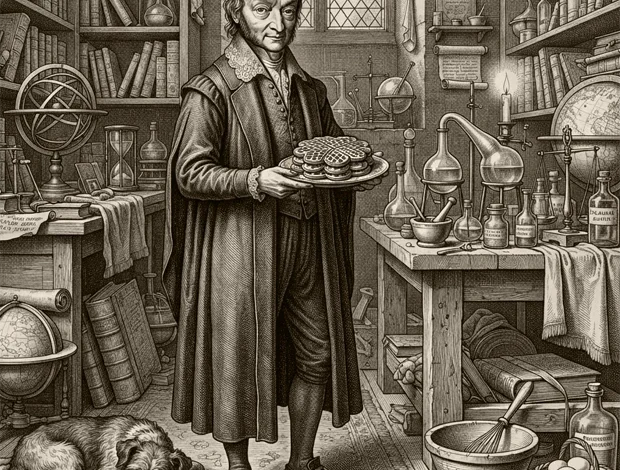
Culinary innovation has officially intersected with molecular stoichiometry through the launch of a new digital platform designed to calculate, optimize, and generate waffle batters on demand. Released to coincide with the milestone 250th anniversary of the birth of Italian physicist and chemist Amedeo Avogadro, the application—fittingly named Avogadro—represents a twelve-year journey from concept to execution. Built by food science enthusiasts and inspired by a corpus of roughly 1,000 Scandinavian and Norwegian culinary traditions, the tool seeks to answer a foundational question of domestic baking: what precisely defines the boundaries of a functional waffle batter?
The platform diverges entirely from traditional recipe databases. Rather than storing and retrieving static documents, the web application functions as a parametric generator. Users select base ingredients categorized by physical state and nutritional properties—including liquids, dairy, fats, eggs, starches, and sweeteners—and manipulate a series of sliders controlling sensory attributes such as sweetness, richness, and tanginess. The software immediately computes a precise, gram-scaled batter tailored to the user’s designated egg count. Furthermore, an integrated visual metric dubbed the "waffle heart quality indicator" provides instant feedback, assessing whether the generated composition is structurally sound and how closely it aligns with historical culinary benchmarks.
Main Facts and System Architecture
At its technical core, the Avogadro generator operates on an expansive matrix of variables. By combining diverse ingredient selections with multiple slider positions, the system spans an astronomical $10^27$ theoretical control settings. To contextualize this massive scale, the figure is directly referenced against Avogadro’s number—$6.02214076 times 10^23$—the fundamental physical constant defining the number of constituent particles, such as atoms or molecules, in one mole of a substance. Consequently, the application’s mathematical architecture encompasses roughly 1,660 moles’ worth of potential waffle formulations.
The interface is divided into two distinct operational environments: a streamlined standard mode and an advanced expert mode. While standard mode utilizes a curated subset of ingredients and a restricted number of sliders to ensure foolproof baking results, expert mode unlocks the full inventory of components alongside eight distinct sliders and multiple pre-set configurations. This granular level of control allows culinary experimenters to venture into uncharted gastronomic territory, though developers note a careful caveat: while the theoretical control settings number in the septillions, rounding parameters and the pruning of trace ingredients mean many configurations resolve to identical physical batters. Additionally, a fraction of theoretical combinations falls outside workable parameters, a deficiency explicitly highlighted by the absence of functional lobes on the application’s quality indicator.
A Twelve-Year Chronology of Culinary Computing

The genesis of the Avogadro project traces back more than a decade, reflecting the methodical pace often required to bridge computational modeling with empirical kitchen science.
The timeline of development highlights the intersection of theoretical physics anniversaries and culinary software design:
- August 2014: The conceptual framework is established. Initial development begins with rough interface mockups featuring circular selector fields and preliminary slider designations, accompanied by a rudimentary Excel model.
- 2014 through 2025: Development remains largely dormant while the creator compiles an extensive research corpus of approximately 1,000 historic and traditional waffle recipes, predominantly originating from Norway and Scandinavia. These historical records frequently relied on tacit knowledge, utilizing qualitative instructions such as adding flour "until the batter has the right consistency."
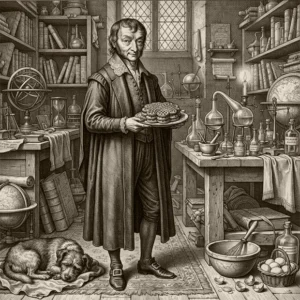
- August 9, 2026: The global scientific and culinary communities mark the 250th anniversary of the birth of Amedeo Avogadro, who was born in Turin, Italy, in 1776. Capitalizing on this historic date, the Avogadro parametric waffle generator officially launches online.
Historical Background and Scientific Context
Amedeo Avogadro remains one of the most influential figures in the history of physical science. Best known for Avogadro’s Law—the hypothesis formulated in 1811 stating that equal volumes of all gases, at the same temperature and pressure, contain the same number of molecules—his work provided the critical stoichiometric foundation that allowed chemistry to transition from a qualitative art to a precise quantitative science.
Naming a culinary calculator after the Turin-born scientist is more than a mere numerical pun. Baking, much like chemistry, is fundamentally an exercise in proportional stoichiometry. Just as balancing a chemical equation requires precise ratios of reactants to yield predictable products, achieving the ideal waffle texture requires a delicate balance of moisture, gluten development, protein coagulation, and lipid distribution. Historical recipes that instructed bakers to rely on intuition ("if you know, you know") represented an empirical understanding of these chemical systems long before the underlying food science was formally mapped.
Industry Implications and Analysis
Food scientists and digital archivists have increasingly turned to parametric modeling to preserve and deconstruct traditional recipes. By shifting away from static cookbooks toward dynamic generative models, culinary platforms allow researchers to analyze structural ratios across regional cuisines.

From an analytical perspective, tools like Avogadro reveal surprising truths about modern food manufacturing. Preliminary testing of the platform indicates that several highly popular commercial waffle mixes occupy positions surprisingly far from traditional baseline compositions on the quality indicator spectrum. This demonstrates that consumer preferences often embrace fringe formulations that defy conventional historic norms, validating the application’s design choice to flag unconventional recipes as innovative rather than inherently flawed.
Furthermore, the project serves as a crowdsourced experiment in empirical validation. Because testing $10^27$ distinct batters in a physical kitchen is impossible, the algorithm acts as an informed hypothesis regarding what constitutes the physical limits of "right consistency." Developers have emphasized that user feedback regarding edge cases, structural failures, or unexpectedly successful formulations will prove invaluable for refining the underlying mathematical models.
Broader Impact on Gastronomy and Education
The convergence of chemistry anniversaries with interactive food technology offers notable educational utility. Educators teaching stoichiometry and physical science frequently struggle to make abstract concepts like moles and molecular counts tangible to students. By anchoring Avogadro’s constant to a familiar, comforting household food item, the application provides a memorable heuristic for understanding massive numerical scales.
As the digital platform opens to the public, bakers worldwide are encouraged to utilize the interface to design bespoke formulations. Whether celebrating the historic scientific milestones of 18th-century Turin or simply seeking to engineer the ultimate crisp-yet-tender breakfast pastry, the project demonstrates that the intersection of mathematics and gastronomy remains fertile ground for discovery. Users engaging with the platform are invited to share unusual formulations and edge-case behaviors, ensuring that the tool continues to evolve through collective culinary experimentation.