When a French Avant-Garde Poet Joined the Colonial Dutch Army Just for a Free Ticket to Java

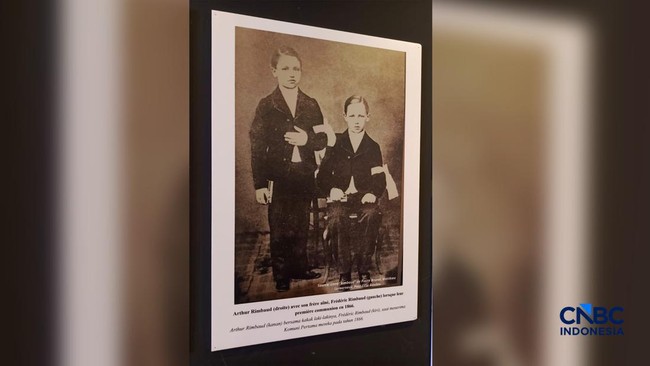
The intersection of literature, colonial history, and military desertion has rarely been as dramatically intertwined as in the brief, enigmatic sojourn of French poet Arthur Rimbaud in nineteenth-century Java. Long before his name became synonymous with the radical reimagining of modern poetry, Rimbaud engineered one of the most eccentric travel hacks in literary history. Faced with the exorbitant costs of maritime travel from Europe to the Dutch East Indies in the 1870s and possessing neither a steady income nor a penchant for conventional employment, the twenty-one-year-old artist enlisted in the colonial army of the Netherlands solely to secure free passage across the globe.
This little-known chapter of literary and Southeast Asian history was thrust back into the public spotlight during the opening of the Arthur Rimbaud 150th-Anniversary Exhibition at the National Museum in Jakarta. The exhibition sheds light on how a towering figure of European avant-garde literature abruptly traded the romanticism of verse for the rigid discipline of a colonial infantryman—only to abandon his post within weeks of setting foot on Javanese soil, vanishing into the local populace before making a stealthy return to Europe.
The Historical Context of Nineteenth-Century Colonial Recruitment
To understand Rimbaud’s bizarre transit strategy, one must examine the geopolitical and economic realities of Europe and the Dutch East Indies during the mid-1870s. The Royal Netherlands East Indies Army, universally known by its Dutch acronym KNIL, was a colonial mercenary force established by the Kingdom of the Netherlands in 1810. Comprising a mix of Dutch volunteers, European mercenaries of various nationalities, and native indigenous troops, the KNIL was tasked with maintaining colonial rule over the sprawling archipelago, which was undergoing a period of intense military consolidation.
By 1876, the colonial administration in Batavia was deeply entangled in the protracted and bloody Aceh War on the northern tip of Sumatra, a conflict that placed a severe strain on Dutch military manpower. To replenish its ranks, the KNIL actively recruited throughout Europe, establishing recruitment bureaus in cities such as Harderwijk in the Netherlands. These bureaus offered bounties, steady pay, and, crucially, free maritime transportation to the colonies for foreign nationals willing to sign multi-year enlistment contracts.
For Arthur Rimbaud, who had officially declared his retirement from poetry in 1875 after publishing his groundbreaking surrealist masterpiece Illuminations, life had become an endless quest for physical displacement and radical experience. Having exhausted the literary salons of Paris and the bohemian pathways of Europe, Rimbaud yearned for the exotic landscapes of the East. Lacking the funds to purchase a steamship ticket to Asia, the young poet viewed the KNIL not as an instrument of imperial conquest or a patriotic calling, but as a pragmatic, state-funded travel agency.
The Chronology of an Impulsive Enlistment and Desertion
The sequence of events leading up to Rimbaud’s brief military career in Java is remarkably well-documented through Dutch colonial military archives and historical scholarship. On May 18, 1876, Arthur Rimbaud presented himself at the Harderwijk military depot in the Netherlands. Having successfully navigated the superficial vetting processes of the KNIL recruitment office, he enlisted as a colonial soldier, binding himself to military service under an assumed identity or his actual records, which historians have meticulously tracked through muster rolls.
Following basic processing and administrative formalities, Rimbaud boarded a troop transport ship bound for the tropical colonies. On July 22, 1876, the young French poet arrived at the bustling port of Batavia, the administrative heart of the Dutch East Indies. The transition from the liberated, intellectual coffeehouses of Western Europe to the suffocating hierarchy of a colonial garrison was immediate and jarring.
From Batavia, military records indicate that Rimbaud and a contingent of fresh recruits were loaded onto the colonial steamer Minister Fransen van de Putte, sailing eastward along the northern coast of Java to the port of Semarang. From Semarang, the troops were transported via the newly established colonial railway system to Kedung Jati, completing the final leg of their journey on foot or via wagon to the garrison town of Salatiga, nestled in the mountainous interior of Central Java.
In Salatiga, Rimbaud was assigned to a military barracks where he was expected to undergo rigorous acclimatization and tactical training. However, the monotonous brutality of camp life, combined with the stifling tropical heat and the looming threat of deployment to the frontlines of the Aceh War, rapidly eroded any romantic notions the poet may have harbored about military life.
The tipping point arrived in mid-August 1876. According to colonial muster rolls, Rimbaud was last accounted for during morning roll call on August 15, 1876. By the morning of August 16, the poet was conspicuously absent from the barracks. He had successfully deserted.
Official Responses and Archival Evidence
The desertion of Private Rimbaud triggered a standard administrative response from the KNIL command structure, inadvertently preserving his movements for posterity. Historical research, highlighted in works such as Bernard Dorléans’s comprehensive study Orang Indonesia & Orang Perancis, dari Abad XVI sampai dengan Abad XX (2006), details how colonial authorities recorded the disappearance of foreign legionnaires who found the realities of tropical garrison life intolerable.
Speaking at the inauguration of the exhibition at the National Museum in Jakarta, Indonesian Minister of Culture Fadli Zon emphasized the stark contrast between Rimbaud’s lifelong quest for personal freedom and the authoritarian constraints of the colonial military apparatus.
"Arthur Rimbaud was a profoundly influential French poet, a modern avant-garde figure who shaped generations of subsequent French writers, including Albert Camus, who famously wrote about rebellion and the rebel," stated Fadli Zon during the opening ceremony. "In 1876, at the age of twenty-one, Rimbaud journeyed to Java after enlisting in the Dutch colonial army. From someone of a radically free spirit, he was forced into a situation requiring absolute military obedience—a massive challenge to his fundamental nature."
Curatorial teams working on the exhibition noted that before vanishing into the Javanese countryside, Rimbaud reportedly liquidated or distributed portions of his meager personal belongings, leaving items behind for local welfare institutions or acquaintances. Historians estimate that following his escape from the Salatiga barracks, Rimbaud embarked on an arduous trek across the rugged terrain of Central Java, walking an estimated 48 kilometers back toward the coastal port city of Semarang.
The precise details of Rimbaud’s weeks living outside the law among the local Javanese population remain shrouded in mystery. Due to the limited nature of personal records from this specific clandestine window, historians have been unable to fully map the extent of his cultural immersion, linguistic communication, or daily survival strategies during his brief period as a fugitive.
Escape, Return to Europe, and Legacy in Modern Literature
Rimbaud’s evasion of military authorities ultimately proved successful. Recognizing that remaining in the Dutch East Indies permanently as a deserter carried the death penalty or lifetime penal labor under military law, the poet arranged for his clandestine exit from the archipelago. Within weeks of his desertion, Rimbaud boarded a Scottish merchant vessel anchored in a Javanese port, working his passage back toward Europe. By 1877, official and family records confirm that he had safely returned to his family home in France, closing the chapter on his disastrous military adventure.
Despite the brevity and chaos of his Javanese escapade, the experience underscored a lifelong pattern of restless wandering that would define Rimbaud’s post-literary years. Abandoning poetry entirely at a remarkably young age, he subsequently traveled extensively throughout the Middle East and East Africa, operating as a merchant, explorer, and trader in regions such as Aden and Harar. Rather than returning to the artistic circles of Paris, he chose a life of commercial enterprise and physical endurance far removed from European literary sensibilities.
The historical exhibition in Jakarta serves not only as a cultural bridge between France and Indonesia but also as a fascinating reminder of how globalized historical figures intersected with the colonial history of Southeast Asia. By examining Rimbaud’s desertion through contemporary historical frameworks, scholars are able to deconstruct the myths of European imperial romanticism, viewing the colonial apparatus through the lens of those who sought to exploit its infrastructure for personal liberation—at immense personal and legal risk.
Ultimately, Arthur Rimbaud’s brief, unauthorized holiday in Java remains a testament to the unpredictable nature of human ambition. It reveals a literary titan who viewed an imperial army not as an instrument of honor, but merely as a desperate means to an exotic end, leaving behind archival footprints that continue to captivate historians and literary enthusiasts 150 years later.