
Supreme Court Texas Border Barbed Wire
Supreme Court Texas Border Barbed Wire: A Deep Dive into Federal vs. State Authority and Border Security
The U.S. Supreme Court’s recent involvement in the Texas border dispute, specifically concerning the state’s deployment of razor wire barriers, thrusts a complex interplay of federal and state authority, constitutional interpretation, and the practical realities of border security into the national spotlight. This legal and political saga centers on Texas Governor Greg Abbott’s Operation Lone Star, a state-led initiative aimed at deterring illegal immigration, which has involved the installation of extensive razor wire fencing along the Rio Grande. The core of the legal challenge lies in whether Texas’s actions infringe upon the federal government’s exclusive authority over immigration and border management.
The U.S. Constitution, particularly Article I, Section 8, grants Congress the power to "establish a uniform Rule of Naturalization" and "regulate Commerce with foreign Nations." This has long been interpreted to mean that the federal government has primary responsibility for setting immigration policy and managing the nation’s borders. Texas, however, asserts its inherent right to defend itself and protect its citizens from what it perceives as an overwhelming influx of undocumented individuals. Governor Abbott has invoked the concept of "invasion" under Article IV, Section 4 of the Constitution, which obliges the federal government to protect states from invasion, arguing that the federal government’s alleged failure to secure the border necessitates state intervention. This interpretation is contentious, with many legal scholars arguing that it is a misapplication of the "invasion" clause, which historically referred to foreign military incursions.
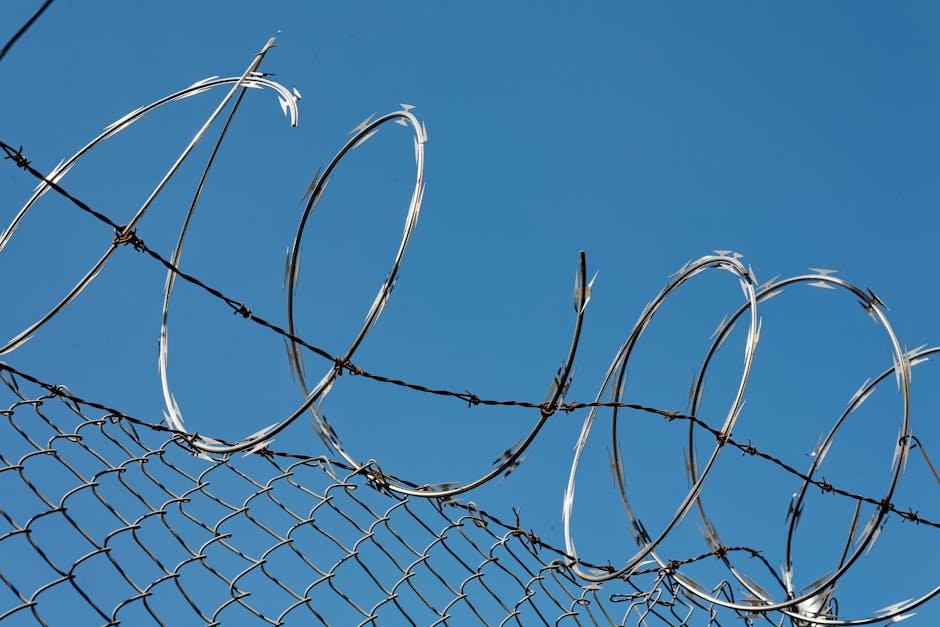
The razor wire itself has become a potent symbol of this escalating conflict. Deployed in concert with state law enforcement personnel, the wire is intended to create a physical deterrent to individuals attempting to cross the Rio Grande into Texas. Critics, including immigration advocacy groups and humanitarian organizations, have decried the wire as inhumane and dangerous, citing reports of injuries sustained by migrants, including children, who have become entangled in the sharp metallic strands. These concerns have fueled legal challenges and public outcry, amplifying the pressure on the courts to intervene. The visual impact of miles of concertina wire juxtaposed against the natural landscape of the border region further sharpens the debate, evoking imagery of a fortified frontier rather than a managed international boundary.
The legal battles have unfolded through a series of lower court rulings and appeals, ultimately reaching the Supreme Court. A significant point of contention has been the authority of federal Border Patrol agents to access and operate on private property where the state has erected these barriers. Texas has, at times, obstructed federal agents’ access, creating a direct confrontation between state and federal law enforcement. The Supreme Court’s interventions have often been procedural, allowing for the continuation of certain state actions while the broader legal questions are addressed. This judicial back-and-forth highlights the complexity of disentangling federal and state responsibilities in a situation where both entities claim legitimate interests and authority.
The underlying issue, beyond the immediate legal wrangling over razor wire, is the broader debate about border security and immigration policy in the United States. For decades, the nation has grappled with an inconsistent and often politicized approach to managing its southern border. The sheer volume of attempted crossings, driven by a complex mix of economic hardship, political instability, and violence in origin countries, has strained federal resources and created immense challenges for border communities. Texas, as the state with the longest stretch of the U.S.-Mexico border, bears a disproportionate burden of these challenges, leading to its unilateral actions under Operation Lone Star.
The deployment of razor wire can be seen as an attempt to reclaim control and impose a physical barrier in the absence of perceived sufficient federal action. However, from a federal perspective, such state-driven initiatives can undermine national policy, create jurisdictional conflicts, and potentially lead to unintended humanitarian consequences. The federal government’s argument is that immigration is a national issue requiring a unified and coordinated approach, and that individual states cannot unilaterally dictate immigration enforcement or erect barriers that impede federal operations.
The legal arguments presented to the Supreme Court often revolve around established legal precedents and constitutional interpretations. Cases like Arizona v. United States (2012), where the Supreme Court struck down key provisions of an Arizona law designed to enforce immigration laws, are frequently cited. In that case, the Court held that federal law preempted state attempts to regulate immigration, emphasizing the federal government’s exclusive authority in this domain. Texas’s legal team has sought to distinguish its actions, arguing that Operation Lone Star is not about regulating immigration directly but about addressing the consequences of alleged federal inaction, such as public safety and the use of private property.
The practical implications of the razor wire are also a significant factor in the legal and political discourse. While intended to deter illegal crossings, the wire has demonstrably caused harm. Humanitarian organizations have documented instances of individuals, including asylum seekers, suffering severe lacerations and other injuries. This has raised questions about the legality and morality of using such methods, even if authorized by state law. The imagery of injured migrants, particularly vulnerable populations like families with children, has resonated with the public and added a layer of emotional intensity to the legal and political debate.
Furthermore, the razor wire initiatives have strained relations between federal agencies, particularly Customs and Border Protection (CBP) and the Department of Homeland Security (DHS), and the Texas state government. Clashes have occurred when state officials have asserted their authority to restrict access to federal agents or when federal agents have cut through state-installed wire to reach migrants in distress. These inter-agency conflicts highlight the challenges of coordinating efforts when there is a fundamental disagreement on approach and authority. The efficient and effective management of the border requires seamless cooperation between federal and state entities, and these disputes create significant friction.
The economic aspects of Operation Lone Star and the razor wire deployment are also noteworthy. Texas has allocated significant state resources to fund these initiatives, diverting funds that critics argue could be used for other public services. The ongoing legal battles also incur substantial costs. While the state frames these expenditures as necessary for border security, opponents question the efficacy and cost-effectiveness of these measures compared to other potential strategies. The sheer scale of the wire deployment, miles upon miles of it, represents a considerable investment of financial and logistical resources.
The Supreme Court’s role in this dispute is not to adjudicate the broader policy questions of immigration or border security, but rather to resolve the legal conflicts over jurisdiction and the application of law. The Court’s decisions will likely set important precedents regarding the balance of power between federal and state governments in matters of national security and immigration. The outcome will have far-reaching implications for how states can respond to perceived border crises and the extent to which they can operate independently of federal directives.
The ongoing legal and political saga surrounding Texas’s border barbed wire underscores the deep divisions within the United States regarding immigration and border security. It highlights the inherent tension between federal authority and state sovereignty, and the challenges of creating a cohesive and humane approach to a complex international issue. As the legal proceedings continue, the nation watches to see how the Supreme Court will interpret the Constitution and its implications for the future of border management in the United States. The razor wire, once a local issue, has become a national symbol of this contentious debate, and its resolution will undoubtedly shape the ongoing discourse on these critical issues for years to come. The presence of the wire has also had a tangible impact on the environment and wildlife along the border, with concerns raised about its potential to harm animals and disrupt ecosystems. This adds another layer of complexity to the discussion, bringing in environmental considerations alongside legal, humanitarian, and security concerns. The long-term ecological impact of such extensive physical barriers remains a subject of ongoing study and debate.





