A Historical Trajectory: From Obscurity to Modernity
The origins of the Between the Sheets are as layered as the drink itself. The cocktail first surfaced in the public consciousness in 1929, appearing in Frank Shay’s Drawn from the Wood. In its nascent form, the recipe utilized a combination of gin, Bacardi rum, and Cointreau. However, the drink underwent a significant metamorphosis as it migrated across the Atlantic during the early 1930s. Bartenders in Europe, particularly in the storied bars of Paris and London, recognized the potential of the template and initiated a series of crucial adjustments: the substitution of gin for Cognac and the introduction of fresh lemon juice.
These changes moved the drink firmly into the orbit of the Sidecar, another iconic sour of the era. The inclusion of the recipe in the 1930 Savoy Cocktail Book cemented its status in the canon of classic mixology. For Ryan Gannon, who first encountered the recipe two decades ago, the drink represented a puzzle of balance. Over the course of a twenty-year career, Gannon has obsessively recalibrated the ratios, moving away from the heavy-handed sweetness often associated with early 20th-century recipes toward a more nuanced, drier profile that appeals to contemporary palates.
The Evolution of the Recipe
Gannon’s approach to the Between the Sheets is not merely an act of replication; it is an act of historical curation. During his eight-year tenure at the renowned bar Cure in New Orleans, Gannon integrated the drink into the "Cocktails We Love" section of the menu. In that setting, he utilized El Dorado 3-year rum and Pierre Ferrand Cognac, a combination that provided a robust, classic backbone.
However, the transition to his current programs at Lonnie’s and Ingas Bar necessitated a shift in strategy. With a smaller backbar, Gannon has been forced to prioritize ingredient versatility. The goal is to curate a selection of spirits that can perform double-duty, serving as the foundation for both historical revivals and original house creations. This constraints-based approach has paradoxically led to a more focused and intentional iteration of the drink.
Anatomizing the Modern Between the Sheets
To understand the success of the drink at Lonnie’s, one must examine the specific chemistry of its components. Gannon selects Frapin 1270 as his base Cognac. He argues that this specific expression occupies a vital middle ground; it possesses the depth required to stand up to the other ingredients without the heavy, tannic weight that can sometimes overwhelm more delicate citrus profiles.
The role of rum in the recipe has also been carefully considered. While some interpretations of the drink rely on generic white spirits, Gannon insists on the "funk" inherent in old-school, Bacardi-style aged rums. To achieve this, he employs Probitas, a blended rum that marries the pungent, high-ester characteristics of Jamaican pot-still spirit with the clean, light profile of Barbados Coffey-still rum. This creates a structural integrity that prevents the drink from becoming a one-note Cognac sour.
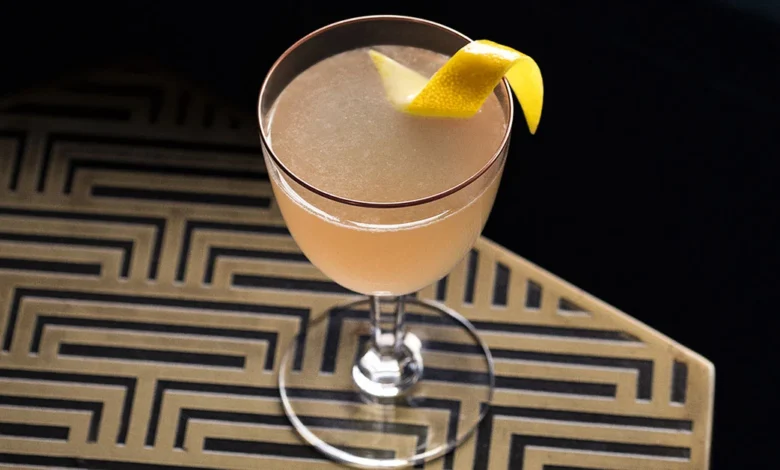
The final component—the orange liqueur—is where the most significant modern departure occurs. Moving away from the ubiquity of Cointreau or the "candied" profile of traditional triple secs, Gannon utilizes Flor de Azar. This Mexican-produced spirit is distilled with an array of botanicals, including pomelos, mandarins, lime, and tuberose, and is sweetened with agave. The addition of black pepper and cardamom in the spirit’s profile provides a sophisticated edge that is further amplified by a dash of Regans’ Orange Bitters, which shares a structural affinity for cardamom. A simple expressed lemon twist serves as the final, bright punctuation mark.
Professional Analysis: The Cocktail as an Apéritif
Industry observers and fellow mixologists note that the resurgence of such "forgotten" cocktails is a direct result of a broader trend toward historical literacy in the hospitality sector. By framing the Between the Sheets as a "tropical sidecar"—or, as Gannon suggests, "what happens if a Daiquiri and a Sidecar had a baby"—the bartender demystifies the drink for the guest.
The implication here is that the modern consumer is no longer seeking the "sudden intoxication" that Duffy warned of in 1934. Instead, there is a clear demand for cocktails that offer a journey through history while remaining palatable and balanced enough to function as an apéritif. The fact that the drink has become a "surprising hit" as an occasional special suggests that guests are increasingly eager to engage with the narrative behind the glass.
Broader Implications for the Bar Industry
The success of the Between the Sheets at Lonnie’s serves as a case study for how small-scale, high-quality cocktail programs can succeed without an exhaustive list of niche spirits. By focusing on the interplay of high-quality base spirits and complex modifiers, Gannon has managed to elevate a recipe that was once nearly lost to history.
From a data-driven perspective, the trend suggests that consumers are moving away from the "extreme" mixology of the 2010s—characterized by elaborate house-made infusions and massive ingredient lists—in favor of "back-to-basics" mixology that focuses on the quality of the spirit and the precision of the technique. This transition is not merely a stylistic preference; it is an economic necessity for many bars operating in high-rent, space-constrained environments like Brooklyn.
A Legacy Continued
As Gannon continues to refine his approach, the legacy of the Between the Sheets remains secure. It is a testament to the idea that a well-crafted cocktail is not a static object, but a living tradition that requires constant attention and periodic re-evaluation. Whether or not the drink remains a permanent fixture at Lonnie’s, its current popularity proves that the warnings of the 1930s—while perhaps valid in an era of inconsistent spirit quality—no longer apply to the modern, carefully curated bar program.
The drink sits at the intersection of history and innovation. By honoring the structural constraints of the past while utilizing the superior agricultural and distillation techniques of the present, establishments like Lonnie’s are successfully bridging the gap between generations of drinkers. The Between the Sheets, once a cautionary tale, has become a standard-bearer for a new era of thoughtful, historically informed, and exceptionally balanced hospitality.
Looking forward, the success of this initiative indicates that there is a vast, untapped archive of mid-century recipes waiting to be rediscovered and adjusted for the modern palate. As the industry continues to evolve, the ability of bartenders like Gannon to synthesize history with contemporary flavor profiles will remain the defining characteristic of elite, world-class cocktail service. The "sick headaches" of 1934 have been replaced by a clean, citrus-forward, and intellectually satisfying experience that speaks to the enduring power of a properly mixed drink.