The Art and Science of Demijohn Resting: Redefining the Maturation of Artisanal Mezcal

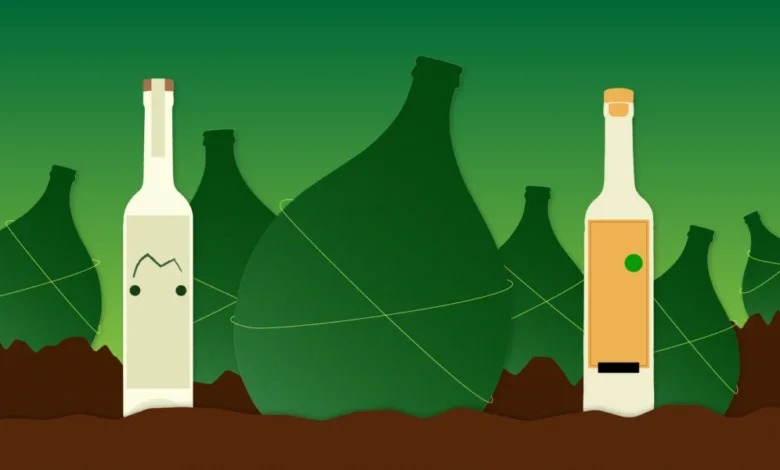
In the heart of Santiago Matatlán, a town frequently heralded as the world capital of mezcal within Oaxaca’s Valles Centrales region, the Macurichos family maintains a tradition that challenges the conventional wisdom of spirits maturation. Located approximately 30 miles east of Oaxaca City, their palenque houses a dedicated space known as "el cuarto de descanso," or the resting room. Within this sanctuary, hundreds of 10-gallon glass vessels, known as demijohns or damajuanas, are meticulously arranged across the floor. These vessels contain mezcal that has been allowed to sit in stasis for periods ranging from five to ten years, undergoing a subtle but transformative evolution that many producers now consider the pinnacle of agave spirit craftsmanship.
According to Gonzalo Martinez Sernas, a maestro mezcalero for Macurichos, the resting process is not merely a preference but a fundamental requirement for quality. Sernas notes that while a freshly distilled mezcal may possess an immediate appeal, the raw distillate often hides the true complexity of the agave. He likens the process to the stabilization phase in winemaking, suggesting that time in glass allows the harshness of the alcohols to dissipate, resulting in a flavor profile that is significantly more intense, mature, and cohesive. This philosophy of patience is increasingly being recognized by international critics; in a recent comprehensive evaluation of over 70 mezcals, the top-rated spirits were almost exclusively those that had undergone extended glass resting.
The Chemical and Sensory Evolution of Glass Aging
The preference for glass over wood in the world of mezcal marks a significant departure from the aging traditions of tequila, bourbon, or scotch. While barrel aging introduces external flavors such as tannins, vanillin, and wood sugars, glass is prized for its relative neutrality, which preserves the "terroir" of the agave and the specific nuances of the distillation process. However, recent scientific inquiries and anecdotal evidence from mezcaleros suggest that glass is far from inert during long-term storage.
Justin Briggs, the Mexico portfolio manager at Skurnik Wine & Spirits, describes the integration of a new distillate as a social process. He compares an immature mezcal to an individual arriving at a gathering of strangers; it takes time for the various volatile compounds to harmonize. In its raw state, mezcal often exhibits sharp, aggressive notes—sometimes reminiscent of acetone or nail polish remover. Through demijohn resting, these volatile components interact with small amounts of oxygen, allowing the spirit to "find itself." The result is a mellowing effect where fruit-forward aromas and delicate floral characteristics, which would otherwise be masked by the "heat" of the alcohol, become prominent.
Chemically, this transformation is driven by micro-oxidation. Because the corks or traditional stoppers—such as "olotes" (corn cob hearts)—used to seal demijohns are rarely airtight, a minute exchange of gases occurs. Jason Paul Cox, founder of Espíritu Humano and producer of Cinco Sentidos, confirms that this environment facilitates the formation of esters. Over months and years, this chemical shift leads to a creamier, oilier mouthfeel, a quality highly sought after by connoisseurs. Furthermore, many mezcaleros prefer to rest spirits at high proofs, often including the "tails" of the distillation run. These tails contain complex organoleptic compounds that, while rough initially, provide the necessary building blocks for a rich, evolved spirit after years of resting.
A Chronology of the Demijohn: From European Trade to Oaxacan Shadows
The use of demijohns in Mexico is a fusion of colonial history and indigenous necessity. Historically, these large, wicker-wrapped glass bottles appeared in the 17th century, coinciding with the rise of commercial distillation in Europe. They were the primary vessels for transporting brandies and rums across the Atlantic trade routes. The British Royal Navy famously utilized demijohns for rum rations, and European producers of grappa and fruit eau-de-vie have long used glass to soften their distillates without losing the bright aromatics of the base fruit.
In Mexico, the adoption of glass aging was born out of a combination of cultural ritual and political evasion. Sernas emphasizes that for the Zapotec people of Oaxaca, mezcal is a sacred substance used in traditional medicine and religious offerings. However, for much of the 20th century, mezcal was treated as a clandestine "moonshine" by authorities. This led to a culture of secrecy where mezcaleros would hide their production to avoid heavy taxation or confiscation.
Justin Briggs relates historical accounts of legendary producers, such as Don José Cortés, who would bury demijohns of mezcal in their front yards whenever tax collectors were rumored to be in the area. By the time the "coast was clear" and the vessels were unearthed, the producers noticed a remarkable improvement in the spirit’s profile. What began as a tactic for survival evolved into a deliberate technique for quality enhancement. This "library" of glass vessels eventually became a way for families to preserve their history, keeping "antiguas de semillas legendarias"—mezcals from legendary harvests—for future generations.
Comparative Maturation: Above-Ground vs. Subterranean Resting
The methodology of resting varies significantly across different regions of Mexico, including Puebla, Guerrero, and Michoacán. One of the most intriguing practices is the burial of glass containers. Orlando Estrada, co-founder of Tlamati, explains that burying mezcal is believed to "harmonize" the spirit more effectively than above-ground storage. This process is said to stabilize the "pearls" (the bubbles formed when shaking the spirit to test alcohol content) and develop a distinct sweetness.
To understand the physical differences between these methods, Jason Paul Cox conducted a controlled experiment. He split a single batch of mezcal, storing half in a cool, dark room and burying the other half underground. After one year, lab results showed distinct trajectories:
- The Underground Batch: Maintained its original alcohol by volume (ABV) and developed "dark green" flavor tones, characterized by notes of wintergreen and forest floor.
- The Above-Ground Batch: Experienced a slight drop in proof and a reduction in methanol and fusel alcohols. This batch was aromatically brighter, exhibiting notes of cantaloupe and a richer mouthfeel.
These findings suggest that the temperature stability and pressure of the earth create a different chemical environment than the atmospheric fluctuations of a "cuarto de descanso." Regardless of the specific location, the consensus among maestros is that a minimum of nine months is required for basic stabilization, though two to three years is the standard for premium artisanal releases.
Market Implications and the Future of Agave Spirits
As the global market for mezcal matures, consumer interest is shifting from basic "espadín" expressions toward complex, process-driven spirits. Terms like "tahona-crushed," "ancestral," and "puntas" have already entered the lexicon of high-end spirits marketing. "Demijohn rested" appears poised to be the next major differentiator for premium brands.
Data from recent industry tastings suggests that glass-rested spirits are consistently outperforming their unaged counterparts in quality scores. For instance, the Macurichos Joven Cirial, rested for 30 months in glass, has been praised for its unique "citrus-heavy" profile, while the Cinco Sentidos Tobalá Cultivado, also glass-aged, has gained acclaim for its savory, complex notes of pickled red onion and elote.
However, the adoption of this technique by larger commercial operations remains a challenge. Demijohn resting is inherently space-intensive and requires significant capital to be tied up in inventory for years. Unlike wood aging, which allows a brand to label a product as "Reposado" or "Añejo" under CRM (Consejo Regulador del Mezcal) regulations to justify a higher price point, glass resting does not always carry the same immediate regulatory recognition or consumer awareness.
Conclusion: The Essential Nature of Patience
The resurgence of demijohn resting represents a broader movement within the spirits industry toward "slow" production. For the maestros of Oaxaca and beyond, the move toward glass is an act of preservation—preserving the integrity of the agave, the history of the family, and the nuances of the land.
While the "taxman" may no longer be the primary reason for burying spirits in the yard, the legacy of that era has provided modern mezcaleros with a blueprint for excellence. As Gonzalo Martinez Sernas asserts, the process is "absolutely essential." In an era of rapid industrialization, the "resting room" stands as a testament to the belief that some things cannot be rushed, and that the finest expressions of agave are those that have been allowed to sit in the dark, breathing through a cork, for half a decade or more. For the connoisseur, the reward is a spirit that has shed its youthful aggression to reveal a mature, integrated, and profoundly complex character.