Go beyond the Margarita, from the Negroni-like Rosita to the tropical Toreador.

For decades, the global perception of tequila has been dominated by a select few high-volume cocktails. The Margarita, consistently ranked as the most popular cocktail in the United States, and the Paloma, a refreshing staple of Mexican cantinas, have effectively acted as the gatekeepers of agave-based spirits. However, a growing movement within the professional bartending community is working to dismantle this narrow focus. By excavating regional Mexican traditions, reinterpreting mid-century classics, and experimenting with unconventional flavor profiles, mixologists are proving that the versatility of tequila and mezcal extends far beyond the salt-rimmed glass.
The Evolution of Agave Consumption
Tequila’s global market expansion has been meteoric. According to data from the Distilled Spirits Council of the United States (DISCUS), agave-based spirits are among the fastest-growing categories in the liquor industry. In 2023, tequila and mezcal sales surpassed $6 billion in the U.S. alone. Despite this massive volume, consumption patterns remain stagnant. Consumers often view tequila as a party spirit or a base for high-acidity, high-sugar drinks.
Bartenders, however, are shifting the narrative. By treating tequila with the same reverence historically reserved for gin or whiskey, professionals are discovering that the spirit’s earthy, vegetal, and sometimes spicy notes pair exceptionally well with complex modifiers like amaro, fortified wines, and artisanal syrups. This transition from "party drink" to "sipping spirit" has catalyzed the rediscovery of forgotten recipes.

Guadalajara Punch: The Spirit of Jalisco
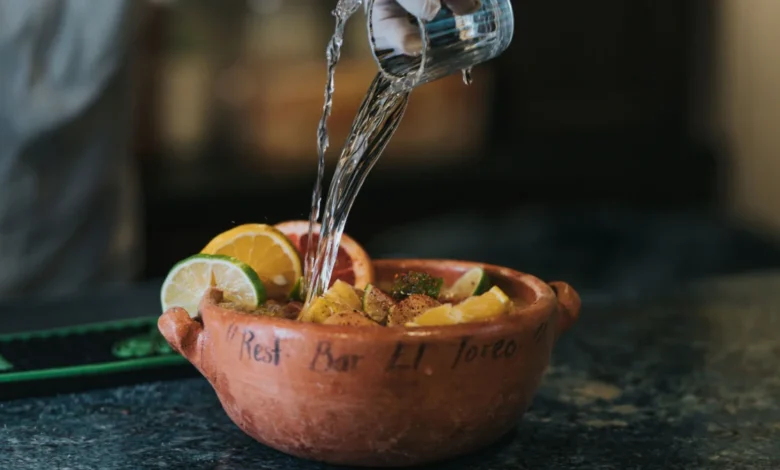
The Guadalajara Punch, known locally in Jalisco as the Cazuela Voladora (or "flying casserole"), serves as a vital bridge between modern craft cocktails and traditional Mexican social drinking. Unlike the individual, shaker-built cocktails common in Western bars, the Cazuela is a large-format communal drink. It is traditionally served in wide-mouthed clay vessels, which help maintain the temperature of the mixture while allowing the aromas of citrus—typically a blend of grapefruit, orange, and lime—to permeate the drink.
The "flying" moniker is a lighthearted nod to its potency. Because the drink is constructed in large batches with soda and salt, the alcohol is often masked by the vibrant acidity of the fruit. Historically, this drink is the heart of Jalisco’s social gatherings, highlighting the Mexican philosophy that tequila is best enjoyed when shared. For the home bartender, the Cazuela offers a lesson in balance: it demonstrates how salt and citrus can be used to open up the palate, a technique that predates the modern Margarita by generations.
The Rosita: A Continental Pivot
While the Negroni has become the de facto king of the aperitivo hour, its agave-based cousin, the Rosita, remains an "insider" classic. Popularized in the early 2000s by the late legendary bartender Gary "Gaz" Regan, the Rosita replaces the gin base of a standard Negroni with reposado tequila. The genius of the recipe, however, lies in its vermouth ratio. By splitting the sweet vermouth with a portion of dry vermouth, the drink gains a sophisticated, lean profile that allows the wood-influenced notes of the reposado tequila to shine through.
The evolution of the Rosita is a testament to the drink’s adaptability. Modern iterations have pushed boundaries further. For instance, high-end establishments like The Franklin in New Orleans have experimented with smoked tequilas to provide an added layer of depth, while San Diego’s Roma Norte has pivoted toward using bright, high-proof blanco tequilas to create a sharper, more refreshing profile served straight up. This trajectory suggests that the Rosita is not just a one-off riff, but a legitimate sub-category of the Negroni family that challenges the assumption that tequila cannot stand up to bitter, fortified ingredients.

Reimagining the Tequila Sunrise
The Tequila Sunrise occupies a strange place in cocktail history. Once a ubiquitous fixture of 1970s bar culture, it eventually became a symbol of kitsch, associated with artificial grenadine and low-quality spirits. Yet, the core premise of the drink—the layering of flavors through density—is sound. Industry leaders like Ignacio "Nacho" Jimenez have worked to rehabilitate the drink’s image by deconstructing its components.
In his "Sun-Risa," Jimenez replaces commercial grenadine with a homemade hibiscus-habanero syrup, introducing a floral, spicy heat that complements the agave base. By blending tequila with a touch of mezcal, he introduces a smoky complexity that was entirely absent from the disco-era original. The addition of bitter orange juice further modulates the sweetness, turning a "punchline" cocktail into a balanced, nuanced beverage. This shift illustrates a broader trend: the "premiumization" of classic drinks where the focus is not on changing the name, but on elevating the quality of every constituent part.
The Toreador: A Pre-Prohibition Ancestor
Perhaps the most compelling case for exploration is the Toreador. Predating the Margarita, the Toreador is a classic blend of tequila, apricot liqueur, lime juice, and simple syrup. While it remains obscure in many parts of the world, it is a foundational drink in the Australian bar scene.
The Toreador highlights an important historical fact: early tequila cocktails were often fruit-forward, utilizing stone fruit liqueurs to balance the spirit’s inherent bite. The apricot liqueur provides a velvet-like texture that makes the acidity of the lime more palatable, resulting in a drink that is arguably more elegant than the sharp, citrus-heavy profile of a modern Margarita. As bartenders seek to differentiate their menus, the Toreador serves as a blueprint for "new classics" that rely on historic flavor profiles to appeal to modern drinkers.

The Metexa: The Aperitif Frontier
The final frontier for tequila is the category of the aperitif. The Metexa, a sophisticated mix of tequila, quinquina, and Swedish punsch, is a radical departure from the norm. Developed by industry veteran Jamie Boudreau, the cocktail is designed for those who find the traditional tequila profile too aggressive or one-dimensional.
The inclusion of quinquina—a wine-based aperitif flavored with cinchona bark—introduces a quinine-driven bitterness that pairs seamlessly with the earthiness of agave. The Swedish punsch, a complex, spicy liqueur, adds an aromatic weight that gives the drink a "jab" of flavor. The Metexa represents the professionalization of the tequila market, signaling that the industry is ready to treat tequila as a base for complex, contemplative, and dry cocktails rather than just sugary, crowd-pleasing refreshers.
Broader Implications for the Industry
The shift toward these "underrated" cocktails is not merely a trend; it is an economic and cultural necessity. As the cost of premium agave spirits continues to rise, consumers and bars are moving away from high-volume, low-margin drinks. There is an increasing demand for cocktails that provide a unique experience—one that justifies a higher price point through complexity, history, and craftsmanship.
Furthermore, this movement is helping to foster a more profound respect for Mexican craftsmanship. By moving beyond the Margarita, consumers are forced to engage with the nuances of terroir, production methods, and the diversity of the agave plant itself. As these recipes continue to circulate through cocktail menus globally, they are effectively normalizing the idea that tequila is a world-class spirit worthy of the same intellectual rigor as Scotch or Cognac. The future of the tequila industry lies not in the mass-produced, salt-rimmed status quo, but in the vast, untapped potential of these overlooked traditions.