Decoding Four Decades in a Bottle: What Happens When You Open a 40-Year-Old Vintage Wine

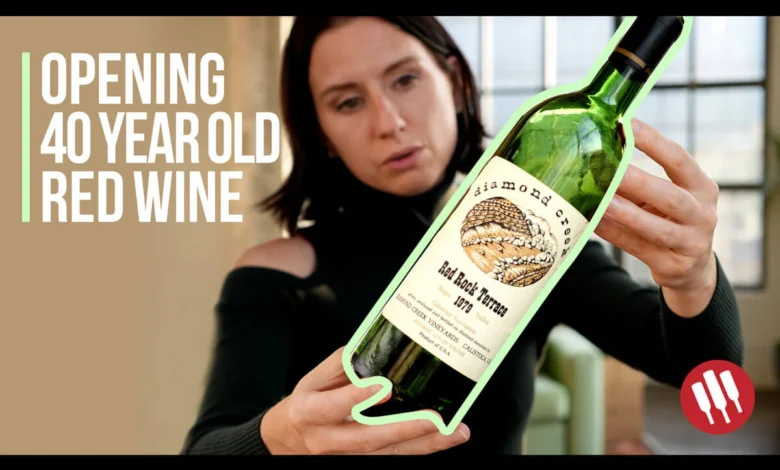
For most wine enthusiasts and casual drinkers alike, uncorking a vintage bottle that has aged for several decades is a rare, almost ceremonial milestone. While the romance of cellaring wine for generations is a cornerstone of oenology, the practical reality of opening a 40-year-old bottle presents a series of unique logistical and chemical challenges. Recently, a gathering of wine professionals, collectors, and winemakers sought to demystify this experience by opening a pristine 1979 Diamond Creek "Red Rock Terrace" Napa Valley Cabernet Sauvignon. The exercise offered a rare window into the physics of aging, the degradation of organic materials, and the remarkable longevity of specific American viticultural regions.
The Background and Context of Aging Napa Valley Cabernets
The centerpiece of the evening, the 1979 Diamond Creek Cabernet Sauvignon, carried immense historical significance. Established in Diamond Mountain District in Napa Valley, Diamond Creek Vineyards was among the first estates in California to exclusively focus on producing terroir-driven, Bordeaux-style single-vineyard Cabernet Sauvignons. In the late 1970s, the prevailing global consensus—particularly among European critics—was that New World wines lacked the structural integrity, acidity, and tannin profiles required to gracefully endure decades of bottle maturation. Napa Valley wines, in particular, were often dismissed abroad as overly fruit-forward and designed for immediate consumption.
Opening a 40-year-old bottle from this specific era served as both a sensory experiment and a historical stress test. Participating in the tasting was Jackson Rohrbaugh, a Master Sommelier whose professional background involves evaluating rare and compromised vintages. The convergence of a Master Sommelier, the original winemaking philosophy of Diamond Creek, and a pristine 1979 vintage provided an authoritative framework to evaluate whether decades-old California reds can genuinely compete with their Old World counterparts in longevity.
The Mechanics of Extraction: Why 40-Year-Old Corks Demand Specialized Tools
The first operational hurdle encountered during the evening was the extraction of the closure. Standard, double-hinged waiter’s corkscrews, while effective for younger bottles, are ill-suited for closures that have resided in a bottle neck for four decades. Over time, natural cork degrades structurally. It becomes porous, highly spongy, and thoroughly saturated with wine due to capillary action and decades of contact.
When a standard helix (worm) is driven into an aged cork, the compromised material frequently crumbles, dropping debris into the liquid or shearing off entirely, leaving the lower half trapped inside the neck. To mitigate this risk, professionals rely on specialized extraction instruments. The primary tool recommended for such fragile closures is the "Ah-So"—also known as a butler’s thief or two-prong puller—which slips two parallel steel blades down the sides of the cork, gripping it friction-wise without piercing the crumbling organic matter. Alternatively, modern preservation systems such as the Coravin can bypass the extraction process entirely by accessing the wine through a medical-grade needle, though traditionalists often prefer complete extraction for older vintages that require decanting and oxygenation.
Understanding Ullage: The Indicator of Bottle Health
Before any cork is pulled, the baseline health of an aged wine is evaluated through visual inspection of the fluid level, a metric known in the industry as "ullage" or shoulder level. Ullage refers to the empty space between the liquid surface and the bottom of the cork.
As wine ages over decades, minor amounts of liquid and alcohol molecules evaporate through the microscopic pores of the natural cork and the capsule, a process accelerated in low-humidity cellar environments. Consequently, the fill level of the bottle serves as a primary diagnostic indicator of the wine’s provenance and condition at auction houses such as Winebid, Spectrum, or K&L Wine Merchants.
In professional grading, a fill level that extends well up into the glass neck of the bottle indicates optimal storage conditions, minimal oxidation, and a high probability of structural integrity. A "high shoulder" level—where the wine reaches just below the base of the neck where the glass tapers outward—is generally considered acceptable for bottles exceeding thirty to forty years of age, representing minor, expected evaporation. However, fill levels dropping to "low shoulder" or below signify excessive air exposure. When too much oxygen infiltrates the headspace over a prolonged period, the wine undergoes premature oxidation, turning acetic, flat, or distinctly vinegary before the cork is ever removed.
The Sensory Revelations: Evaluating the 1979 Diamond Creek
When the 1979 Diamond Creek Cabernet Sauvignon was finally uncorked, the collective skepticism in the room shifted rapidly to astonishment. Even Master Sommelier Jackson Rohrbaugh was visibly taken aback by the wine’s condition, with his initial taste leaving him momentarily speechless. Far from being oxidized, hollow, or structurally collapsed, the wine demonstrated remarkable aromatic complexity, secondary and tertiary flavor development, and a lingering finish.
The survival and evolution of this specific red wine past the 40-year mark highlight the critical intersection of chemistry and viticulture. For a dry red wine to endure four decades, several foundational factors must align during both the growing season and the winemaking process:
- Natural Acidity: Tartaric and malic acids act as a natural preservative, slowing down chemical degradation and providing structural backbone as tannins polymerize over time.
- Tannin Phenols: Thick-skinned varietals like Cabernet Sauvignon contain high concentrations of condensed tannins. As these tannins bind with anthocyanins over decades, they soften into silky textures while maintaining structural framework.
- Alcohol and pH Balance: Balanced alcohol levels—traditionally much lower in 1970s Napa Valley wines compared to modern iterations—prevent the wine from tasting hot or unbalanced as it ages.
- Storage Environment: Consistent, cool temperatures (ideally around 55°F or 13°C) and stable humidity levels are absolute prerequisites for preserving both the liquid and the cork seal over a forty-year timeline.
Industry Implications: Hype, Ripe, and the Future of Modern Vintages
The successful tasting of the 1979 Diamond Creek vintage reignited a broader industry debate regarding aging potential versus modern winemaking styles. For decades, critics have argued that contemporary Napa Valley Cabernets are built primarily for immediate accessibility, prioritizing high extraction, concentrated fruit profiles, and elevated alcohol levels over longevity.
During the post-tasting discussion, the assembled group of winemakers, collectors, and trade professionals attempted to answer a central question: Will current releases, such as the 2018 vintage, possess the structural longevity required to replicate this performance forty years into the future in the year 2058?
The consensus among the experts was sharply divided. Proponents of modern viticulture argue that advanced canopy management, precise temperature-controlled fermentation, and meticulous sorting yield cleaner, more structurally sound wines than those produced in the 1970s. Conversely, traditionalists express concern that warming global temperatures, resulting in higher sugar accumulation and subsequent alcohol levels, may compromise the long-term aging curves of contemporary vintages.
Ultimately, while the debate surrounding modern age-ability remains active, the opening of the 1979 Diamond Creek provided empirical proof that Napa Valley Cabernet Sauvignon is capable of defying international skepticism. It demonstrated that under ideal conditions, a well-crafted red wine can transcend generations, offering a liquid archive of a specific harvest half a century prior. As collectors continue to invest in blue-chip cellars, the lessons learned from extracting, evaluating, and tasting such rare bottles will remain an essential guide for navigating the complex science of wine maturation.