
Chewy Strawberry Sugar Cookies

Chewy Strawberry Sugar Cookies: A Recipe for Perfectly Tender, Fruit-Kissed Delights
The allure of a chewy sugar cookie is undeniable. It’s a classic for a reason, offering a comforting, sweet base that’s both satisfying and versatile. However, elevate that familiar delight with the vibrant, slightly tart essence of strawberries, and you’ve got a cookie that transcends the ordinary. Chewy strawberry sugar cookies are not just a treat; they are an experience. The inherent chewiness, often a coveted characteristic, is achieved through a careful balance of ingredients and baking techniques that encourage moisture retention and a soft, yielding texture. The addition of strawberry introduces a delightful complexity, a subtle fruitiness that complements the sweetness without overpowering it. This article delves deep into the science and artistry behind crafting these exquisite cookies, covering everything from ingredient selection and preparation to baking nuances and troubleshooting. Whether you’re a seasoned baker or a novice looking to impress, understanding the core principles will empower you to consistently produce perfect chewy strawberry sugar cookies.
The foundation of any exceptional cookie lies in the quality and interaction of its core ingredients. For chewy strawberry sugar cookies, these are paramount. Flour, specifically all-purpose flour, provides the structural framework. Too much flour will result in a dry, crumbly cookie, while too little can lead to excessive spreading. The goal is to achieve a tender crumb, and this is often facilitated by using just enough flour to bind the ingredients without developing too much gluten. Butter, unsalted and softened to room temperature, is the primary source of fat. The fat content is crucial for both flavor and texture. Softened butter creams effectively with sugar, incorporating air that contributes to the cookie’s lift and tenderness. Unlike melted butter, which can lead to a crisper cookie, softened butter ensures a richer, chewier result. Sugar, a blend of granulated and brown sugar, plays a dual role. Granulated sugar contributes to sweetness and crispness at the edges, while brown sugar, with its molasses content, adds moisture, chewiness, and a subtle caramel note. The ratio of brown sugar to granulated sugar is a key determinant of chewiness. A higher proportion of brown sugar will yield a softer, chewier cookie. Eggs, specifically large eggs, act as binders and contribute to richness and structure. The yolk adds fat and emulsifies the batter, while the white provides protein that sets during baking. For a chewy cookie, using a whole egg plus an extra egg yolk can enhance the chewiness and richness. Vanilla extract is a classic flavor enhancer, deepening the overall sweetness and aroma. For strawberry flavor, the options are varied, each with its own impact on texture and taste. Freeze-dried strawberry powder offers the most concentrated and pure strawberry flavor without introducing excess moisture, which is critical for maintaining chewiness. Fresh strawberries, while vibrant, can add too much water, potentially leading to a softer, more cake-like texture or requiring longer baking times. Strawberry extract or jam can also be used, but careful consideration of their liquid content and sugar levels is necessary. The leavening agent, typically baking soda or baking powder, controls the rise and spread of the cookie. Baking soda, an alkaline ingredient, reacts with acidic components (like brown sugar or strawberries) to create carbon dioxide gas, leading to lift. Baking powder is a complete leavening agent containing both acid and base. For chewy cookies, a minimal amount of leavening is often preferred to prevent excessive puffiness and maintain a dense, chewy interior.
The preparation of chewy strawberry sugar cookies involves a systematic approach that ensures optimal ingredient integration and texture development. The creaming of butter and sugar is the critical first step. This process involves beating softened butter and sugars together until the mixture is light, fluffy, and pale in color. This incorporates air into the butter, which expands during baking, contributing to the cookie’s texture. Avoid over-creaming, which can introduce too much air, leading to a cakey cookie. Next, eggs and vanilla extract are added, one at a time, ensuring each is fully incorporated before adding the next. This emulsifies the fat and liquid components, creating a stable base. If using fresh strawberries, they should be puréed or finely diced and their excess liquid drained. For freeze-dried strawberries, they are typically pulsed in a food processor or blender until a fine powder is achieved. This powder is then incorporated into the dry ingredients. The dry ingredients – flour, leavening agent, salt, and strawberry powder (if using) – are whisked together in a separate bowl. Salt is crucial for balancing sweetness and enhancing overall flavor. Combining the wet and dry ingredients is a delicate stage. Gradually add the dry ingredients to the wet ingredients, mixing on low speed or by hand until just combined. Overmixing at this stage can develop gluten in the flour, resulting in a tough cookie. The dough should be thick and cohesive, but not sticky. It is often beneficial to chill the cookie dough before baking. This allows the fats to firm up, preventing excessive spreading during baking, and also allows the flavors to meld and deepen. Chilling for at least 30 minutes, or up to 24 hours, is recommended. When shaping the cookies, uniform size is key for even baking. Scooping rounded tablespoons of dough and rolling them into balls ensures consistency. Some recipes recommend gently flattening the dough balls slightly before baking to encourage a chewier texture and prevent them from becoming too domed.
The baking process for chewy strawberry sugar cookies is where the magic truly happens, transforming the prepared dough into perfectly textured delights. Oven temperature is a critical factor. A moderately hot oven, typically between 350°F and 375°F (175°C and 190°C), is ideal. A slightly higher temperature can lead to crispier edges, while a lower temperature might result in undercooked centers. Preheat your oven thoroughly to ensure consistent heat distribution from the moment the cookies enter. Baking time is also crucial and highly dependent on the size and thickness of your cookies, as well as your oven’s characteristics. For average-sized cookies, the baking time usually ranges from 9 to 13 minutes. The cookies are ready when the edges are set and lightly golden brown, while the centers still appear slightly soft and underbaked. This visual cue is vital for achieving chewiness; the cookies will continue to cook and firm up on the hot baking sheet after being removed from the oven. Overbaking is the most common culprit for dry, crumbly cookies. Therefore, it’s better to err on the side of slightly underbaking. The use of parchment paper or a silicone baking mat on the baking sheet is highly recommended. This prevents sticking, promotes even heat circulation, and makes for easier cleanup. Allowing adequate space between cookies on the baking sheet is also important. Cookies spread as they bake, and overcrowding can lead to them baking together and becoming misshapen and unevenly cooked. Once baked, resist the temptation to move the cookies immediately. Allow them to cool on the baking sheet for 5 to 10 minutes. During this time, they will continue to set and firm up, developing that desirable chewy texture. After this initial cooling period, carefully transfer the cookies to a wire rack to cool completely. This allows air to circulate around them, preventing the bottoms from becoming soggy.
Troubleshooting common issues encountered when making chewy strawberry sugar cookies is an essential part of mastering the recipe. The most frequent problem is cookies that spread too much. This can be caused by several factors. If your butter was too soft or melted, it will contribute to excessive spreading. Ensure your butter is softened to room temperature, not melted. Overcreaming the butter and sugar can also incorporate too much air, leading to a flatter cookie. Another common cause is using too much sugar, particularly granulated sugar, which melts and causes spreading. If the dough is too warm when baked, it will spread more. Chilling the dough is crucial for preventing this. If your cookies are consistently spreading too much, try chilling the dough for longer, using slightly less butter, or adding a tablespoon or two more flour, mixing it in gently. Conversely, cookies that are too thick and cakey indicate insufficient spreading. This can occur if the butter was too cold, the dough was not creamed enough, or if too much flour was used. Using baking powder instead of or in addition to baking soda can also lead to a puffier, cakey cookie. Ensure your baking soda or baking powder is fresh and active. If the cookies are consistently too dry and crumbly, it’s a strong indicator of overbaking or too much flour. Always err on the side of underbaking, and measure your flour accurately. Scooping flour directly from the bag can lead to too much flour being incorporated; spoon the flour into your measuring cup and level it off with a straight edge. The strawberry flavor might be too subtle for some palates. If using freeze-dried strawberry powder, ensure it is finely ground and evenly distributed. For more intense flavor, you can increase the amount of powder slightly, but be mindful of its impact on the dough’s moisture content. If using fresh strawberries, ensure they are very well-drained or slightly dried before puréeing to avoid excess moisture. Another option to boost strawberry flavor without adding moisture is to use a high-quality strawberry extract, but be cautious as extracts can be potent. The texture might be too hard. This is almost always a result of overbaking. Cookies continue to cook on the baking sheet after removal from the oven. Always remove them when the edges are just set and the centers still look slightly underdone. Cooling them completely on the baking sheet for a few minutes before transferring them to a wire rack also helps achieve a softer, chewier interior.
Storage and shelf-life considerations are important for maintaining the quality of chewy strawberry sugar cookies. Once completely cooled, these cookies can be stored in an airtight container at room temperature. When stored properly, they will maintain their chewy texture for up to 3-5 days. For longer storage, they can be frozen. Individual cookies can be wrapped tightly in plastic wrap and then placed in a freezer-safe bag or container. Alternatively, the unbaked cookie dough balls can be frozen on a baking sheet until firm, then transferred to a freezer bag. Frozen cookies, whether baked or unbaked, can be stored for up to 2-3 months. To bake frozen dough balls, place them on a parchment-lined baking sheet and bake for an additional 2-3 minutes, as they will need a bit more time to cook through from a frozen state. When storing, avoid placing them in the refrigerator, as the moisture in the refrigerator can make them stale and tough. Ensure the container is truly airtight to prevent moisture loss or gain, which can significantly impact the cookie’s texture. If you find the cookies are becoming slightly too hard over time, you can place a slice of bread or a piece of apple in the airtight container with the cookies for a day or two. The moisture from the bread or apple will be absorbed by the cookies, helping to rehydrate them and restore some of their chewiness. However, this method should be used with caution as it can also make them too soft or even soggy if left for too long. For optimal flavor and texture, it is always best to consume them within the first few days of baking.
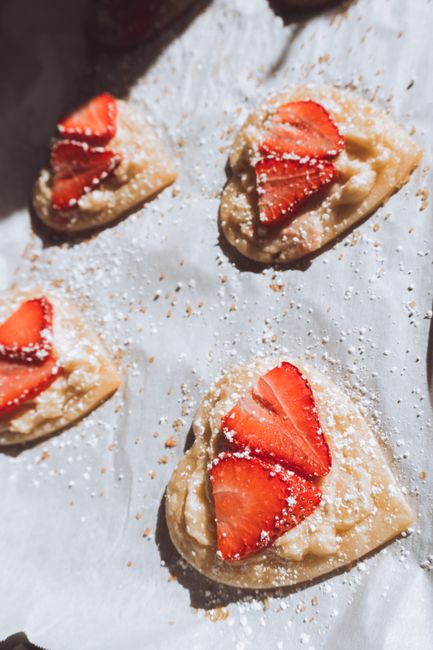
The versatility of chewy strawberry sugar cookies allows for numerous creative variations and enhancements that can cater to different preferences and occasions. The most straightforward variation involves incorporating different types of strawberry. While freeze-dried strawberry powder offers the most consistent results for chewiness, a very finely puréed and drained fresh strawberry or a high-quality strawberry jam can be added for a more pronounced, jammy strawberry flavor. When using fresh purée, reducing the liquid content in the dough slightly by a tablespoon or two of milk or water might be necessary to compensate for the added moisture. For a visually appealing and flavor-boosting addition, consider adding small pieces of dried strawberries to the dough. These provide bursts of concentrated strawberry flavor and a slight chewiness. Another popular enhancement is the addition of white chocolate chips. The creamy sweetness of white chocolate pairs beautifully with the tartness of strawberries, creating a delightful flavor contrast. Ensure the white chocolate chips are of good quality to prevent them from melting into an oily mess. For a textural contrast, toasted slivered almonds or chopped pistachios can be incorporated into the dough. Their crunchiness provides a pleasing counterpoint to the cookie’s chewiness, and their nutty flavor complements the strawberry. A subtle citrus twist can also elevate the strawberry flavor. A teaspoon of lemon zest or orange zest added to the dough can brighten the overall taste profile, making the strawberry flavor pop. For a decorative touch, once the cookies have cooled slightly on the baking sheet, you can press a few fresh strawberry slices or a dollop of cream cheese frosting onto the center of each cookie. This transforms them into a more elaborate dessert. Furthermore, the base dough can be used for other fruit-infused sugar cookies. Replacing the strawberry powder with raspberry powder, blueberry powder, or a blend of mixed berry powders will yield equally delicious, fruit-kissed treats. The key to successful variations lies in understanding how additional ingredients, particularly those containing moisture, will affect the dough’s consistency and baking time. Always aim to maintain a dough that is firm enough to hold its shape without excessive spreading.
In conclusion, the pursuit of the perfect chewy strawberry sugar cookie is a rewarding culinary journey. It’s a process that demands attention to detail, a nuanced understanding of ingredient interactions, and a patient approach to baking. From the precise creaming of butter and sugar to the crucial moment of removing cookies from the oven when they still appear slightly underdone, each step contributes to the final delectable outcome. By mastering the principles of ingredient selection, preparation, and baking, and by understanding how to troubleshoot common issues, bakers can consistently produce these delightful treats. The inherent chewiness, combined with the bright, fruity notes of strawberry, makes these cookies a standout choice for any occasion, from casual gatherings to more formal celebrations. Whether enjoyed plain or creatively enhanced, chewy strawberry sugar cookies offer a comforting yet sophisticated indulgence, a testament to the simple pleasure of a well-executed homemade cookie.


