Buckwheat noodles occupy a foundational role in the culinary traditions of northern and northwestern China, with regional preparations deeply embedded in the gastronomy of provinces such as Shaanxi, Shanxi, Gansu, and the Inner Mongolia Autonomous Region. In these areas, historical culinary methods involve processing buckwheat flour into qiaomian hele—a dense, malleable dough forced through specialized mechanical presses directly into boiling water. This traditional technique yields robust, texturally distinct strands that differ significantly from the delicate, uniformly cut soba common in Japanese cuisine. Despite these mechanical differences, both traditions celebrate the earthy, nutty flavor profile of Fagopyrum esculentum (common buckwheat), making the grain an ideal vehicle for cold, dressed noodle dishes designed to combat high ambient temperatures.
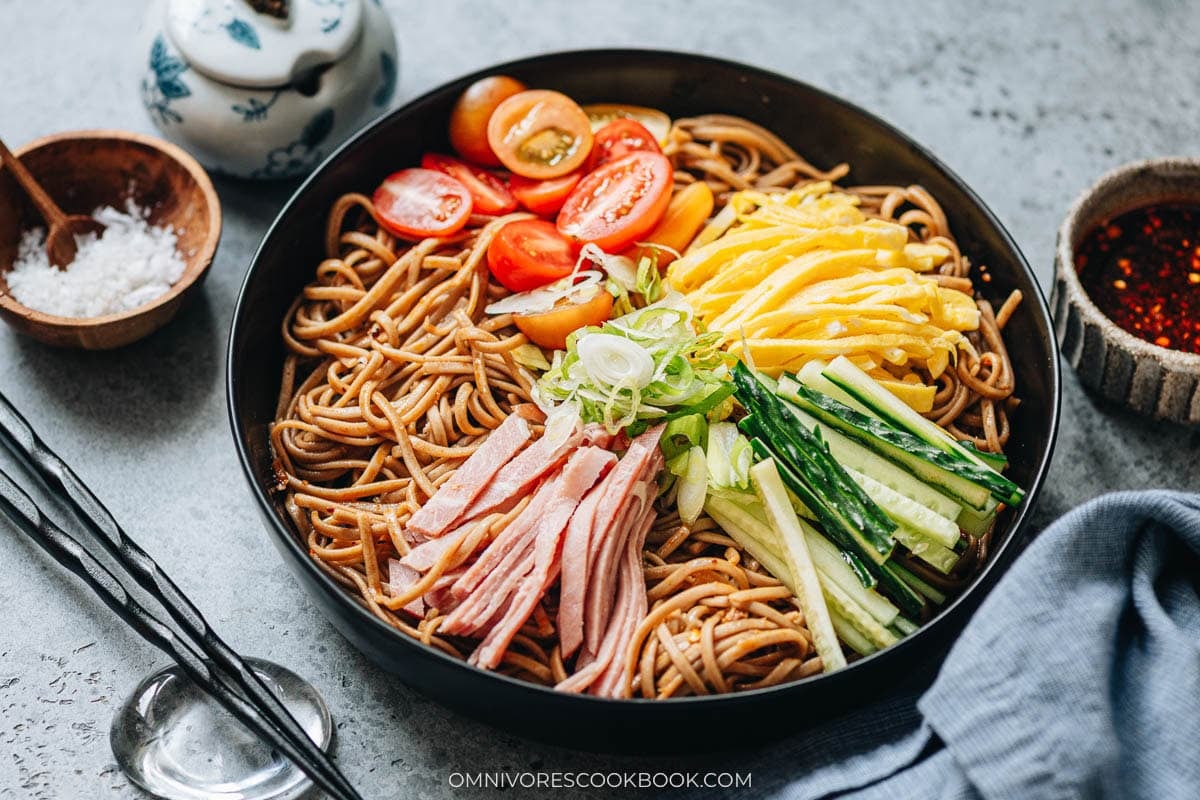
Culinary historians note that the integration of buckwheat into broader Asian noodle salads is heavily influenced by cross-border trade, migration, and regional demographics. In northeastern China’s Dongbei region, proximity to the Korean peninsula and the presence of a substantial Korean ethnic minority have long fostered a rich exchange of foodways. Traditional preparations such as Korean-style cold noodle soups and localized buckwheat noodle salads formed a staple of regional summer diets, heavily influencing contemporary iterations of chilled noodle dishes found globally today.
Ingredient Composition and Nutritional Profile
Adapting traditional regional Chinese recipes for contemporary home kitchens often requires logistical substitutions without compromising flavor integrity. While fresh qiaomian hele remains difficult to source in overseas markets such as the United States, commercially available dried Japanese soba serves as an accessible and structurally reliable alternative. Standard nutritional data for a single serving of the prepared Chinese Buckwheat Noodle Salad highlights its status as a balanced light meal, containing approximately 258 kilocalories, 15 grams of carbohydrates, 15 grams of protein, and 16 grams of fat. The dish also provides critical micronutrients, including 11 milligrams of vitamin C, 50 milligrams of calcium, and 2 milligrams of iron, alongside a dietary sodium content of 904 milligrams.
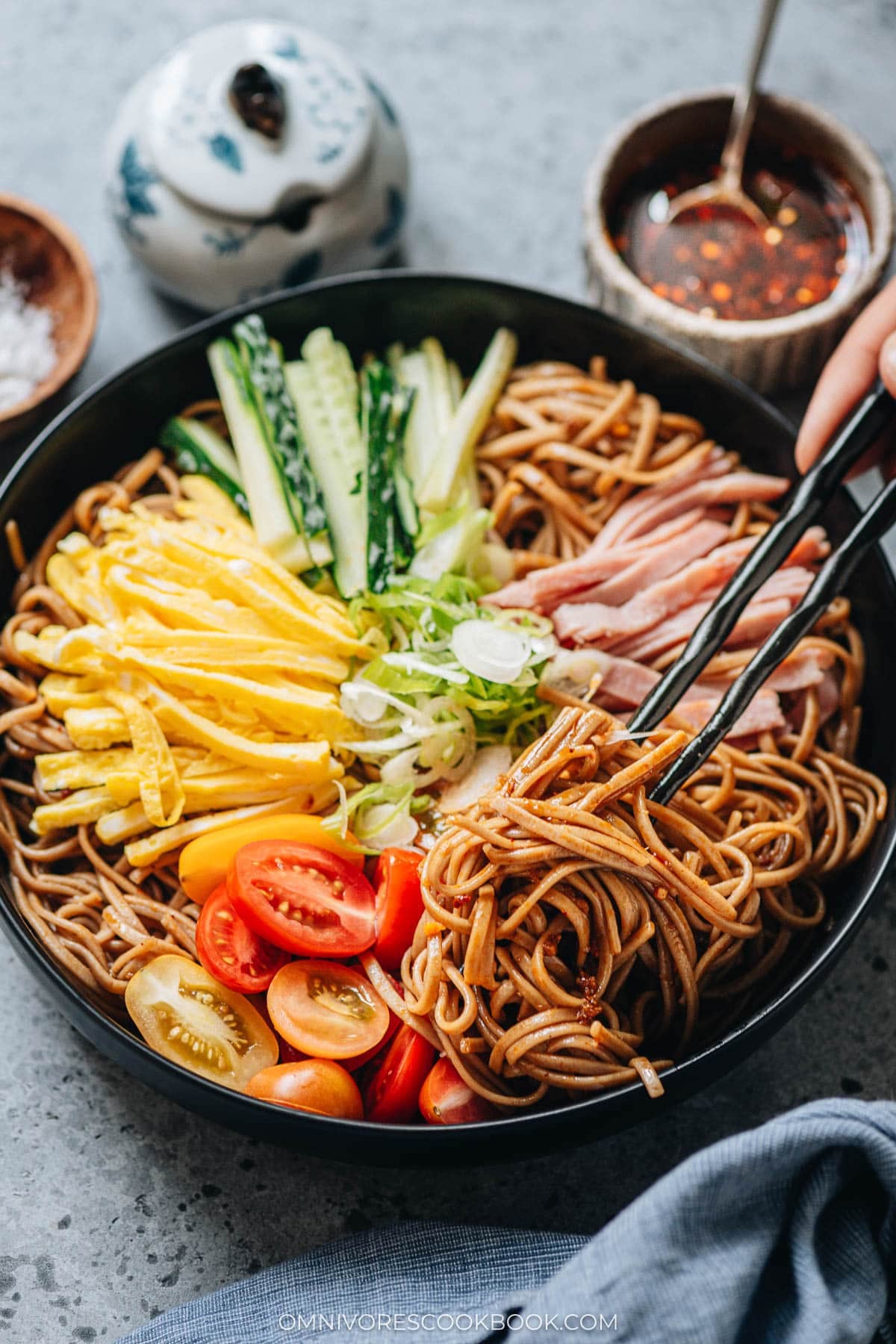
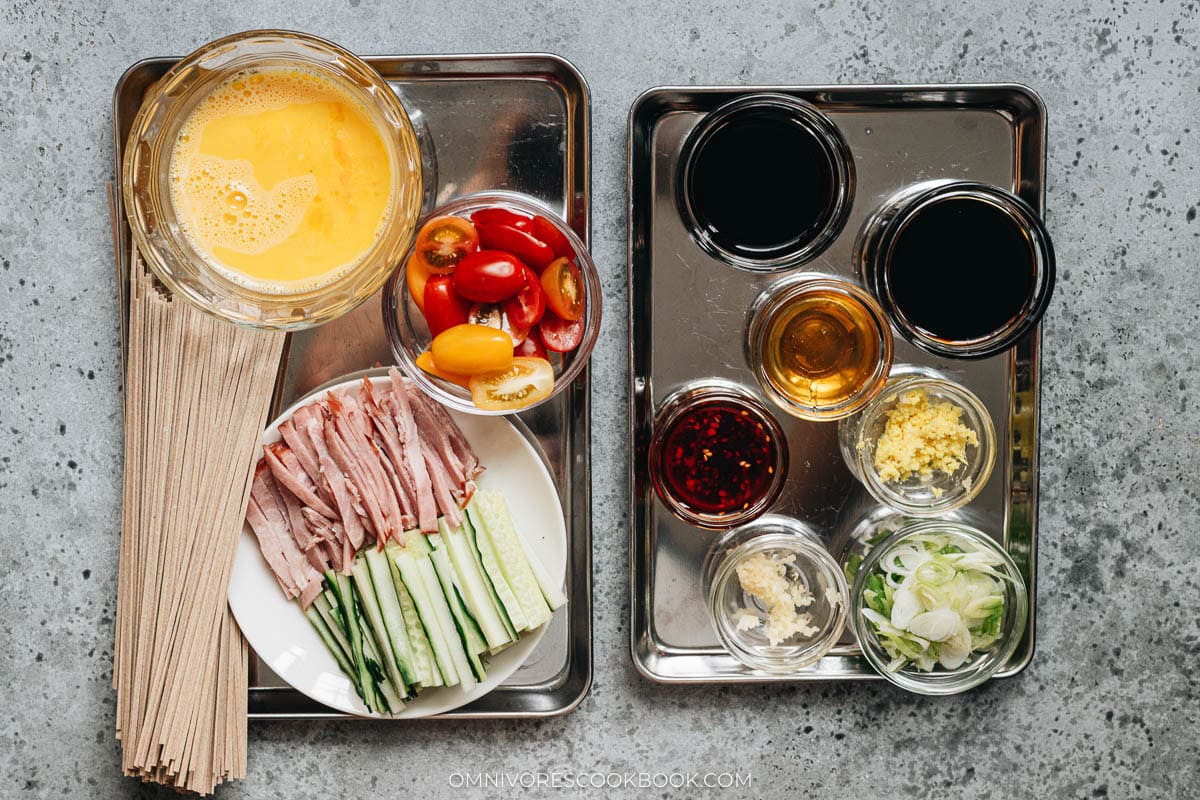
The ingredient architecture is divided into four distinct components: the noodle base, a delicate egg crepe, a pantry-staple dressing, and fresh mix-ins.
- Noodle Selection: Dried Japanese soba with a high percentage of authentic buckwheat flour is prioritized to ensure an earthy foundation, whether utilizing 100% buckwheat varieties or traditional wheat-blended alternatives.
- Dressing Matrix: The sauce relies on a harmonious balance of light soy sauce, Chinkiang vinegar (a traditional Chinese black vinegar), chili oil infused with chili flakes, natural honey, and freshly grated ginger and garlic. Grating the aromatics rather than mincing them ensures uniform integration into the thin liquid, preventing dense accumulation at the base of the serving vessel.
- Protein Component: A thin egg sheet, crafted from beaten eggs lightly seasoned with salt and cooked in a non-stick skillet wiped with a bare film of oil, is folded and sliced into precise ¼-inch ribbons.
- Fresh Produce Toppings: Julienned Persian cucumbers, halved cherry tomatoes, thinly sliced uncured ham, and finely chopped scallions contribute textural contrast, acidity, and a crisp finish.
Step-by-Step Preparation Methodology
The execution of the cold noodle salad requires precise thermal management and timing to achieve optimal texture.
- Noodle Boiling and Shocking: Soba noodles are introduced to a rolling boil and cooked strictly until al dente. Because buckwheat retains residual heat and continues to soften off the burner, early removal is critical. Immediate immersion in cold running water halts the cooking process, washes away excess surface starch, and prevents the strands from coalescing into a dense, sticky mass.
- Egg Crepe Production: A large non-stick skillet is treated with a microscopic film of neutral oil via paper towel application. Beaten eggs are poured into the heated pan and swirled immediately to form an even, translucent round. Cooking takes approximately one to two minutes over medium heat until the structure is fully set. The sheet is subsequently folded, cooled, and julienned.
- Dressing Emulsion: The liquid components—light soy sauce, Chinkiang vinegar, chili oil, honey, and micro-grated ginger and garlic—are whisked thoroughly in a mixing vessel. Culinary professionals recommend tasting the emulsion prior to application, adjusting salinity and acidity to match individual preferences based on the specific brand of soy sauce or vinegar utilized.
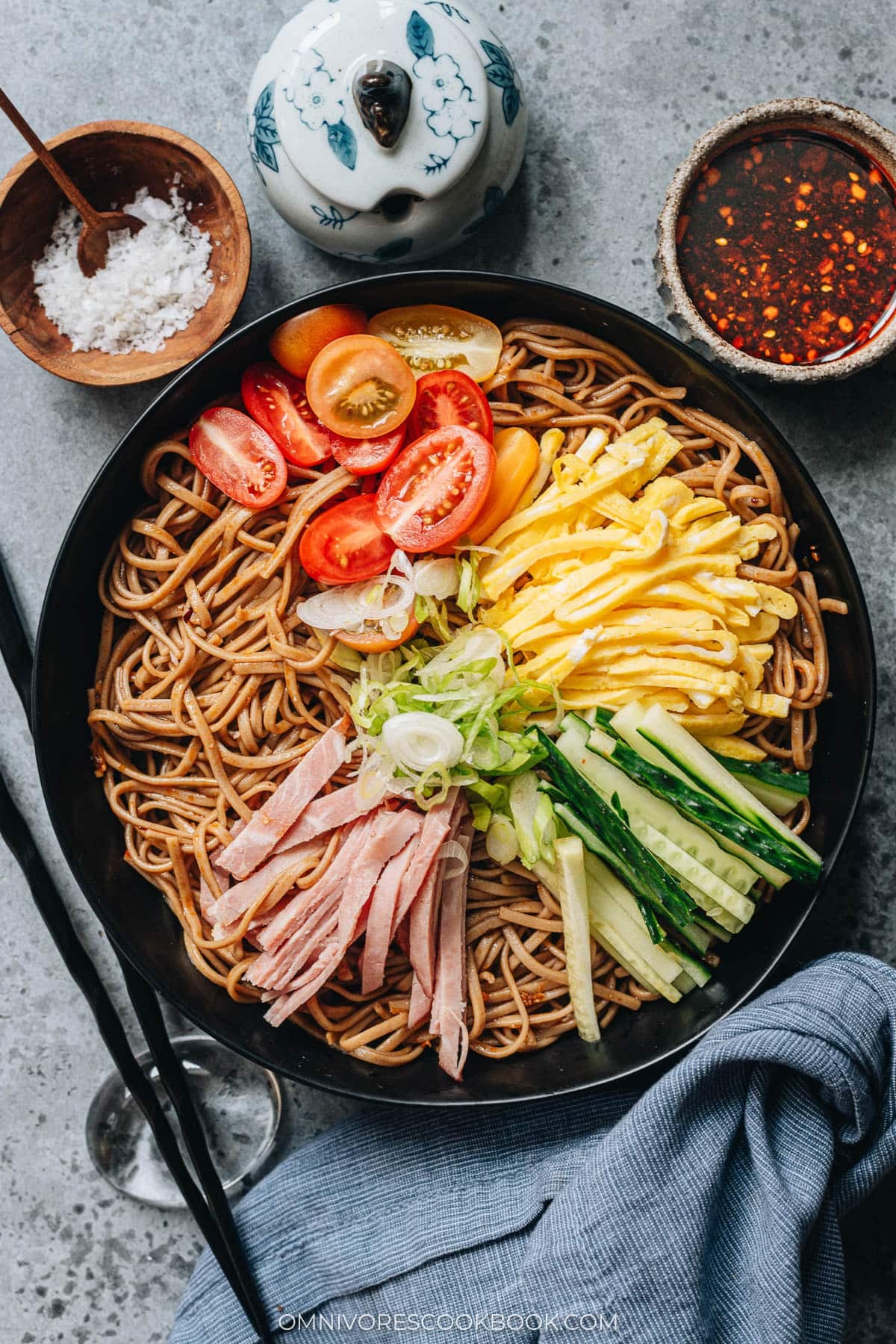
- Assembly and Integration: Approximately two-thirds of the prepared dressing is combined directly with the chilled noodles to ensure complete coating. The dressed soba is then portioned into individual serving vessels and meticulously layered with the ham, egg ribbons, cucumber, tomatoes, and scallions. The remaining dressing is reserved for table-side customization.
Culinary Adaptability and Serving Suggestions
In domestic settings, this cold noodle preparation functions as a standalone lunch or a light summer supper. To maintain optimal textural integrity, culinary experts advise keeping the components deconstructed—storing cooked noodles, fresh toppings, and dressing in separate refrigerated containers if prepared in advance. Direct, prolonged contact between the dressing and the noodles prior to consumption can cause the delicate strands to absorb excess liquid and lose their characteristic springy bite.
The dish also integrates seamlessly into broader dining spreads, particularly during warm-weather gatherings where hot-stove cooking is minimized. It pairs effectively with complementary ambient or chilled dishes, such as traditional wood ear mushroom salads, Sichuan-style spicy wontons in red oil, or Chinese eggplant prepared with garlic sauce.
Dietary accommodations are easily achieved without sacrificing the structural integrity of the meal. The recipe can be modified for vegetarian diets by omitting the uncured ham and substituting pan-seared firm tofu strips for protein. For those seeking lower spice levels, the chili oil can be reduced or partially substituted with toasted sesame oil, provided sufficient lipid content remains to maintain noodle gloss and prevent dryness.