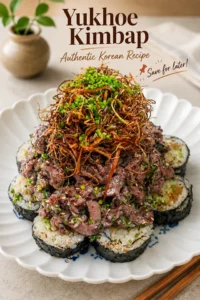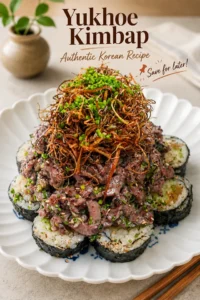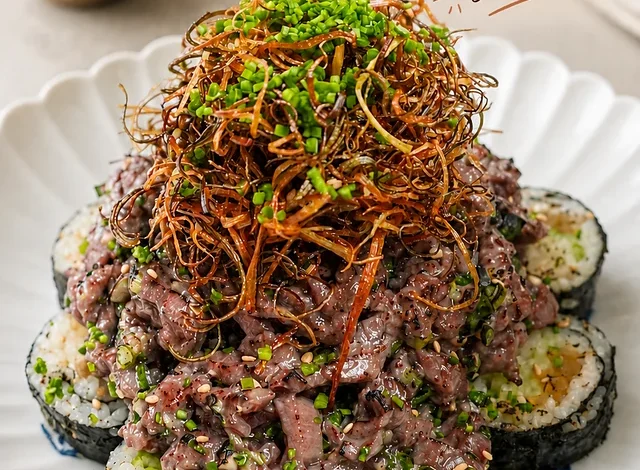
The convergence of traditional Korean beef preparation and the iconic convenience of kimbap has birthed a contemporary culinary phenomenon known as Yukhoe Kimbap. This dish represents a sophisticated departure from standard street-food formats, elevating the familiar seaweed rice roll by incorporating premium raw beef seasoned in the style of Korean tartare. By balancing the rich, savory profiles of seasoned protein with the crisp, refreshing textures of traditional produce, Yukhoe Kimbap has transitioned from niche culinary experimentation to a favored centerpiece for upscale social gatherings and modern bistro menus.

Historical Context and Culinary Evolution
The foundation of this dish lies in two distinct pillars of Korean gastronomy. Yukhoe, or Korean-style raw beef, traces its origins back to the Joseon Dynasty, where it was primarily enjoyed as a delicacy by the upper class. The dish relies on the quality of the beef—traditionally lean cuts such as top round or eye of round—marinated in a blend of sesame oil, soy sauce, sugar, and garlic. It is frequently accompanied by julienned Korean pear, which provides a necessary sweetness and enzymatic balance to the density of the raw meat.

Kimbap, conversely, is a staple of everyday Korean cuisine. Often misidentified by international observers as a variation of Japanese sushi, kimbap is defined by its distinct preparation: the rice is seasoned with sesame oil rather than vinegar, and the fillings are typically cooked or pickled. The modern innovation of combining these two traditions—placing the raw, seasoned beef as a topping on a roll filled with crunchy vegetables—shifts the kimbap from a portable snack to a refined hors d’oeuvre.

The Anatomy of the Dish
The preparation of Yukhoe Kimbap is a study in structural integrity and temperature management. The rolls themselves are constructed using roasted nori, short-grain rice seasoned with toasted sesame oil and salt, and a core of fresh, julienned ingredients. The inclusion of danmuji (yellow pickled radish) or, as preferred by some purists, Ulwae jubak-jangajji (pickled oriental melon aged in sake lees), provides a sharp, acidic crunch that cuts through the richness of the beef.

The defining characteristic of this dish is the placement of the protein. By positioning the seasoned Yukhoe atop the sliced roll rather than enclosing it, the chef ensures that the temperature of the beef remains cool and the texture distinct. The addition of crispy fried green onion or leeks is a calculated technical choice; the frying process converts the raw vegetable’s pungency into a deep, umami-rich crunch that serves as an essential garnish, effectively tying the disparate elements together.

Technical Preparation and Safety Protocols
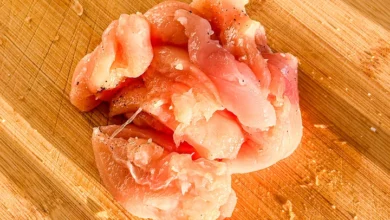
From a professional culinary perspective, the execution of this dish demands rigorous attention to food safety and ingredient sourcing. Because the primary protein is consumed raw, the selection of the beef is the most critical variable. Culinary professionals emphasize the necessity of sourcing "sashimi-grade" or "tartare-grade" beef from trusted purveyors. The meat must be handled in a temperature-controlled environment to mitigate bacterial growth, and the preparation timeline must be strictly adhered to: the beef is typically seasoned immediately before service to prevent the salt and soy sauce from drawing out moisture and compromising the integrity of the raw protein.

The process of "lightly torching" the surface of the beef has also emerged as a popular variation. While this alters the traditional definition of Yukhoe, it introduces a Maillard reaction that adds a smoky, charred depth to the beef. This technique reflects a broader trend in fusion cooking, where chefs attempt to marry the fresh, clean profile of raw ingredients with the savory, complex flavors associated with open-flame cooking.

Broader Economic and Cultural Implications
The rise of elevated kimbap variations like Yukhoe Kimbap mirrors a wider shift in global dining preferences, where "casualization" is meeting "premiumization." Data from the Korean food and beverage sector indicates an increasing consumer demand for "experience-based" dining, even within the context of traditional staple foods. As consumers become more adventurous with raw protein preparations—a trend bolstered by the global popularity of carpaccio and ceviche—dishes like Yukhoe Kimbap serve as a gateway to more traditional Korean flavors.

Furthermore, the dish provides a template for efficient service in professional kitchens. Most components, such as the seasoned rice, the vegetable julienne, and the signature green onion oil, can be prepared in advance (mise en place), allowing the final assembly to be executed rapidly. This efficiency makes it an ideal candidate for catering and high-volume banquet service, where presentation is as critical as flavor.

Supporting Data and Industry Trends
Market analysis of the Korean culinary export industry shows a significant uptick in the interest surrounding regional specialties. The region of Jeonju, widely recognized as a hub of Korean culinary excellence, has long championed its version of beef bibimbap topped with raw beef. The adaptation of these regional flavors into the kimbap format allows for easier scalability and international adoption.

In terms of nutritional profile, the dish is characterized by a high protein-to-fat ratio. The use of avocado oil for frying the green onions is a common modern substitution for traditional vegetable oils, appealing to health-conscious demographics. The integration of Korean pear also aligns with global trends toward incorporating fruit-based elements into savory courses, highlighting a sophisticated approach to palate cleansing within a single bite.

Best Practices for Service and Consumption
For those looking to replicate this dish in a professional or high-end home setting, several best practices are established:

- Chilling Protocol: The beef should be tempered in a freezer for a brief period—not long enough to freeze solid, but sufficient to firm the muscle fibers. This allows for precise, uniform julienning, which is vital for the texture of the tartare.
- Ingredient Separation: Aromatics such as garlic and fresh green onions should never be mixed into the Yukhoe base until the moment of service. This prevents the oxidation of the aromatics, which can lead to an overpowering, bitter flavor profile.
- Oil Utilization: The green onion oil produced during the frying process is an asset that should not be discarded. It possesses a high smoke point and an intense aromatic quality that is frequently utilized in professional kitchens for finishing noodles or dressing seasonal salads.
- Pairing Dynamics: Due to the complexity of the flavors—the sweetness of the pear, the salinity of the soy-marinated beef, and the umami of the fried leeks—the dish pairs exceptionally well with dry, high-acidity beverages. Sommelier-led recommendations often include dry sparkling wines or high-quality sake, which cleanse the palate between bites of the rich beef.
Conclusion: A New Standard
Yukhoe Kimbap is more than a trendy adaptation of a traditional snack; it is a refined synthesis of historical technique and modern culinary aesthetics. By maintaining the integrity of the raw beef while introducing innovative textures like fried aromatics, it challenges the perception of kimbap as merely a utilitarian meal. As the dish continues to appear on menus ranging from casual fusion bistros to sophisticated supper clubs, it stands as a testament to the versatility of Korean ingredients and the ongoing evolution of a globalized culinary landscape. Its success lies in its ability to be both deeply rooted in tradition and daringly forward-looking, satisfying the contemporary palate’s desire for complexity, freshness, and visual appeal.