Yukhoe Kimbap: A Culinary Evolution of Traditional Korean Beef Tartare

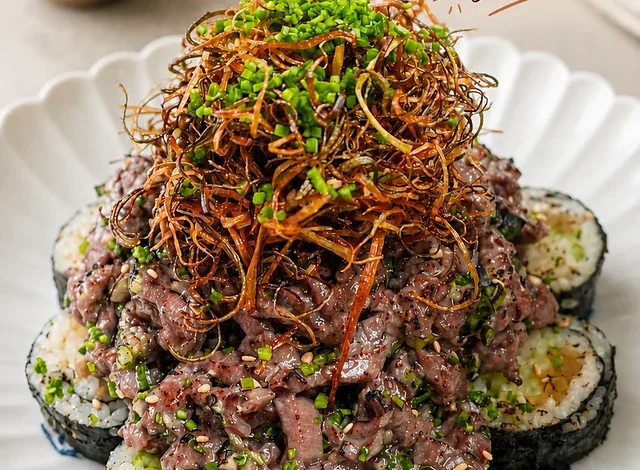
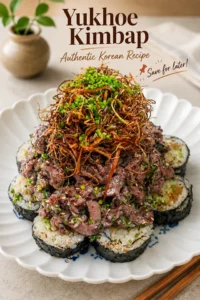
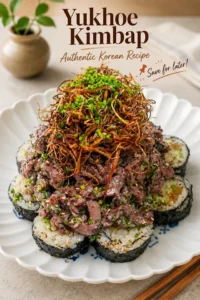
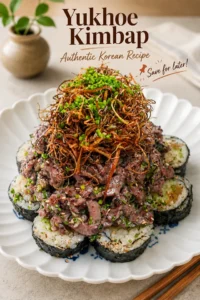
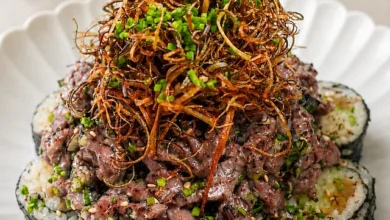
The integration of traditional raw beef preparations with the contemporary convenience of kimbap has emerged as a significant trend in modern Korean gastronomy. Yukhoe, a venerable dish consisting of finely julienned raw beef seasoned with sesame oil, soy sauce, and aromatics, has historically been served as a standalone delicacy. However, the development of Yukhoe Kimbap represents a strategic shift in food presentation, combining the structural integrity of seaweed-wrapped rice with the delicate flavor profile of beef tartare. This hybrid dish, which gained initial popularity in experimental supper clubs in culinary hubs like Paris, has now transitioned into a sophisticated offering for home cooks and high-end dining establishments alike.

Historical Context and Culinary Evolution
Yukhoe traces its origins to the Goryeo Dynasty, where the consumption of raw meat was influenced by Mongolian culinary customs. Traditionally, the dish focuses on the purity of high-quality, lean beef, such as top round or eye of round, to ensure both safety and texture. In the context of Korean cuisine, the balance of "yin" and "yang" is paramount; thus, the inclusion of crisp, sweet Korean pear—which contains enzymes that aid in protein digestion—serves as a functional and flavor-based necessity.

The kimbap, or Korean seaweed rice roll, has long been a staple of both daily lunches and festive picnics. Traditionally, kimbap is filled with cooked ingredients like spinach, carrots, ham, and burdock root. The innovation of Yukhoe Kimbap lies in the abandonment of the "cooked-filling" standard. By utilizing raw beef as a topping rather than an internal component, chefs preserve the integrity of the meat while ensuring the rice and seaweed remain structurally stable. This method draws inspiration from the culinary techniques found in Jeonju, a city world-renowned for its bibimbap culture and its dedication to the preservation of traditional food ingredients, particularly at the Jeonju Hanok Village.

Preparation and Methodology: The Technical Approach
The preparation of Yukhoe Kimbap requires a high degree of precision to manage both food safety and sensory experience. The process can be broken down into three primary stages: the preparation of the rice base, the curation of the beef, and the final assembly.

The rice must be seasoned with high-quality sesame oil and toasted sesame seeds to provide a nutty foundation. The filling consists of julienned Korean pear, cucumber, and pickled radish (danmuji), or in more refined iterations, Ulwae jubak-jangajji—an oriental melon pickled in sake lees. The use of the latter adds a sophisticated, acidic depth that contrasts with the richness of the beef.

The beef itself must be handled with extreme care. Professionals recommend that the beef be slightly tempered in a freezer—not enough to freeze the fibers, but enough to facilitate uniform, paper-thin slicing. This practice is essential for achieving the melt-in-the-mouth texture expected of a high-quality tartare. The sauce, an emulsion of soy sauce, sugar, and aromatics, must be applied immediately before service to prevent the salt from drawing too much moisture from the meat, which would otherwise compromise its structural integrity.

Supporting Data and Ingredient Standards
The success of this dish relies heavily on the quality of its components. According to culinary standards in South Korea, the beef used for yukhoe must be exceptionally fresh, often sourced from specific cuts like udunsal (top round) or hongdukkesal (eye of round). The chemical composition of these cuts—low in intramuscular fat but high in protein density—makes them ideal for raw consumption.

Furthermore, the integration of fried green onion is not merely aesthetic. The frying process, conducted in avocado oil at a precise temperature of 160°C (320°F), creates a Maillard reaction that results in a savory, crunchy garnish. This provides a necessary textural contrast to the soft beef and the chewy texture of the nori. The byproduct of this process, green onion-infused oil, is increasingly recognized by culinary experts as a valuable secondary ingredient, containing volatile aromatic compounds that enhance the flavor profile of the accompanying yukhoe sauce.

Implications of the "Torched" Variation
In recent years, a variation involving the use of a culinary torch on the assembled kimbap has gained traction. From a sensory perspective, the application of heat to the surface of the beef creates a "seared-raw" profile. This technique introduces a slight smoky, char flavor, which some consumers prefer as it mitigates the intensity of the raw beef flavor. While purists argue that the heat diminishes the subtlety of the dish, culinary analysts suggest that this customization allows for a broader market appeal, effectively bridging the gap for consumers who might otherwise be hesitant to consume entirely raw meat.

Logistics for Home and Professional Settings
The dish is noted for its efficiency in a high-pressure kitchen environment. Because the components—the green onion oil, the sauce, and the pickled vegetables—can be prepared in advance, the final assembly is streamlined. This makes the dish an ideal candidate for catering or "supper club" environments where the host aims to balance complexity with social interaction.

The logistical challenge lies in the final assembly. The kimbap must be rolled tightly enough to hold its shape when sliced but loosely enough to retain the texture of the rice. The placement of the yukhoe is critical; it should be heaped in a generous, uniform manner on the cut face of each roll. This presentation ensures that every bite provides an even distribution of the savory beef and the refreshing crunch of the internal vegetables.

Broader Impact on Korean Fusion Cuisine
The rise of Yukhoe Kimbap is a microcosm of the current trajectory of Korean cuisine on the global stage. It highlights a departure from strictly traditional preparation methods toward a more fluid, modular approach to dining. By elevating a street-food staple (kimbap) with a high-end protein (yukhoe), the dish satisfies the modern demand for "premium comfort food."

Furthermore, the trend reflects an increased accessibility of specialized ingredients. As global interest in Korean culinary arts grows, the availability of specific items—such as high-grade seaweed, authentic danmuji, and the appropriate cuts of beef—has expanded, allowing amateur cooks to replicate dishes that were once restricted to high-end restaurants.

Conclusion and Future Outlook
Yukhoe Kimbap stands as a testament to the versatility of Korean flavor profiles. It succeeds by balancing opposing textures and temperatures: the warmth and nuttiness of the rice, the cold, tender quality of the beef, and the crisp, refreshing bite of the pear and cucumber. As the dish continues to evolve, it is likely that variations incorporating local, seasonal ingredients from outside of Korea will emerge, further solidifying its status as a significant innovation in contemporary global cuisine. Whether served as a small plate at a refined dinner party or enjoyed as an elevated individual meal, the dish represents a harmonious intersection of tradition and modern culinary ambition.