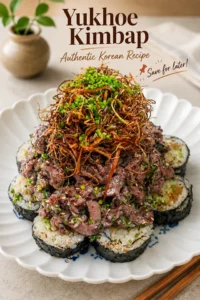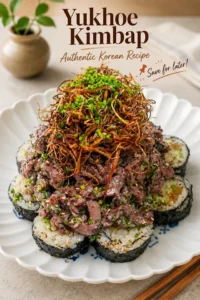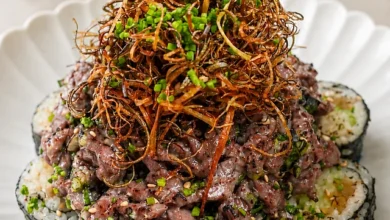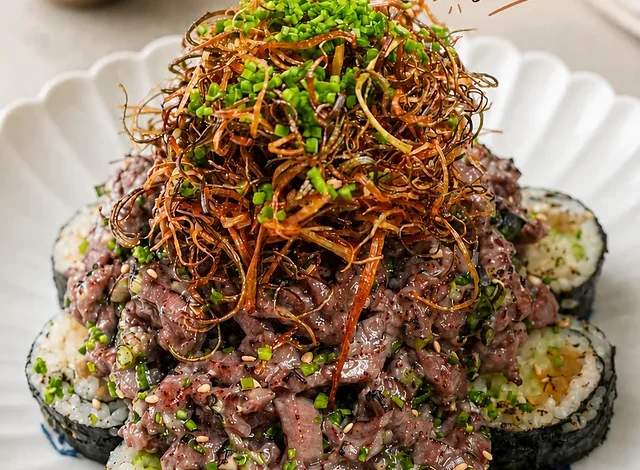
The technical composition of this dish relies on the precise balance of flavor profiles inherent to Korean gastronomy. The foundational "kimbap" component consists of steamed short-grain rice seasoned with sesame oil and toasted seeds, providing a nutty aromatic base. This is paired with julienned Korean pear, which offers a signature sweetness and high-moisture crunch, along with cucumber and danmuji—the quintessential yellow pickled radish. The departure from tradition occurs in the final assembly: instead of incorporating the beef into the roll, it is placed atop the sliced pieces, allowing the diner to experience the distinct, cool temperature of the seasoned raw meat alongside the warm, umami-rich components of the roll.

Historical Context and Culinary Evolution
While kimbap has long been a staple of the Korean diet, often compared to the Japanese futomaki, its evolution has been marked by regional variations and the inclusion of diverse proteins. Traditionally, kimbap fillings are cooked—ranging from sautéed carrots and spinach to processed ham or imitation crab. The introduction of yukhoe (Korean beef tartare) into this format marks a significant departure toward a more minimalist, ingredient-focused approach.

Yukhoe itself carries a long history in Korean culinary traditions, particularly within the Jeonju region, which is widely recognized as a hub for traditional food culture, including the famous Jeonju Bibimbap. The practice of consuming raw, thinly sliced beef seasoned with soy, garlic, and sesame oil is deeply embedded in the region’s agricultural history. By merging the techniques of yukhoe with the portability and structure of kimbap, chefs are catering to a modern demand for elevated "snack" foods that offer the complexity of a fine dining entrée in a finger-food format.

Technical Preparation and Ingredient Integrity
The successful execution of Yukhoe Kimbap depends heavily on the quality and handling of the primary protein. Culinary professionals emphasize the use of lean cuts, specifically top round (udunsal) or eye of round (hongdukkesal), which are prized for their low fat content and firm, consistent texture.

The preparation process involves a strict protocol to ensure both safety and optimal mouthfeel:

- Protein Procurement: Beef must be sourced from a butcher with the capacity to provide cuts suitable for raw consumption.
- Temperature Control: Prior to slicing, the beef is typically placed in a freezer to firm up, facilitating precise, uniform julienning. This process is crucial to achieving the texture associated with high-end tartare.
- Emulsification: The sauce, a blend of soy, sesame oil, and aromatics, is emulsified prior to application. This ensures that the coating adheres to the beef without causing the fibers to break down prematurely.
- Aromatic Integration: The use of green onion oil—produced by frying alliums in neutral oil—serves as a bridge between the savory, raw beef and the seasoned rice.
The Role of Contrast in Gastronomy
Data regarding consumer food preferences in East Asia indicates a growing trend toward dishes that offer "sensory contrast." Yukhoe Kimbap exemplifies this by providing a multi-layered experience: the crunch of the fried green onion and danmuji, the juiciness of the Korean pear, the soft, yielding texture of the raw beef, and the chew of the nori-wrapped rice.

The inclusion of fried green onion is not merely decorative; it provides an essential "savory crunch" that mimics the role of tenkasu in certain sushi rolls, adding depth to the flavor profile. Furthermore, the option to lightly torch the beef before serving introduces a Maillard reaction—a chemical process that occurs when amino acids and reducing sugars are exposed to heat—providing a smoky, charred flavor that appeals to those who may be hesitant about the texture of completely raw proteins.

Broader Implications for Modern Korean Cuisine
The popularity of this dish signals a broader shift in how traditional Korean staples are being interpreted globally. As interest in Korean food culture continues to rise, culinary professionals are increasingly looking for ways to adapt traditional recipes for dinner party settings. The "supper club" origin of this dish suggests that it is designed for social consumption, where the preparation is largely completed in advance, allowing for the final assembly to occur immediately before the dish is presented.

From an economic perspective, the rise of elevated kimbap variations reflects a transition in the hospitality sector where street-food-derived concepts are being rebranded as "premium casual." This allows for higher margins and attracts a demographic interested in the intersection of authenticity and innovation.

Critical Considerations for Safety and Handling
Because the dish centers on the consumption of raw beef, food safety remains a primary concern for both home cooks and professional kitchens. The following protocols are widely regarded as industry standards for preparing yukhoe:

- Sourcing: Raw-grade beef must be treated with specific handling procedures from the slaughterhouse level.
- Time Management: The yukhoe must be seasoned immediately before service. Marinating the beef in advance, particularly in salt-heavy sauces, can draw out moisture and alter the texture from "silky" to "cured," which is generally avoided in this style of preparation.
- Aromatic Management: Chopped garlic and fresh scallions should remain separated from the sauce and the beef until the final moment of plating to prevent oxidation and the development of harsh, astringent flavors.
Future Trajectory
The integration of yukhoe into the kimbap format is likely to continue evolving as chefs experiment with additional garnishes. Current iterations have already seen the inclusion of egg yolks for added richness and the use of ulwae jubak-jangajji (pickled oriental melon) as a high-end alternative to standard danmuji.

As the global palate becomes more accustomed to raw beef preparations—ranging from French steak tartare to Italian carpaccio—the Korean yukhoe style offers a distinct, aromatic alternative that leverages soy and sesame rather than the capers and mustard common in Western preparations. The adaptability of the kimbap roll, as a vessel for these high-quality ingredients, positions this dish as a lasting fixture in the repertoire of modern fusion cuisine.

Ultimately, the enduring appeal of Yukhoe Kimbap lies in its balance. It remains grounded in the familiarity of the roll while providing the culinary excitement of a sophisticated, raw protein dish. Whether served as a small plate at a formal dinner party or prepared as a high-end snack, it stands as a testament to the versatility of traditional Korean flavor profiles when applied to contemporary culinary architectures. As regional chefs continue to refine the dish, the focus will likely remain on the quality of the beef and the precision of the textural contrasts, ensuring that the dish remains both a sensory experience and a masterclass in balance.