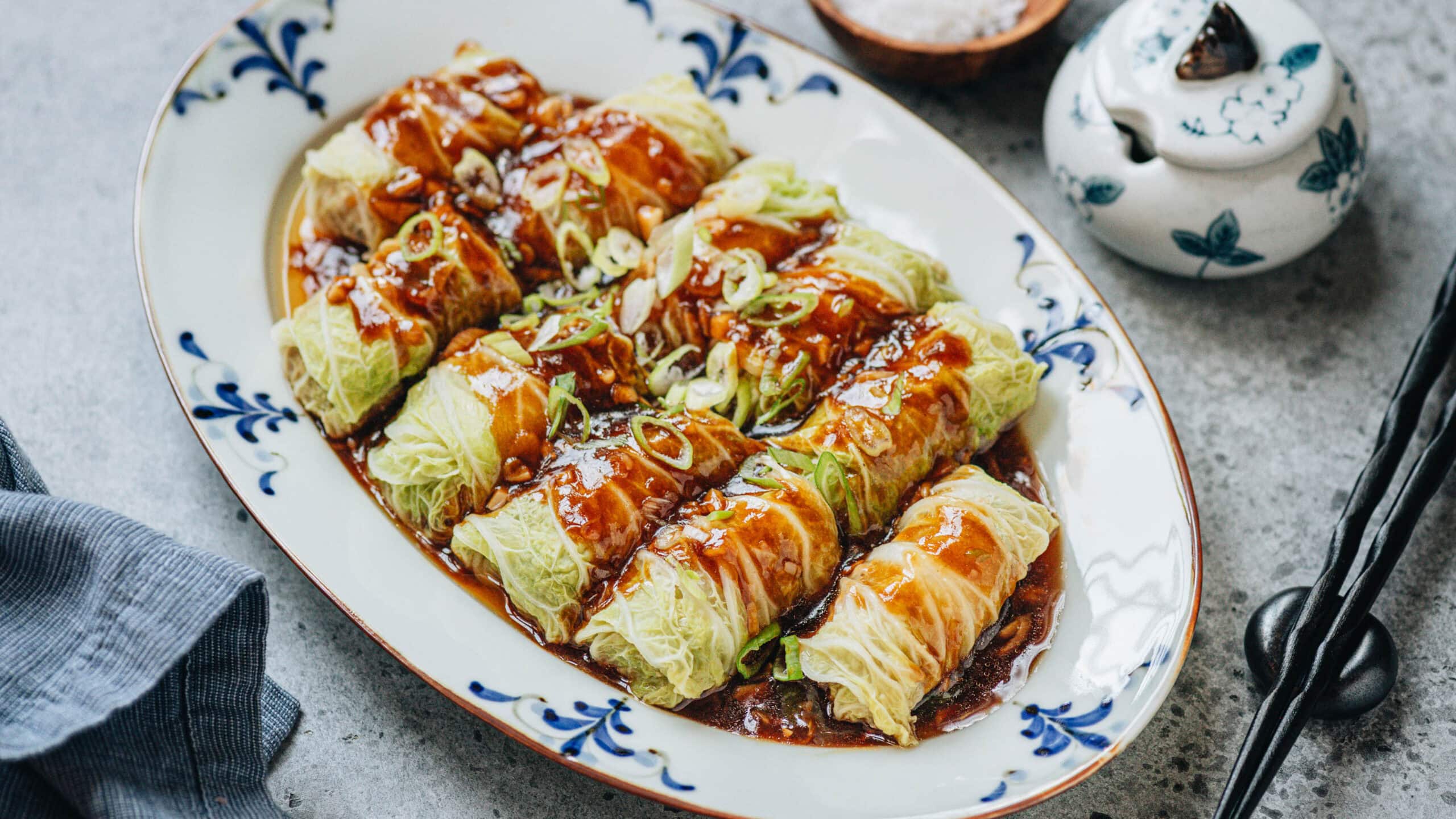
Culinary historians and home economists are increasingly examining traditional Northern Chinese winter dishes as modern consumers seek budget-friendly, nutrient-dense meal alternatives. Among these time-honored recipes, Chinese cabbage rolls—known locally as baicai juan—stand out as a prime example of resourcefulness, leveraging regional produce to create balanced, umami-rich main courses. Originating from the colder provinces of China where fresh agricultural variety historically dwindled during sub-zero winter months, this dish relies on napa cabbage (Brassica rapa subsp. pekinensis) and seasoned ground pork to deliver a comforting, efficient weeknight dinner.
Historical Context and Regional Significance
During the early 1990s in urban centers such as Beijing, seasonal weather patterns drastically limited the availability of diverse fresh produce. Households relied heavily on staple vegetables, most notably napa cabbage, which was typically stored in massive quantities to sustain families through harsh winters. To combat culinary fatigue, home cooks engineered versatile preparations that transformed the mild-flavored, high-moisture vegetable into distinct culinary creations.

While stuffed cabbage variations appear across various global gastronomic traditions—including Eastern European, Middle Eastern, and Balkan cuisines—the Northern Chinese iteration differs fundamentally in its structural components and cooking methodology. Rather than utilizing thick, fibrous green cabbage leaves that require prolonged braising, Northern Chinese recipes favor the delicate, sweet, and pliable leaves of napa cabbage. This choice not only reduces preparation times significantly but also allows the natural sugars of the cabbage to complement savory protein fillings.
Nutritional Profile and Culinary Mechanics

From a nutritional perspective, a standard serving of these steamed cabbage rolls offers a balanced macronutrient distribution. Data compiled from home-cooking nutritional analyses indicate that a single portion contains approximately 231 kilocalories, 12 grams of protein, 17 grams of total fat (including 5 grams of saturated fat), and 8 grams of carbohydrates, alongside valuable dietary fiber and essential micronutrients such as Vitamin C and calcium.
The culinary success of the dish depends heavily on specific preparation techniques:

-
Protein Cohesion: Culinary experts emphasize that the ground pork filling must be thoroughly agitated with seasonings—such as Shaoxing wine, light soy sauce, oyster sauce, sesame oil, and grated ginger—until the mixture develops a sticky, tacky texture. This physical bonding ensures the meat retains moisture and structural integrity during the steaming process.
-
Moisture Management: Unlike Western cabbage rolls that are typically submerged in tomato or broth-based sauces and oven-baked, the Chinese method utilizes direct steam cooking. This preserves the structural integrity of the tender napa cabbage leaves while trapping natural juices inside the meat.

-
Zero-Waste Sauce Integration: As the cabbage and pork steam, they release a substantial amount of natural liquid onto the cooking vessel. Professional and home-cooking methodologies repurpose this nutrient-dense exudate as the foundational base for a glossy finishing sauce. Combined with aromatics like garlic and scallion whites, along with oyster sauce and a controlled cornstarch slurry, this liquid prevents flavor loss and creates a cohesive flavor profile.
Step-by-Step Preparation Chronology

Preparation of authentic Chinese cabbage rolls typically requires less than sixty minutes, making it a viable option for contemporary schedules.
Phase One: Rehydration and Blanching
The process begins by reconstituting dried shiitake mushrooms in warm water for approximately 10 to 15 minutes to unlock concentrated umami compounds. Concurrently, selected inner and middle napa cabbage leaves—chosen for their flexibility—are briefly blanched in boiling water for roughly 20 seconds. This step softens the foliage just enough to facilitate rolling without tearing, after which the leaves are immediately rinsed in cold water to arrest the cooking process.

Phase Two: Filling Assembly and Rolling
The filling is formulated by combining fatty ground pork, minced rehydrated shiitake mushrooms, aromatics, and finely chopped raw napa cabbage whites (which impart a desirable crunch). Cooks place one to two tablespoons of this mixture near the base of each blanched leaf, folding the sides inward and rolling upward to form a secure package.
Phase Three: Steaming and Reduction
The assembled rolls are arranged seam-side down on a heatproof plate to prevent unravelling and steamed over boiling water for 12 minutes. Following a brief resting period to allow excess moisture to purge, the accumulated steaming liquid is harvested, combined with soy and oyster sauces, and simmered in a skillet with garlic and scallions. A gradual cornstarch slurry is introduced to achieve a glossy viscosity before the sauce is poured over the finished rolls.

Broader Culinary Implications and Modern Adaptations
Modern food analysts note that traditional recipes like Chinese cabbage rolls align closely with contemporary dietary movements emphasizing whole foods, minimal food waste, and efficient meal preparation. By utilizing the leftover napa cabbage whites for subsequent stir-fries or braises, home cooks adhere to traditional principles of culinary economy.

Furthermore, culinary adaptability has allowed the dish to transcend its regional origins. While traditional specifications call for a higher-fat ground pork to maintain moisture against the lean vegetable wrapper, home cooks frequently experiment with alternative proteins, including ground chicken, turkey, or beef, though leaner substitutions often require adjustments to prevent dryness.
As global interest in homestyle Asian cooking continues to expand through digital media platforms and specialized cookbooks, dishes rooted in resourcefulness and heritage—such as steamed napa cabbage rolls—demonstrate enduring relevance in modern kitchens worldwide.