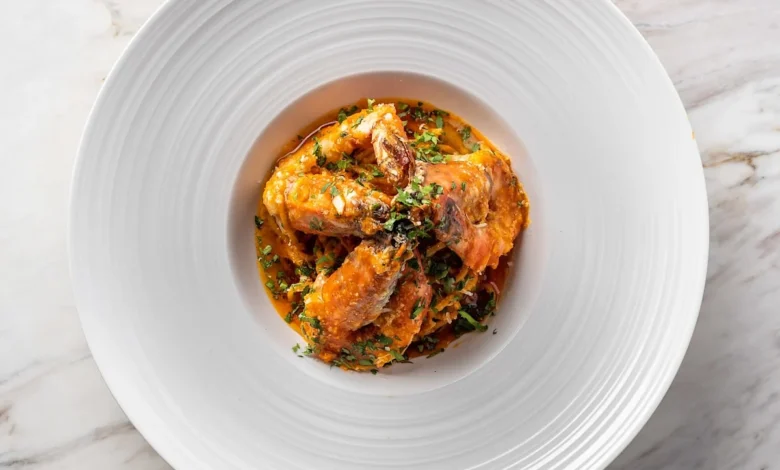
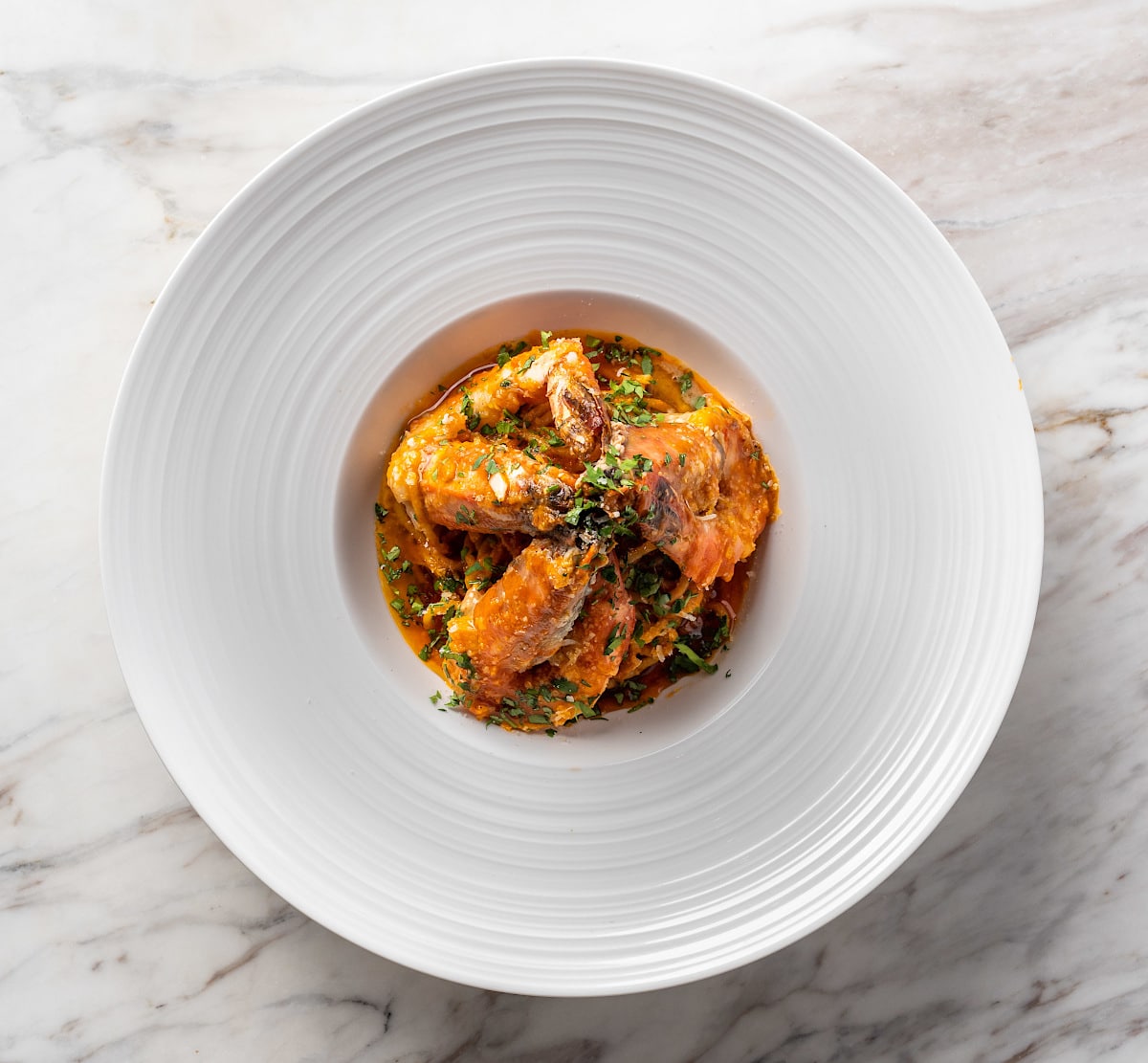
The culinary landscape of the Mediterranean has long been defined by its ability to transform simple, high-quality ingredients into dishes of extraordinary depth and flavor. Among the pantheon of Greek coastal classics, Garides Saganaki—plump shrimp simmered in a robust tomato reduction and finished with crumbled feta cheese—stands out as a masterclass in balance. Bringing this iconic meze from the tavernas of the Aegean to the vibrant dining scene of Southeast Asia, Executive Chef Djordjo Cetkovic has championed the dish at Pano Kato in Singapore, offering international diners an authentic taste of Greek culinary heritage.
The appeal of Garides Saganaki lies not merely in its ingredients, but in the rigorous culinary technique required to execute it properly. According to Chef Cetkovic, whose extensive professional background spans prestigious kitchens across Europe and Asia, the integrity of the dish depends entirely on precise timing. By allowing the tomato sauce to simmer, concentrate, and develop its natural sweetness before introducing the seafood, the kitchen ensures that the shrimp are incorporated only at the final moment. This prevents the crustaceans from overcooking, yielding a tender, succulent texture that contrasts sharply with the salty, creamy tang of warm feta and the subtle, aromatic warmth of ouzo.
Culinary Origins and the Evolution of Saganaki Culture
To understand Garides Saganaki, one must first examine the broader culinary tradition of the saganaki. The term traditionally refers to a small, heavy-bottomed two-handled frying pan, known as a saganaki, in which various foods are prepared or fried. Over time, the name evolved to describe the dishes themselves—most notably fried cheeses like graviera or kefalotyri, as well as seafood and vegetable preparations cooked in similar vessels.
In coastal regions of Greece, seafood saganaki dishes became staples of the seaside ouzeri, establishments traditionally dedicated to serving meze alongside small glasses of ouzo, tsipouro, or wine. The pairing of seafood with tomatoes, garlic, herbs, and cheese is a hallmark of Greek island cooking, reflecting historical trade routes, agricultural practices, and the deep-seated coastal lifestyle. While regional variations abound—some incorporating fiery chili peppers, others utilizing fresh herbs like dill or parsley—the tomato-and-feta foundation remains the most globally recognized expression of the dish.
Master Chef Djordjo Cetkovic and Mediterranean Gastronomy in Asia
The contemporary adaptation of this classic recipe at Pano Kato in Singapore is helmed by Executive Chef Djordjo Cetkovic. With over two decades of professional culinary experience spanning Europe and Asia, Cetkovic brings a rigorous European discipline to his Mediterranean menus. As an ambassador for the Culinary Federation of Serbia in Asia and the author of The Grand Heritage Cookbook, Cetkovic has built a reputation for bridging traditional regional cuisines with modern international standards.
His tenure in Greece profoundly influenced his approach to seafood preparation. In professional kitchens, mastering crustacean cookery is notoriously difficult due to the narrow window between properly cooked and rubbery textures. Cetkovic emphasizes that home cooks and professional chefs alike often make the critical error of adding raw shrimp to a cold or watery sauce. By reducing the tomato base until rich and viscous, the sauce coats the shrimp instantly, sealing in moisture and flavor during the brief baking phase.
Comprehensive Recipe: Garides Saganaki by Chef Djordjo Cetkovic
For culinary enthusiasts seeking to replicate the authentic flavors of a Greek taverna at home, Chef Cetkovic provides a structured blueprint that emphasizes quality ingredients and precise execution.
Preparation and Cooking Metrics
- Prep Time: 20 minutes
- Cook Time: 35 minutes
- Total Time: 55 minutes
- Course: Main Course / Meze
- Cuisine: Greek
- Yield: 4 servings
Ingredients
- Shrimp/Prawns: 16 to 20 large shrimp (prawns), peeled and deveined, with tails left on for presentation (fresh or flash-frozen and thoroughly thawed).
- Tomatoes: 4 cups ripe plum tomatoes, finely chopped, or two 14-ounce cans of high-quality crushed Italian tomatoes.
- Aromatics: 1 medium yellow onion, finely diced; 3 cloves of garlic, minced.
- Alcohol: 2 tablespoons of Ouzo (traditional Greek anise-flavored aperitif).
- Cheese: 7 ounces (200 grams) authentic Greek feta cheese, crumbled into large chunks.
- Olive Oil: 4 tablespoons extra virgin olive oil, divided.
- Herbs and Seasoning: 1 teaspoon dried oregano; sea salt and freshly cracked black pepper to taste; a pinch of sugar (if using canned tomatoes to balance acidity); fresh flat-leaf parsley, chopped, for garnish.
- Accompaniment: Freshly baked crusty artisan bread for serving.
Step-by-Step Instructions
- Preheat the Oven: Begin by preheating your oven to 200°C (400°F). Ensuring the oven is fully heated is essential for achieving the quick bake required for the shrimp and the rapid softening of the feta.
- Prepare the Aromatics: In a large oven-safe skillet or traditional saganaki pan, heat 3 tablespoons of extra virgin olive oil over medium heat. Add the finely diced yellow onion and sauté for 5 to 7 minutes until translucent and soft, taking care not to let them brown excessively.
- Incorporate Garlic and Spices: Add the minced garlic and dried oregano to the skillet, stirring continuously for approximately 1 minute until the garlic becomes fragrant.
- Deglaze with Ouzo: Carefully pour in the 2 tablespoons of ouzo. Allow the alcohol to cook off for 1 to 2 minutes while scraping up any browned bits from the bottom of the pan, imparting the signature subtle anise aroma into the base.
- Simmer the Tomato Sauce: Stir in the chopped fresh tomatoes (or canned crushed tomatoes). Season with sea salt, black pepper, and a pinch of sugar if necessary. Reduce the heat to medium-low and allow the sauce to simmer uncovered for 20 to 25 minutes. The sauce must reduce significantly, thickening into a rich, concentrated paste that coats the back of a spoon.
- Add the Shrimp: Once the tomato sauce has reached the desired consistency, arrange the raw, peeled shrimp evenly throughout the pan, pressing them gently into the hot sauce. As Chef Cetkovic notes, this timing is crucial: the shrimp should enter only when the sauce is fully finished.
- Top with Feta: Scatter the large chunks of crumbled feta cheese generously across the top of the shrimp and tomato sauce. Drizzle the remaining 1 tablespoon of extra virgin olive oil over the cheese.
- Bake to Perfection: Transfer the oven-safe skillet into the preheated oven. Bake for 8 to 10 minutes, or until the shrimp are just opaque and cooked through, and the feta has softened and begun to brown slightly at the edges.
- Garnish and Serve: Remove the dish carefully from the oven. Let it rest for 2 to 3 minutes to settle, garnish with freshly chopped flat-leaf parsley, and serve immediately while bubbling alongside abundant slices of crusty bread.
Cultural and Economic Implications of Mediterranean Cuisine Abroad
The global proliferation of Mediterranean dishes like Garides Saganaki highlights a broader shift in international consumer preferences toward diets perceived as both flavorful and health-conscious. Mediterranean culinary concepts, characterized by the heavy utilization of olive oil, fresh vegetables, lean proteins, and fermented dairy, continue to experience strong growth across Asian metropolitan markets such as Singapore.

Restaurants specializing in regional Greek and Mediterranean fare face unique supply chain challenges, particularly regarding the importation of authentic protected designation of origin (PDO) items such as authentic Greek feta cheese and specialized regional spirits like ouzo. Despite these logistical hurdles, chefs like Djordjo Cetkovic maintain that preserving the authenticity of these components is non-negotiable for delivering a genuine cultural experience.
Furthermore, the popularity of meze-style dining reflects a changing social dynamic in modern hospitality, where shared, interactive dining experiences take precedence over traditional multi-course plating. Dishes designed to be shared around a table, accompanied by communal bread-soaking (papara in Greek), foster a convivial atmosphere that transcends cultural barriers.
As international interest in authentic regional European cooking deepens, the careful execution of traditional recipes ensures that culinary heritage remains vibrant and accessible far beyond its geographical origins. Through expert guidance, precise technique, and uncompromising ingredient selection, dishes like Garides Saganaki continue to serve as delicious ambassadors of Greek culture worldwide.