The post-retirement lives of high-ranking state officials in Indonesia often become a subject of intense public scrutiny, frequently characterized by transitions into lucrative corporate boardrooms, prestigious advisory roles, or the quiet enjoyment of accumulated wealth. However, the historical record of the Republic of Indonesia contains the remarkable story of K.H. Saifuddin Zuhri, the nation’s 10th Minister of Religious Affairs, whose post-ministerial life defied the conventional expectations of political elite behavior. Years after serving in the cabinet of President Sukarno, Saifuddin Zuhri was discovered to be quietly making a living as a rice trader in the bustling, crowded alleys of Pasar Glodok, Jakarta. His journey from the halls of power to the stalls of a traditional market serves as a profound case study in political integrity, the "santri" work ethic, and the rejection of state-funded privilege.
The Ministerial Tenure and Political Context (1962–1967)
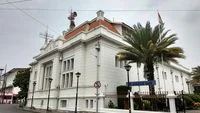
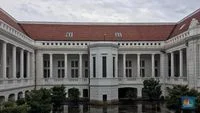
Saifuddin Zuhri’s appointment as Minister of Religious Affairs on March 2, 1962, came during one of the most turbulent periods in Indonesian history—the era of Guided Democracy. At the time, the Ministry of Religious Affairs (Kementerian Agama) served as a critical bridge between the secular-nationalist government of President Sukarno and the powerful Islamic organizations that formed the backbone of Indonesian society. As a prominent figure within Nahdlatul Ulama (NU), the country’s largest Islamic organization, Saifuddin Zuhri was tasked with navigating the complex ideological landscape involving the state, religious traditionalists, and the rising influence of the Indonesian Communist Party (PKI).
During his five-year tenure, which lasted until 1967, Zuhri was known for his administrative discipline and his efforts to institutionalize religious education. His departure from the ministry coincided with the transition from the Old Order to the New Order under General Suharto. Despite the seismic shift in the political landscape, Zuhri remained active in the legislative branch, serving in the Mutual Cooperation People’s Representative Council (DPR-GR) and later winning a seat in the 1971 General Elections as a representative of the NU party. However, as the New Order consolidated power and political dynamics shifted, Zuhri eventually transitioned into a life away from the immediate spotlight of state bureaucracy.
The Return to the Market: A Chronology of Resilience
For Saifuddin Zuhri, the transition from a state dignitary to a common merchant was not a fall from grace, but rather a return to his roots. As documented in his autobiography, Berangkat dari Pesantren (Starting from the Boarding School), published in 1984, the act of trading was a familiar survival mechanism. In 1942, during the hardships of the Japanese occupation and shortly after the birth of his first child, Zuhri had been forced to seek any available means of income. During that era, he sold second-hand clothes, used household appliances, and even cigarettes to sustain his family.
This foundational experience shaped his perspective on labor and dignity. By the 1980s, long after his ministerial term had ended and his formal parliamentary service had concluded, Zuhri found himself needing to supplement his modest pension to meet the daily needs of his household. Rather than leveraging his former titles to secure "commissions" or "consultancy fees"—practices that were becoming increasingly common during the New Order’s economic boom—he chose the path of manual trade.
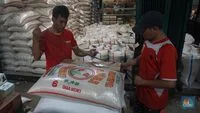
The routine was disciplined and humble. Every morning, following the performance of the Dhuha prayer around 09:00 WIB, the former minister would personally load sacks of rice into his vehicle. He drove himself to Pasar Glodok, a central hub of commerce in West Jakarta known for its density and competitive atmosphere. There, amidst the noise and heat of the market, the man who once sat in cabinet meetings alongside the founding fathers of the nation negotiated prices and sold rice to regular customers.
The Secret Life of a Rice Trader
One of the most striking aspects of Zuhri’s time at Pasar Glodok was the anonymity he maintained. For a significant duration, his own family remained unaware of the specific nature of his daily activities. While they observed him leaving every morning and returning with honest earnings, the details of his labor were kept private. This secrecy was not born of shame, but rather of a desire to protect his family from worry and to maintain the purity of his endeavor.
The veil was eventually lifted when one of his sons accidentally spotted him in the middle of a transaction at the market. The discovery revealed the extent of Zuhri’s commitment to self-reliance. In an era where the families of officials often enjoyed reflected glory and material excess, Zuhri’s children were raised with the understanding that their father’s former status did not entitle them to a life of leisure.
The book Sang Pendoa: Para Kiai Fenomenal Pengayom Kedamaian Umat (2023) highlights this period as a testament to Zuhri’s character. He viewed his time in the market not as a hardship, but as a continuation of his identity as a "santri"—a student of Islamic boarding schools who is taught to be "mandiri" (independent) and to view all "halal" (permissible) work as a form of worship.
A Philosophy of Anti-Greed: Rejecting State Facilities
The roots of Zuhri’s post-retirement simplicity can be traced back to his conduct while he was still in office. His tenure was marked by a rigorous refusal to blur the lines between state property and personal comfort. One of the most famous anecdotes regarding his time as Minister of Religious Affairs concerns his refusal to occupy the official ministerial residence provided by the state.
Despite the prestige and convenience associated with the official home, Saifuddin Zuhri insisted on remaining in his private residence at Jalan Dharmawangsa Raya No. 4, Kebayoran Baru. When pressured by subordinates and colleagues to accept the facility—arguing that it was his right and necessary for the dignity of the office—Zuhri’s response was a sharp critique of political entitlement.
"If I did that, I would be greedy," he famously stated. "If the Minister of Religious Affairs is already greedy, what about the others? My stance is firm. Since then, I have remained in my own house."
His commitment to financial independence was further demonstrated through his method of acquiring a permanent home for his family. He chose to purchase a house in the Jalan Hang Tuah area of Kebayoran Baru through a long-term installment plan (credit), ensuring that every brick was paid for with his own verified income. In an act of ultimate philanthropy, once the installments were cleared, he eventually donated the property to Nahdlatul Ulama for social and community use, ensuring that his personal success would ultimately serve the public good.
Supporting Data: The Economic Reality of the 1980s
To understand the weight of Saifuddin Zuhri’s choice, one must look at the socio-economic context of Indonesia in the 1980s. This was a period of "Pertumbuhan Ekonomi" (Economic Growth) under the New Order, but it was also a time when the "high-cost economy" and "crony capitalism" began to take root. According to historical economic data, the gap between the political elite and the common citizen was widening.
For a former minister to choose the informal sector (traditional market trading) was an anomaly. Most former officials of that era transitioned into the "Yayasan" (Foundation) system or took positions on the boards of state-owned enterprises (BUMN). Zuhri’s choice to enter the rice trade—a commodity with thin profit margins and high physical labor requirements—underscores a deliberate rejection of the patronage systems that defined the era.
Inferred Reactions and Institutional Impact
While there are few recorded official "reactions" from the New Order government to Zuhri’s market activities—likely because he kept them so low-profile—historians suggest that his presence in Glodok was a silent protest against the burgeoning corruption of the time. Within Nahdlatul Ulama, however, his actions solidified his status as a "Kiai" (religious scholar) of impeccable integrity.
His peers in the religious community viewed his labor as a practical application of the concept of "Zuhud"—the Islamic practice of asceticism or detachment from worldly luxury. By selling rice, he was teaching a silent lesson to his followers: that no job is beneath a leader if it is done with honesty.
The Legacy: A Dynasty of Integrity
Saifuddin Zuhri passed away on February 25, 1986, after a period of declining health. His death was mourned by both the religious community and the state, marking the end of an era for a man who had served under both Sukarno and Suharto while maintaining a singular moral compass.
However, the "Zuhri Model" of leadership did not end with his passing. His legacy was carried forward by his youngest son, Lukman Hakim Saifuddin. Decades later, Lukman Hakim would follow in his father’s footsteps, being appointed as the Minister of Religious Affairs under President Susilo Bambang Yudhoyono and continuing in the role under President Joko Widodo.
Lukman Hakim Saifuddin’s tenure was often viewed through the lens of his father’s reputation. During his own time in office, Lukman was frequently cited for his modesty and his efforts to reform the ministry’s internal integrity, mirroring the principles his father practiced in the 1960s and in the stalls of Pasar Glodok.
Fact-Based Analysis: Implications for Modern Governance
The story of Saifuddin Zuhri provides a stark contrast to the contemporary political landscape in Indonesia, where the Wealth Report of State Officials (LHKPN) frequently reveals massive accumulations of assets during and after terms of office. Zuhri’s life suggests that the "culture of service" once held a literal meaning: that the office was a temporary loan from the people, not a permanent upgrade in social class.
The implications of his life story for modern governance are twofold:
- The Separation of Public and Private Interest: Zuhri’s refusal of a state house serves as a precursor to modern anti-corruption efforts that seek to limit the "perks" of office that often lead to a sense of entitlement.
- The Dignity of Labor: By returning to trade, Zuhri de-stigmatized the idea of a former leader engaging in "common" work. This reinforces the democratic ideal that a politician is a citizen first and an official second.
In the annals of Indonesian history, Saifuddin Zuhri is remembered not just for the policies he signed or the speeches he delivered, but for the sacks of rice he carried. His life remains a powerful reminder that the true measure of a statesman is found not in how they handle power, but in how they conduct themselves once that power is gone. His presence in Pasar Glodok was perhaps his most profound sermon, delivered not from a pulpit, but from the driver’s seat of a car filled with rice, driven by a man who refused to be greedy.