As October concludes and the hospitality industry pivots toward the high-volume demands of the holiday season, consumer beverage trends have shifted toward complex, comforting, and seasonally resonant profiles. Data aggregated from cocktail enthusiasts and professional bartenders indicates a distinct departure from the refreshing, high-acid profiles of late summer. Instead, drinkers are gravitating toward preparations that utilize deep, earthy, and aromatic ingredients—such as maple, stone fruit, and saline-rich modifiers—which align with the atmospheric transition into the colder months.
This shift is not merely aesthetic; it reflects a broader industry movement toward "cozy mixology," where the temperature and mouthfeel of a cocktail are engineered to provide a sensory experience suitable for the shortening days of autumn. From the resurgence of long-standing modern classics to innovative experiments with culinary byproducts, these five cocktails have defined the drinking landscape throughout October.
The Rapscallion: A Study in Modern Classicism
The Rapscallion stands as a primary example of how a cocktail can transcend its regional origins to achieve international status. Its journey, which began in the bars of Edinburgh before finding its definitive iteration at Copenhagen’s Ruby in 2007, illustrates the iterative nature of modern mixology. The drink is a sophisticated marriage of Scotch whisky and Pedro Ximénez sherry, a pairing that bridges the gap between the peat-forward character of the Highlands and the syrupy, raisin-like sweetness of the Spanish fortified wine.
The inclusion of a pastis-coated Nick & Nora glass adds a layer of complexity; the faint anise aromatics of the pastis interact with the smoky Scotch upon contact, creating an olfactory experience that is arguably as important as the flavor profile itself. Jim Meehan’s 2011 publication, The PDT Cocktail Book, helped codify the Rapscallion for a generation of American bartenders, cementing its place in the canon of "modern classics." Its sustained popularity in October underscores a continued consumer appetite for spirit-forward drinks that offer a "warming" sensation without relying on excessive dilution.
The Sour Cherry Negroni: Complexity Through Simplicity
The Negroni, traditionally a three-part harmony of gin, Campari, and sweet vermouth, has long served as a sandbox for experimental bartenders. However, the version popularized by the London-based steakhouse group Hawksmoor—specifically at their New York City location—demonstrates that the most successful riffs are often those that respect the original’s structural integrity.
By incorporating acid-adjusted sour cherry juice and rosé vermouth, the Hawksmoor team has managed to modernize the template while maintaining the aperitif’s essential bitterness. This specific preparation is a testament to the "less is more" philosophy. According to Ciarrai Kelly, head bartender at Hawksmoor, the primary objective is to deliver profound flavor without burdening the guest with unnecessarily obscure ingredients or dense, academic descriptions. The data reflects that this approachable complexity has made the Sour Cherry Negroni a perennial top-seller, particularly during the transition to winter menus, where the dark fruit profile of the cherry complements the traditional herbal notes of the cocktail.
The Lightspeed Drifter: The Rise of Sustainable Mixology
Perhaps the most significant departure from traditional cocktail tropes is the Lightspeed Drifter, served at Oddball in New York City. This drink represents a growing trend in the industry: the integration of culinary waste management into beverage programs. By utilizing whey—the byproduct of house-made ricotta—the bar has created a drink that possesses a tactile, velvety mouthfeel and a subtle umami quality that is difficult to replicate with traditional dairy or fruit-based modifiers.
The beverage director, Logan Rodriguez, highlights that the process is inherently linked to the restaurant’s food program. By prioritizing the production of whey for cocktails, the kitchen produces the ricotta as a secondary output, which is then featured on the food menu. This circular approach to ingredient sourcing is no longer just a niche interest; it is becoming a standard expectation for high-end hospitality venues. The Lightspeed Drifter, available in both full-proof and non-alcoholic formats, demonstrates that the industry is successfully decoupling the "craft" experience from the necessity of high-proof alcohol, catering to a shifting demographic of consumers who prioritize flavor and texture over ethanol content.
The Montana Daiquiri: A Historical Synthesis
The success of the Montana Daiquiri at the namesake bar in Hong Kong provides a window into the historical research currently driving modern cocktail development. The drink is a curated synthesis of two distinct historical variations: the Santa Marta Daiquiri, documented in the 1930 Club de Cantineros manual, and the Boadas Daiquiri, a riff originating from the legendary El Floridita in Havana.
The incorporation of kirsch—a clear, colorless fruit brandy made from cherries—into the traditional lime and rum base creates a bridge between the tartness of the classic Daiquiri and the aromatic intensity of European brandies. This "mashup" approach reflects a broader trend of bartenders acting as historians, digging through early 20th-century archives to find forgotten formulas, then updating them with modern techniques. For the consumer, this translates to a cocktail that feels familiar yet offers a distinct, intellectual layer of discovery.
Autumn Sweater: Melancholy and Seasonal Atmosphere
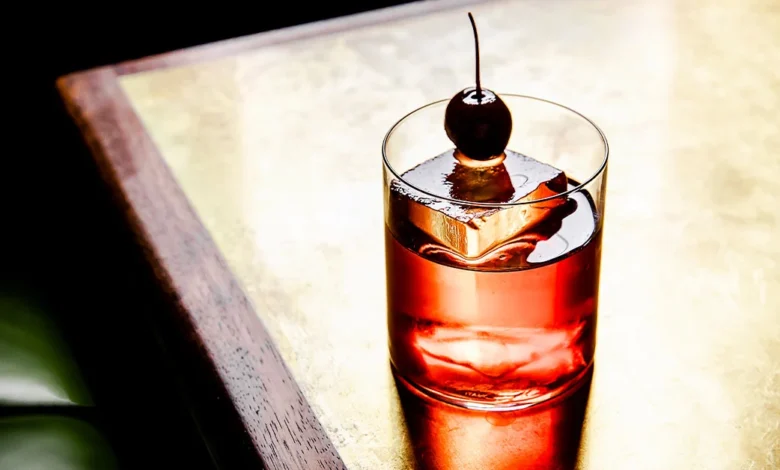
The Autumn Sweater cocktail is emblematic of the "seasonal narrative" trend, where cocktails are designed to evoke specific memories or cultural touchstones. Named after the 1997 Yo La Tengo song, this drink utilizes a base of rye whiskey combined with two distinct amari and two iterations of maple (syrup and bitters).
The use of rye provides a spicy, dry backbone that prevents the maple elements from becoming cloying. The serving suggestion—a large block of ice or an ice sphere—is a deliberate choice intended to mimic the appearance of a harvest moon. This type of "atmospheric mixology" has become a hallmark of late-October menus, where the goal is to create a sense of place and time through the glass. It is a calculated, effective strategy that resonates with consumers looking to mark the change in seasons through ritualized consumption.
Broader Implications and Industry Outlook
The trends observed in October’s most popular drinks suggest that the cocktail industry is currently in a state of refinement rather than radical reinvention. The focus has shifted from the "novelty" era of the 2010s—characterized by foams, dry ice, and ultra-rare bitters—toward a more sustainable and ingredient-focused paradigm.
Several key implications emerge from this month’s data:
- Transparency and Sustainability: As evidenced by the Lightspeed Drifter, consumers are increasingly interested in the "why" and "how" behind a drink. Bars that can communicate the story of their ingredients, particularly regarding sustainability, are seeing higher engagement.
- The Persistence of the "Classic-Plus": The success of the Sour Cherry Negroni and the Montana Daiquiri confirms that the market favors cocktails that have a recognizable "anchor." Bartenders are finding the most success when they modify established templates rather than inventing entirely new categories.
- Non-Alcoholic Integration: The ability of a high-end venue to offer an N/A version of a complex cocktail is no longer a concession; it is a vital part of the business model. The success of the Lightspeed Drifter’s non-alcoholic iteration proves that flavor-first, rather than alcohol-first, mixology is the new standard.
- Tactile Experience: With the colder weather, the focus on "mouthfeel"—achieved through whey, fatty acids, or proper dilution—has become a priority. Drinks are being engineered to feel "substantial," providing a sense of comfort that pairs with the social rituals of the holiday season.
As we move into November, these trends are expected to accelerate. The ingredients noted in October—maple, stone fruit, rye, and citrus—will likely continue to dominate the landscape, albeit with the addition of winter spices such as cardamom, clove, and star anise. The "cozy" profile is not merely a seasonal fad; it is a deliberate response to the psychological need for comfort during the year’s most socially dense and climatically challenging period.
For the home bartender, these recipes serve as a blueprint for the coming months. The common thread among these successes is that they prioritize the quality of the base spirit and the intentionality of the modifier, proving that whether one is at a high-end bar in Hong Kong or a neighborhood spot in New York, the principles of excellent mixology remain rooted in balance, history, and a touch of seasonal sentiment.
Related posts: