Hervé This Unveils Two Decades of Pioneering Molecular Gastronomy Research from Paris Seminars

A comprehensive summary document, encapsulating two decades of groundbreaking research from the monthly molecular gastronomy seminars held in Paris, has been released by its visionary co-founder, Hervé This. This compilation, distributed widely to foster further scientific inquiry and culinary innovation, offers an invaluable insight into the methodical deconstruction of kitchen phenomena that has characterized the seminars since their inception. Available in both French and English, the publication serves as a pivotal resource for both professional chefs and scientific researchers, illuminating the empirical foundations of cooking processes often taken for granted. While the English summary provides a concise overview of key findings, those seeking the most granular detail and precise experimental conditions are encouraged to consult the original French documentation, which offers extensive records from each seminar hosted at AgroParisTech. This significant release underscores the enduring legacy of a discipline that has profoundly reshaped the understanding and practice of culinary arts globally.
The Genesis of Molecular Gastronomy: A Scientific Revolution in the Kitchen
The concept of molecular gastronomy, a term coined by Hervé This and the late Hungarian physicist Nicholas Kurti in 1988, marked a pivotal moment in the history of food science. Prior to their collaborative efforts, the scientific investigation of cooking processes was largely fragmented, often confined to specific areas of food chemistry or engineering without a unifying interdisciplinary framework. Kurti, a low-temperature physicist at Oxford University, possessed a keen interest in the science behind traditional cooking methods, famously stating, "I think it is a sad reflection on our civilization that while we can and do measure the temperature in the atmosphere of Venus, we do not know what goes on inside our soufflés." This sentiment perfectly encapsulated the intellectual curiosity that would drive the nascent field.
Hervé This, a physical chemist at France’s National Institute for Agronomic Research (INRA) and later at AgroParisTech, brought a rigorous scientific methodology to the kitchen. His early work involved systematically questioning anecdotal culinary wisdom and traditional recipes, subjecting them to empirical testing. Together, This and Kurti envisioned molecular gastronomy not as a style of cooking, but as a scientific discipline dedicated to exploring the physical and chemical transformations that ingredients undergo during the cooking process. Their collaboration laid the intellectual groundwork for a systematic approach to understanding food, moving beyond mere empirical observation to explain why certain culinary techniques yield particular results. This foundational work provided a robust scientific lexicon and experimental framework, elevating cooking from an art form to a domain ripe for scientific investigation. The discipline aimed to understand the mechanisms of flavor, aroma, texture, and appearance in food, ultimately seeking to improve existing dishes, create new ones, and challenge long-held culinary myths with verifiable data.
Hervé This: The Architect of Culinary Science
Hervé This’s contributions extend far beyond coining a term; he has been an indefatigable advocate and practitioner of molecular gastronomy. Educated as a physical chemist, his career has been dedicated to bridging the gap between the laboratory and the kitchen. As a researcher at INRA and a professor at AgroParisTech, he has conducted countless experiments, published numerous scientific papers, and authored influential books that have popularized the science of cooking for a broader audience. Among his most renowned works is "Kitchen Mysteries: Explaining the Science of Cooking," a book that had a profound impact on many, including the original author of the shared article, sparking a desire to delve deeper into the chemistry of the kitchen. This book exemplifies This’s approach: taking common recipes and culinary processes, dissecting them scientifically, and explaining the underlying principles in an accessible yet rigorous manner.
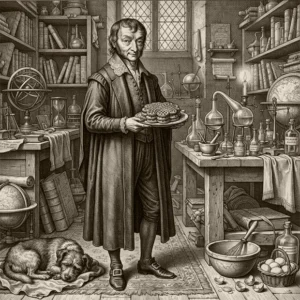
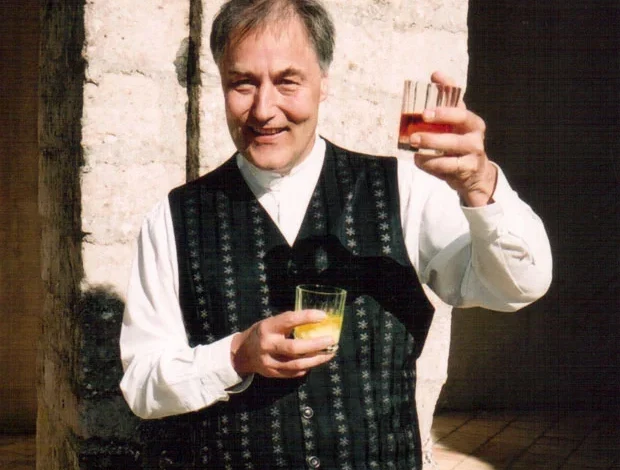
Beyond his written contributions, Hervé This was also instrumental in establishing the "International Workshop on Molecular Gastronomy," first held in Erice, Italy. These workshops brought together leading scientists, chefs, and culinary professionals from around the world to share research, discuss methodologies, and foster interdisciplinary collaboration. The image accompanying the article, depicting Hervé This demonstrating experiments with eggs at the 2004 Erice workshop, vividly captures the hands-on, inquisitive spirit he embodies. His persistent questioning of established culinary dogma and his insistence on empirical verification have inspired a generation of chefs to adopt a more scientific approach to their craft, transforming professional kitchens into environments of continuous experimentation and learning. His philosophy emphasizes that every culinary claim, no matter how trivial it may seem, warrants scientific scrutiny and documentation, a principle that has been at the core of the Paris seminars for two decades.
Two Decades of Discovery: The Paris Molecular Gastronomy Seminars
The molecular gastronomy seminars in Paris, spearheaded by Hervé This, represent a sustained, collaborative effort to systematically investigate culinary phenomena. Initiated around 2000-2001, these monthly meetings at AgroParisTech have served as a unique crucible where theoretical scientific principles meet practical culinary application. The seminars gather a diverse group of participants, including scientists, professional chefs, culinary students, and passionate home cooks, all united by a common goal: to dissect, understand, and document the chemical and physical transformations occurring during cooking.
The methodology employed in these seminars is rigorously scientific. Each session typically focuses on a specific culinary technique, ingredient, or long-held kitchen belief. Participants engage in hands-on experimentation, meticulously reproducing recipes while systematically varying parameters such as temperature, ingredient ratios, cooking times, and chemical additives. Observations are recorded with precision, and the results are then analyzed through the lens of physics and chemistry. This empirical approach challenges anecdotal wisdom and provides concrete, verifiable data to explain why certain techniques work, why others fail, or how they can be optimized. Over two decades, these seminars have accumulated an extraordinary body of documented findings, forming a "treasure trove" of culinary science. The release of the 20-year summary document, while brief, offers a glimpse into this vast repository of knowledge, providing a roadmap to the more extensive, detailed documentation available in French, which includes comprehensive experimental conditions and results for each study. This ongoing collaborative research model underscores the commitment to open science and the continuous pursuit of knowledge in the culinary domain.
Unpacking the "Treasure Trove": Key Findings and Methodologies
The two-decade summary document, even in its abbreviated form, hints at the profound depth and breadth of the research conducted during the Paris Molecular Gastronomy Seminars. The inquiries span a wide range of culinary topics, from the foundational properties of common ingredients to complex cooking techniques. These investigations have not only debunked numerous kitchen myths but have also provided a scientific basis for optimizing existing recipes and fostering innovation.
-
Egg Coagulation and Structure: A recurring subject in molecular gastronomy is the egg, a staple ingredient whose versatility belies its complex protein structure. The seminars have delved into how various factors influence egg coagulation. For instance, studies have explored the precise temperatures at which different egg proteins (e.g., ovalbumin, ovotransferrin) denature and coagulate, affecting texture from runny to firm. Investigations have also examined the impact of pH (acidity/alkalinity) and salt on coagulation rates and final texture. Acidic environments, for example, can cause proteins to coagulate more rapidly at lower temperatures, a principle exploited in dishes like poached eggs. Understanding these mechanisms allows chefs to precisely control the texture of egg-based dishes, from custards to meringues, moving beyond mere guesswork. The seminars might have explored the optimal conditions for achieving specific textures, such as the creamy yolk of a perfectly cooked soft-boiled egg versus the crumbly texture of an overcooked one, or the stability of various egg foams.
-
Emulsion Stability and Creation: Emulsions, such as mayonnaise or hollandaise sauce, are critical components of many cuisines. The seminars have meticulously examined the factors contributing to their stability. This includes the role of emulsifiers (like lecithin in egg yolks), the ratio of oil to water, and the method of incorporation. For instance, the rate at which oil is added to the aqueous phase, and the intensity of agitation, are crucial for forming stable emulsions by creating small, uniformly dispersed oil droplets. Research would likely have investigated the impact of different types of oils, acids (like vinegar or lemon juice), and temperatures on emulsion formation and breakdown. The findings offer practical guidance for preventing sauces from "breaking" and for creating stable, desirable textures.
-
Optimizing Vegetable Cooking: Traditional methods of boiling vegetables often lead to nutrient loss and undesirable textures. The seminars have explored scientific approaches to vegetable preparation, focusing on retaining color, texture, and nutritional value. This might include studies on the impact of salt in boiling water, which can help reduce osmotic pressure and prevent excessive water absorption, or the use of blanching followed by rapid cooling to preserve vibrant colors and crisp textures by deactivating enzymes. The precise timing and temperature for cooking various vegetables to achieve optimal doneness—neither too raw nor too mushy—would also be a focus, challenging the notion of a single "correct" cooking time for all produce.
-
Meat Tenderization and Cooking Methods: The tenderness of meat is influenced by muscle fibers and connective tissue. Seminar research could have explored various tenderization methods, from mechanical (pounding) to enzymatic (using fruit enzymes like papain or bromelain), and their effectiveness. Furthermore, the science behind different cooking methods for meat, such as roasting, braising, or sous-vide, would have been investigated. For example, braising, a low-and-slow moist-heat method, is effective at breaking down tough collagen into gelatin, resulting in tender meat. Sous-vide cooking, characterized by precise temperature control over extended periods, ensures even cooking and minimal moisture loss, yielding exceptionally tender and uniformly cooked products. Understanding the optimal temperature and time for collagen breakdown and protein denaturation is crucial for achieving desired meat textures.
-
Flavor and Aroma Development: Beyond texture, the seminars likely delved into the chemical reactions responsible for flavor and aroma development. This includes the Maillard reaction (responsible for browning and complex savory flavors in cooked meats and baked goods) and caramelization (the browning of sugars). Studies would have investigated the conditions that optimize these reactions, such as temperature, pH, and the presence of specific amino acids and sugars. Understanding these chemical pathways allows chefs to enhance flavor profiles deliberately, rather than relying solely on intuition.
The methodologies employed are fundamentally empirical. Participants formulate hypotheses based on common culinary practices or scientific principles, design experiments with controlled variables, execute them in a kitchen laboratory setting, and meticulously document the outcomes. This systematic approach, emphasizing reproducibility and verifiable results, elevates culinary exploration to a rigorous scientific endeavor. The sheer volume of such investigations over two decades has created an unparalleled repository of applied food science knowledge, truly a "treasure trove" for anyone seeking to understand the fundamental mechanics of cooking.
From Laboratory to Plate: The Practical and Pedagogical Impact
The profound insights generated by the Paris Molecular Gastronomy Seminars have far-reaching implications, extending from the precise control of ingredients in high-end restaurants to the educational frameworks of culinary schools and even the understanding of food among home cooks. The practical application of these findings empowers chefs to move beyond rote memorization of recipes, enabling them to understand why certain techniques work and how to adapt them creatively. For instance, a chef armed with the knowledge of protein coagulation temperatures can precisely cook an egg to a desired consistency every time, irrespective of its size or initial temperature, by adjusting cooking parameters. This scientific precision allows for greater consistency, innovation, and problem-solving in the kitchen.
Pedagogically, the seminars’ documented research provides invaluable material for culinary education. By demystifying complex processes like emulsion formation or flavor development, it allows students to grasp the underlying science, fostering a deeper understanding rather than mere procedural execution. This approach cultivates critical thinking and encourages experimentation, transforming culinary students into culinary scientists who can innovate with confidence. Academic institutions, such as AgroParisTech, which hosts these seminars, benefit from the continuous generation of new knowledge, reinforcing their role as centers of excellence in food science. The interdisciplinary nature of molecular gastronomy, blending chemistry, physics, and culinary arts, also serves as a model for holistic education, encouraging collaboration across traditional academic boundaries.
The Broader Horizon: Shaping the Future of Food
The legacy of the molecular gastronomy seminars, and indeed the broader field, extends to shaping the future of food science, nutrition, and sustainability. By providing a detailed scientific understanding of food ingredients and cooking processes, molecular gastronomy offers tools to address contemporary food challenges. For example, understanding the physical and chemical properties of alternative proteins or plant-based ingredients is crucial for developing sustainable and palatable meat substitutes. The principles gleaned from two decades of seminars can inform the development of new food products, optimize nutrient retention in cooking, and even contribute to personalized nutrition by understanding how specific preparations affect bioavailability of nutrients.
Furthermore, the rigorous, evidence-based approach championed by Hervé This encourages a culture of inquiry that is vital for scientific progress. It challenges dogma not just in the kitchen, but implicitly across various scientific disciplines. The documented findings contribute to a global knowledge base that can be leveraged for food security initiatives, improving food safety protocols, and developing innovative culinary solutions that are both delicious and environmentally conscious. The emphasis on precise experimentation and documentation also aligns with modern scientific practices, ensuring that culinary advancements are built on a solid foundation of verifiable data. The widespread dissemination of these results, as Hervé This intended, serves as a catalyst for ongoing research and development in the ever-evolving landscape of food.
A Call to Culinary Inquiry: Continuing the Legacy
The release of the 20-year summary document from the Paris Molecular Gastronomy Seminars is more than just a historical record; it is an active invitation to continue the spirit of inquiry and experimentation that has defined the movement. Hervé This’s encouragement to distribute the findings widely reflects a commitment to open science and the democratization of culinary knowledge. The article’s concluding question—"Are you aware of culinary claims or kitchen myths that should be checked?"—serves as a direct call to action, echoing This’s lifelong mission to challenge assumptions and seek empirical truths in the kitchen.
This ethos encourages everyone, from professional researchers to amateur enthusiasts, to adopt a scientific mindset when approaching food. It highlights that even seemingly trivial culinary beliefs can yield profound scientific insights when subjected to rigorous testing. The meticulous documentation provided by the seminars serves as a model for how such investigations should be conducted and shared, ensuring that culinary progress is built upon a foundation of verifiable evidence. As the field continues to evolve, the principles established by Hervé This and the rich body of work from the Paris seminars will remain a cornerstone, inspiring future generations to explore, question, and innovate in the fascinating intersection of science and gastronomy. The legacy is not just in the findings themselves, but in the enduring methodology of scientific curiosity applied to the universal human experience of food.