Historical Context and Culinary Evolution
The term "monster cookie" gained prominence in the upper Midwest during the 1970s and 80s, often attributed to the necessity of creating high-energy, shelf-stable snacks for agricultural workers and large family gatherings. These cookies were traditionally defined by their "everything but the kitchen sink" composition. The standard recipe typically required individual portioning, scooping, and multiple sheet-pan rotations in an oven, a process that could consume upwards of two hours for a single large batch.
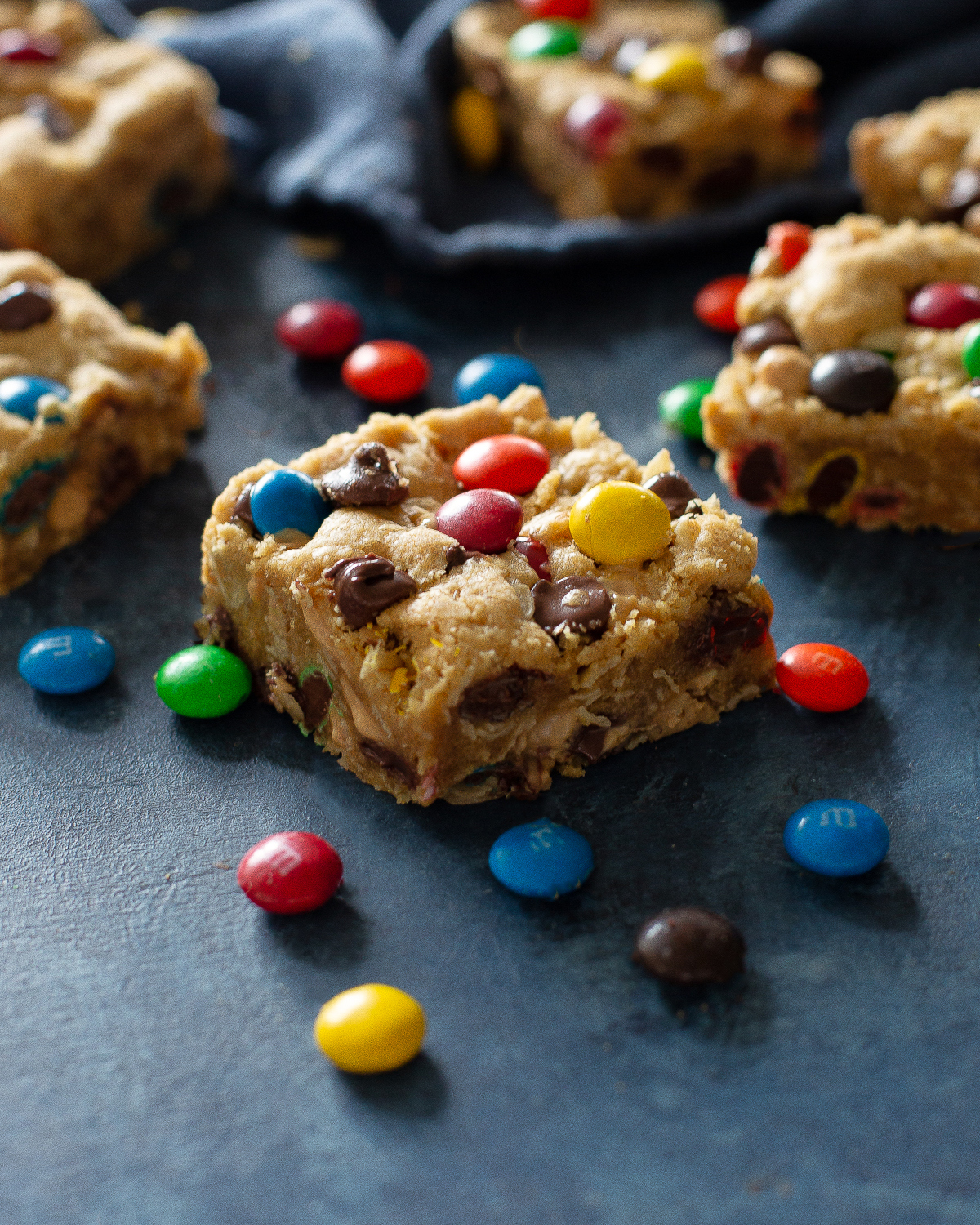
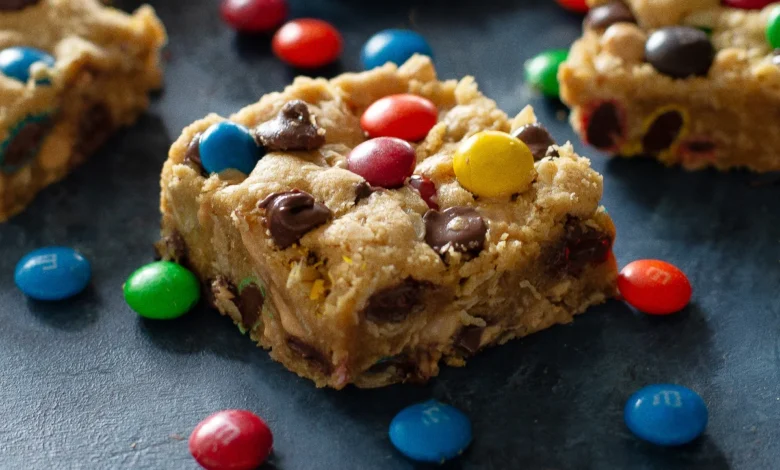
By restructuring the dough into a bar format, bakers have effectively eliminated the labor-intensive portioning phase. This modification is not merely a convenience; it is a structural redesign. The bar format allows for a uniform bake, where the center of the mass remains protected by the edges of the pan, resulting in a moisture-retaining, chewy interior that is difficult to achieve with traditional, thin-spreading cookies.
Technical Specifications and Compositional Analysis
The modern iteration of the Monster Cookie Bar relies on precise ingredient ratios to maintain structural integrity. A comparative analysis of standard cookie doughs versus bar doughs highlights the necessity of specific additives. The inclusion of an extra egg yolk serves a functional purpose: the lipids in the yolk act as an emulsifier and a tenderizer, preventing the high-protein peanut butter from drying out during the extended baking time required for a 9×13-inch surface area.
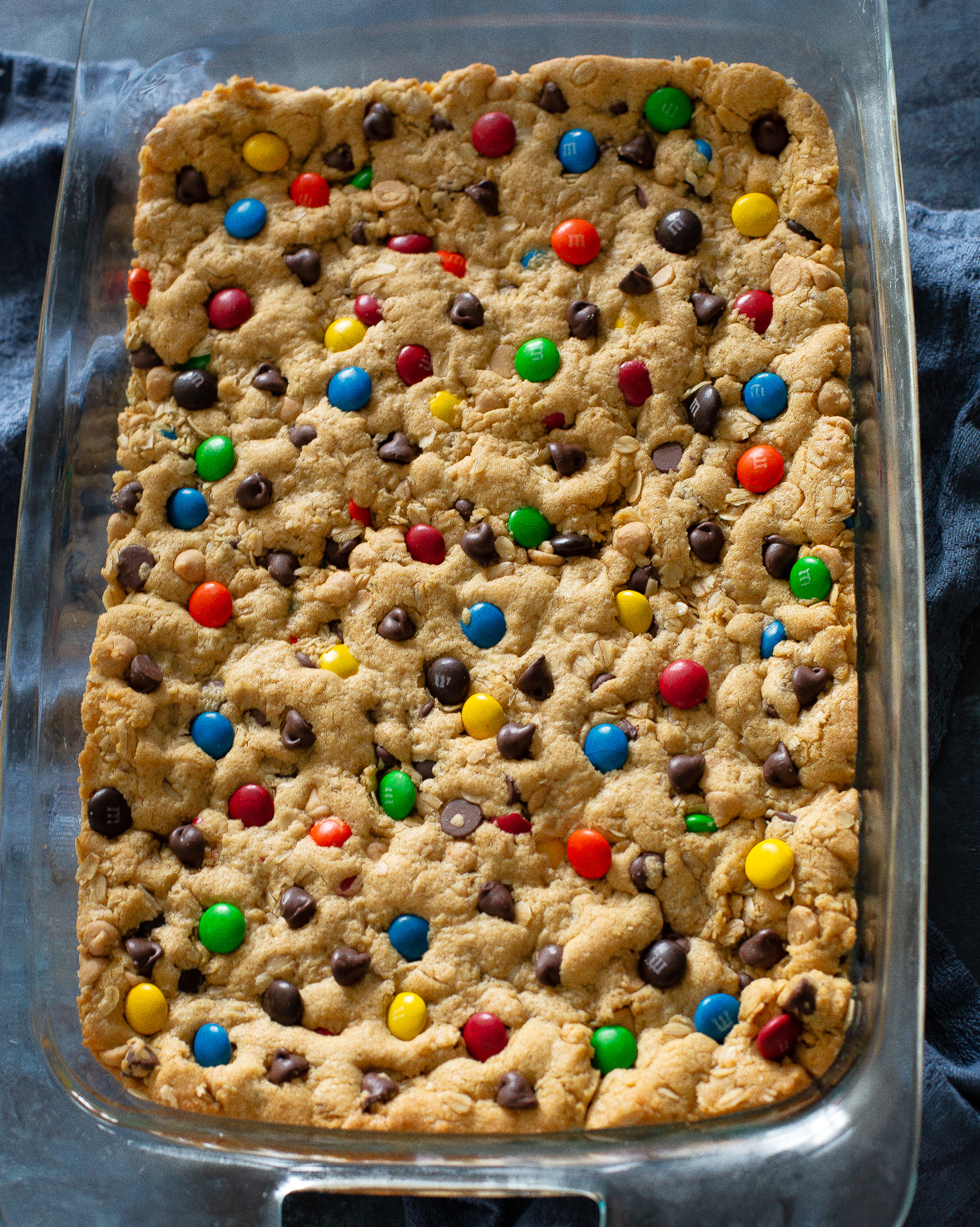
Furthermore, the integration of both chocolate chips and peanut butter chips provides a dual-flavor profile that balances the earthy intensity of the legume-based fat with the refined sweetness of cocoa. The addition of rolled oats contributes necessary fiber and a complex carbohydrate structure, which acts as a bulking agent, giving the bars their characteristic density. To prevent the flavor profile from becoming overly saccharine—a common issue in high-sugar confectionery—culinary professionals emphasize the addition of a calibrated amount of sea salt. This salt performs a chemical role in tempering the sweetness, effectively balancing the flavor profile and enhancing the roasted notes of the peanut butter.
Standardized Preparation and Chronology
To achieve the optimal texture, the preparation follows a standardized, systematic process designed for reproducibility:
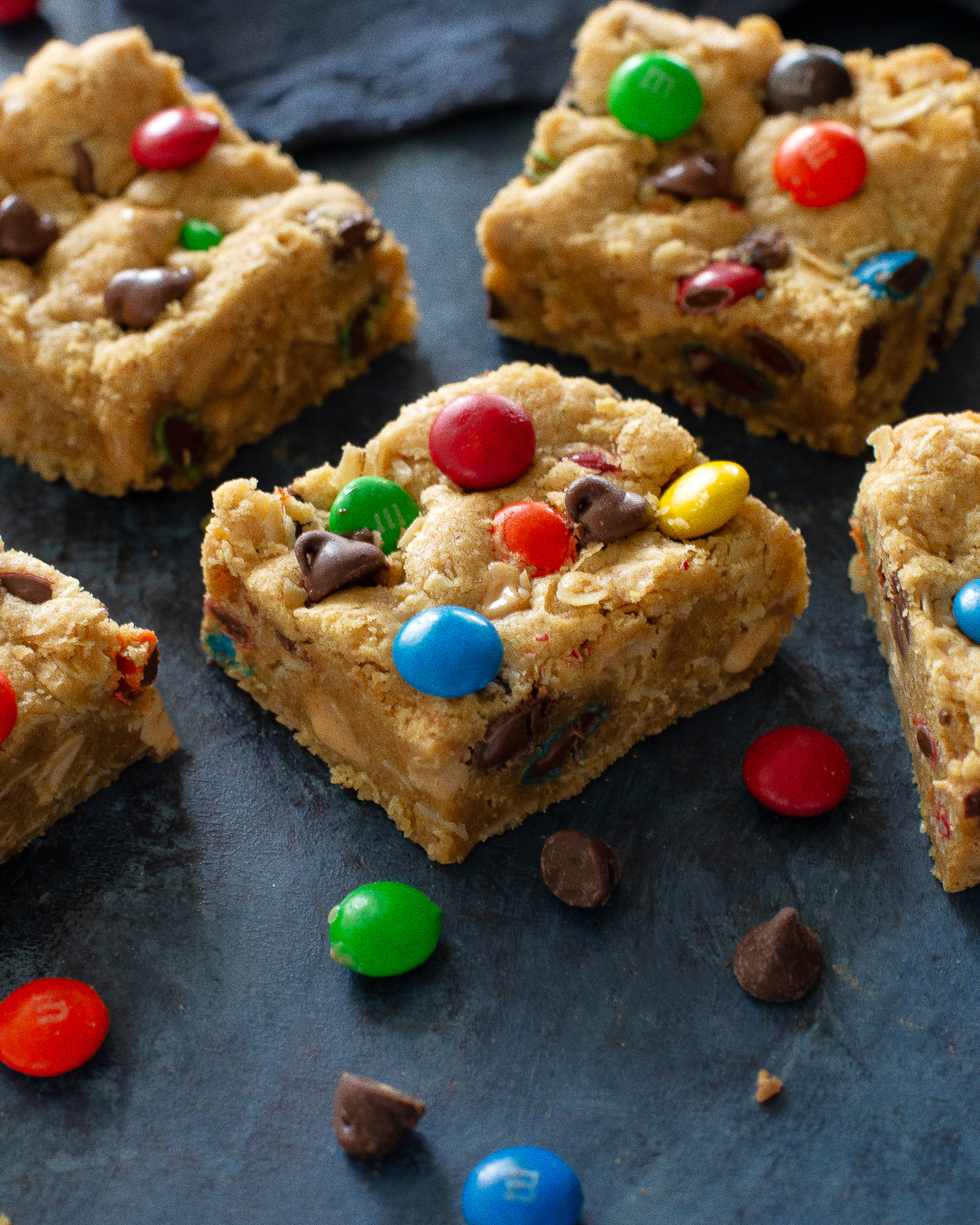
- Pre-processing: The oven is preheated to 350°F (175°C), and the 9×13-inch pan is lined with parchment paper to ensure easy extraction after the cooling phase.
- Creaming Phase: The foundation of the dough is established by creaming together butter, sugar, and high-quality creamy peanut butter. It is vital to note that commercial, shelf-stable peanut butter is preferred; natural varieties, which often contain separated oils, can compromise the binding of the fats, leading to a brittle or excessively greasy final product.
- Binding: Liquid components, including eggs and vanilla extract, are incorporated. This is the stage where the additional yolk is introduced to ensure long-term chewiness.
- Dry Integration: Oats and leavening agents are folded into the base. This step must be handled with precision to ensure the oats are fully hydrated by the wet ingredients without over-developing the gluten.
- Inclusion: Chocolate chips, peanut butter chips, and M&Ms are added last. These are folded in gently to prevent the candy shells from cracking or bleeding color into the dough.
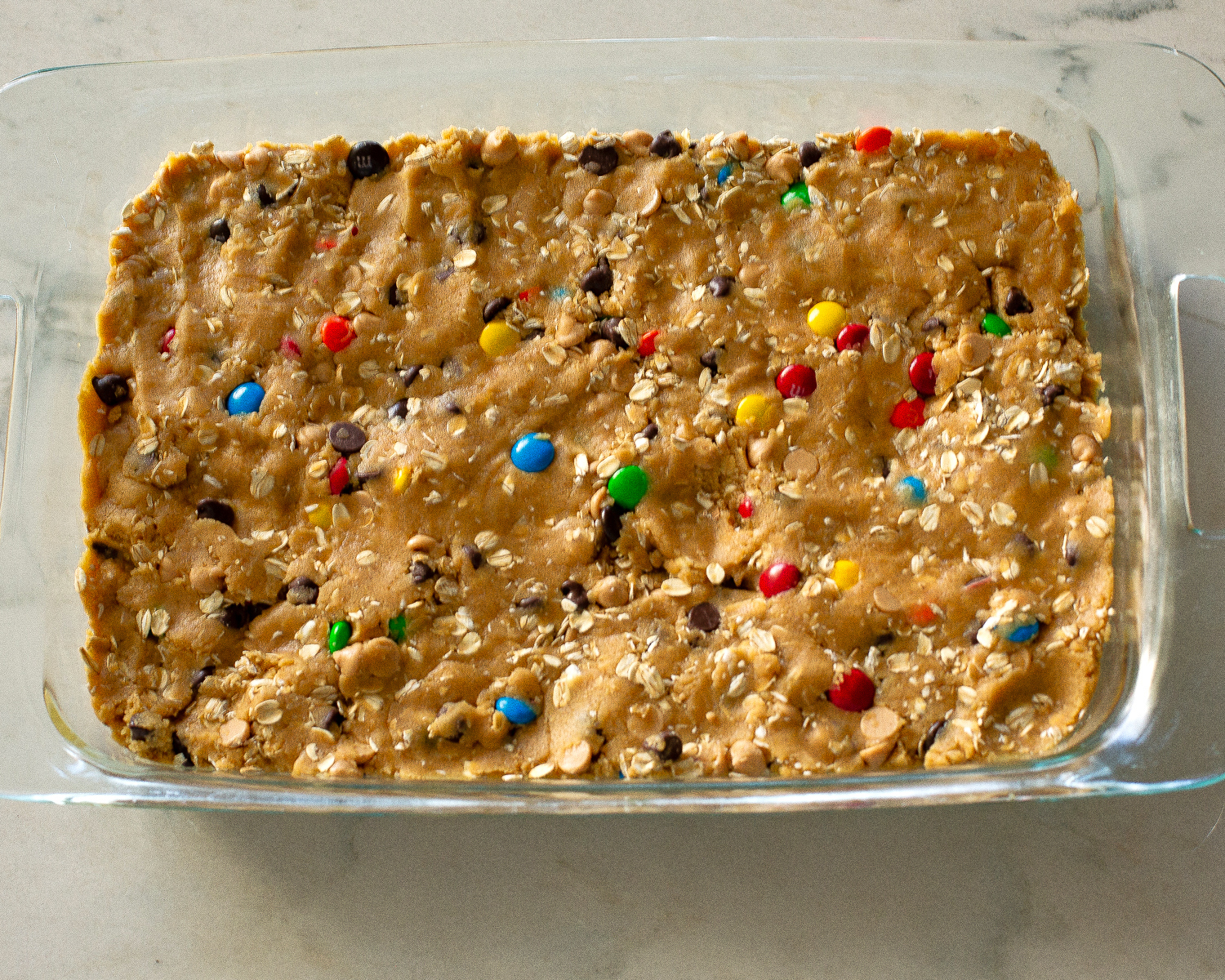
- Baking and Thermal Equilibrium: The mixture is pressed firmly into the pan. Baking occurs over 20 minutes. Crucially, the removal from the heat source occurs when the center is slightly under-baked. The residual heat in the pan completes the cooking process during the "setting" period—a mandatory 30-minute cooling interval where the bars achieve thermal equilibrium.
Economic and Logistical Implications
From a logistical standpoint, the shift toward bar-based desserts reflects broader trends in domestic food preparation. Statistics from home-baking industry reports suggest a 15% increase in searches for "pan-based" or "tray-bake" recipes over the last five years. This trend is driven by two factors: the increase in social hosting and the need for efficient meal planning.
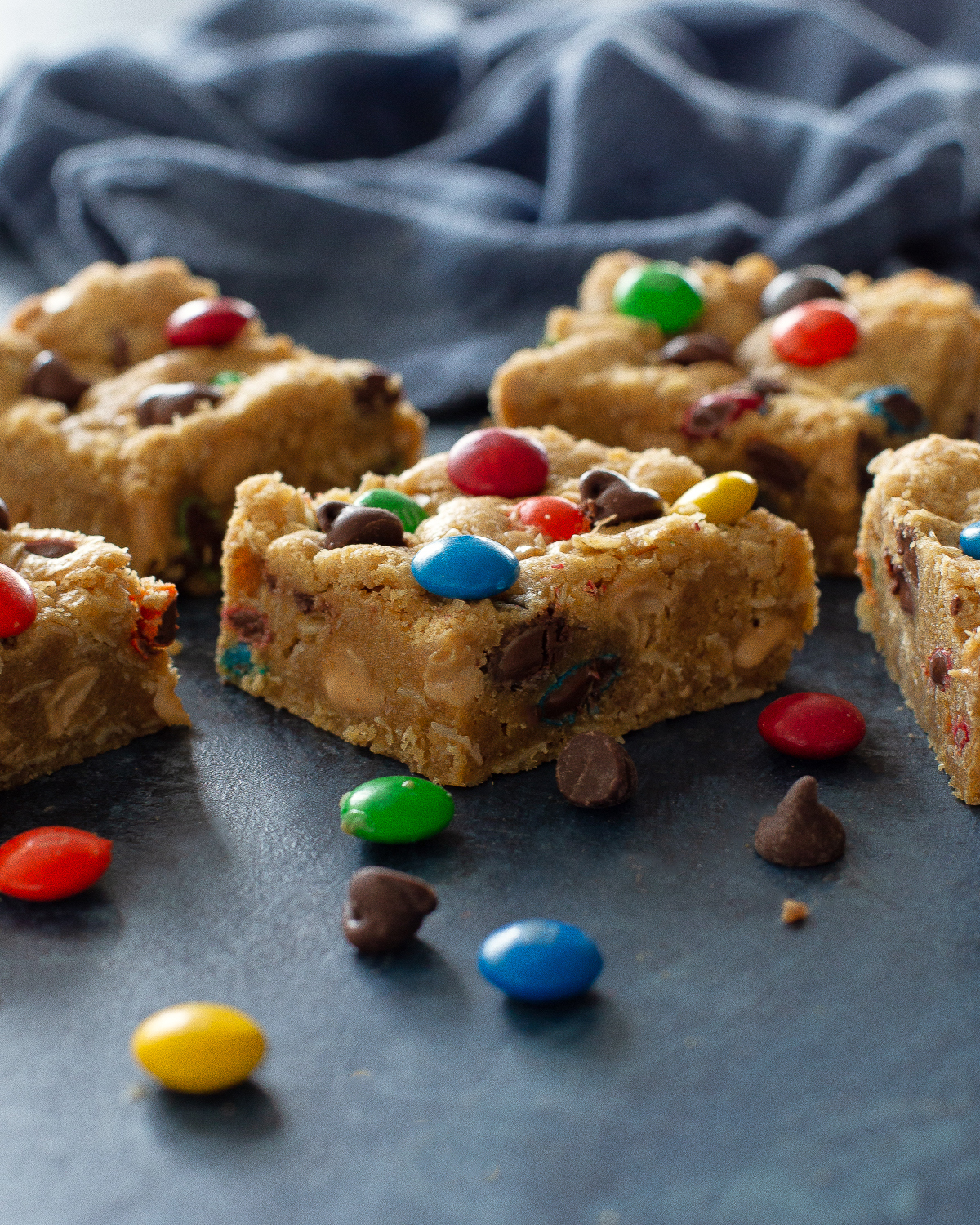
A single 9×13-inch pan of Monster Cookie Bars yields approximately 24 individual servings, depending on the cut size. This efficiency makes the recipe an ideal candidate for large-scale events, school functions, and community gatherings. Furthermore, the storage capacity of the product is notable; when kept in an airtight container at room temperature, the bars retain their texture for up to four days. For long-term logistics, the bars are stable in a freezer environment for up to three months, provided they are wrapped individually to prevent freezer burn and cross-contamination of odors.
Professional Observations on Ingredient Quality
Culinary experts, including industry voices like Christy Denney, emphasize that the success of the Monster Cookie Bar is predicated on the quality of the peanut butter utilized. The chemical composition of the peanut butter—specifically the presence of hydrogenated or stabilizer oils—is what differentiates a cohesive bar from one that crumbles upon slicing.
"The reliance on regular creamy peanut butter is not a matter of preference, but of chemistry," notes a culinary consultant familiar with the recipe. "Natural peanut butters vary wildly in their oil-to-solid ratio. When using a recipe that relies on the structural support of that fat, using an inconsistent variable like natural peanut butter introduces a risk of failure that can turn a high-volume batch into a culinary waste."
Broader Impact on Home Baking Culture
The proliferation of the Monster Cookie Bar is symptomatic of a larger movement in American baking: the "de-complication" of traditional sweets. As the pace of life accelerates, the desire to maintain cultural traditions—such as baking for family—has not waned, but the methodology has adapted. By taking the "monster cookie" from a multi-batch, time-intensive process to a singular, cohesive pan-based recipe, the home baker preserves the nostalgic flavor profile of the original while aligning it with the realities of a modern, time-constrained lifestyle.
Furthermore, the adaptability of this base recipe is significant. While the classic includes chocolate and peanut butter chips, the format lends itself to variations, such as the inclusion of pretzels, nuts, or varying types of chocolate, allowing for regional and personal customization while maintaining the core structural integrity of the bar. This versatility ensures that the Monster Cookie Bar remains a fixture in the American culinary canon, bridging the gap between historical heritage recipes and the pragmatic needs of the 21st-century kitchen. As food prices fluctuate, the ability to produce a high-yield, crowd-pleasing dessert from relatively inexpensive staples like oats and peanut butter also ensures its continued popularity in both domestic and communal settings.
Related posts: