How Corporate Lease Restrictions and Real Estate Loopholes Perpetuate Food Deserts in Low-Income Communities

The modern landscape of American urban planning and retail economics is defined by a paradox: while corporate supermarket chains wield unprecedented buying power to dominate local markets, they simultaneously employ quiet, legal mechanisms that actively restrict food access in vulnerable neighborhoods. For decades, major grocery conglomerates—including corporate giants like Stop & Shop, Walmart, and Albertsons—have utilized restrictive real estate covenants, deed limitations, and strategic property hoarding not merely to protect their commercial investments, but to deliberately stifle competition.
This practice, largely invisible to the average consumer, transforms commercial real estate into a tool for economic exclusion. When these corporate giants vacate a storefront or purchase surrounding plots of land, they frequently attach binding legal clauses that prohibit future occupants from selling food. The result is a manufactured scarcity that exacerbates food insecurity, deepens racial and socioeconomic inequities, and leaves low-income communities stranded in urban food deserts.
The Genesis of a Food Access Mystery
The human cost of these corporate real estate strategies came into sharp focus for Karissa Kang, a first-year law student at Yale University. Upon arriving in New Haven, Connecticut, Kang quickly discovered a glaring discrepancy between her temporary academic home and her native Atlanta, Georgia. In Atlanta, neighborhoods were flush with mainstream shopping options such as Publix and Kroger. In New Haven, however, the landscape was starkly different.
New Haven has long struggled with systemic economic inequities. Non-Yale residents currently face a poverty rate approaching 26 percent, while the local food insecurity rate stands at twice the national average. Within the city’s lowest-income communities, roughly one in three residents experiences food insecurity, and the local Black population faces a poverty rate exceeding 27 percent.
Despite these alarming statistics, Kang noticed that the only full-service grocery option within walking distance of her campus was a single Stop & Shop location situated roughly a half-mile away. More puzzling to her was the commuting behavior of her peers: while she walked to the neighborhood grocery store, fellow law students with automobiles routinely drove out of their way to patronize a Trader Joe’s in a neighboring municipality.
Motivated to understand why a densely populated urban area was structurally limited to a single national grocery chain, Kang began researching the mechanics of the grocery industry. Her investigation uncovered a web of legal instruments known as restrictive covenants—mechanisms designed to protect corporate profits by ensuring that neighborhoods remain devoid of viable alternatives.
Understanding Restrictive Covenants and Real Estate Hoarding
Restrictive covenants are legally binding provisions written into deeds and commercial lease agreements that dictate how a specific parcel of property can be utilized, often for decades or indefinitely. Grocery chains have deployed these provisions since at least the 1950s. Constructing a modern, brick-and-mortar supermarket requires substantial capital investment, with footprints frequently spanning 5,000 square feet or significantly more. To safeguard these investments from future market competition, chains began inserting clauses into real estate contracts to neutralize potential rivals before they could even establish a foothold.
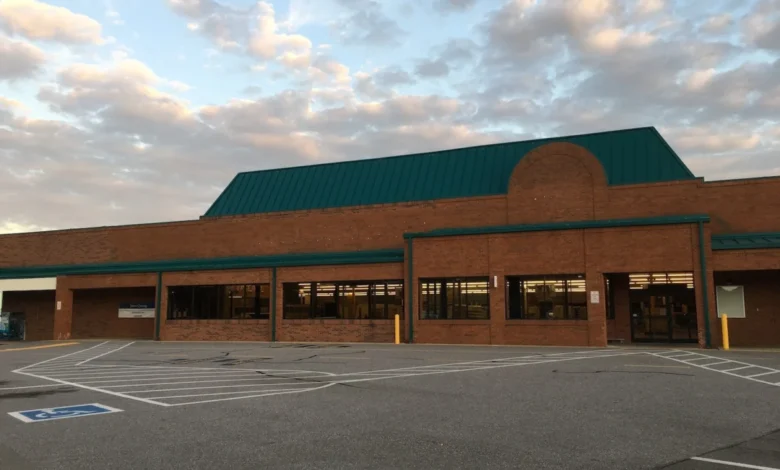
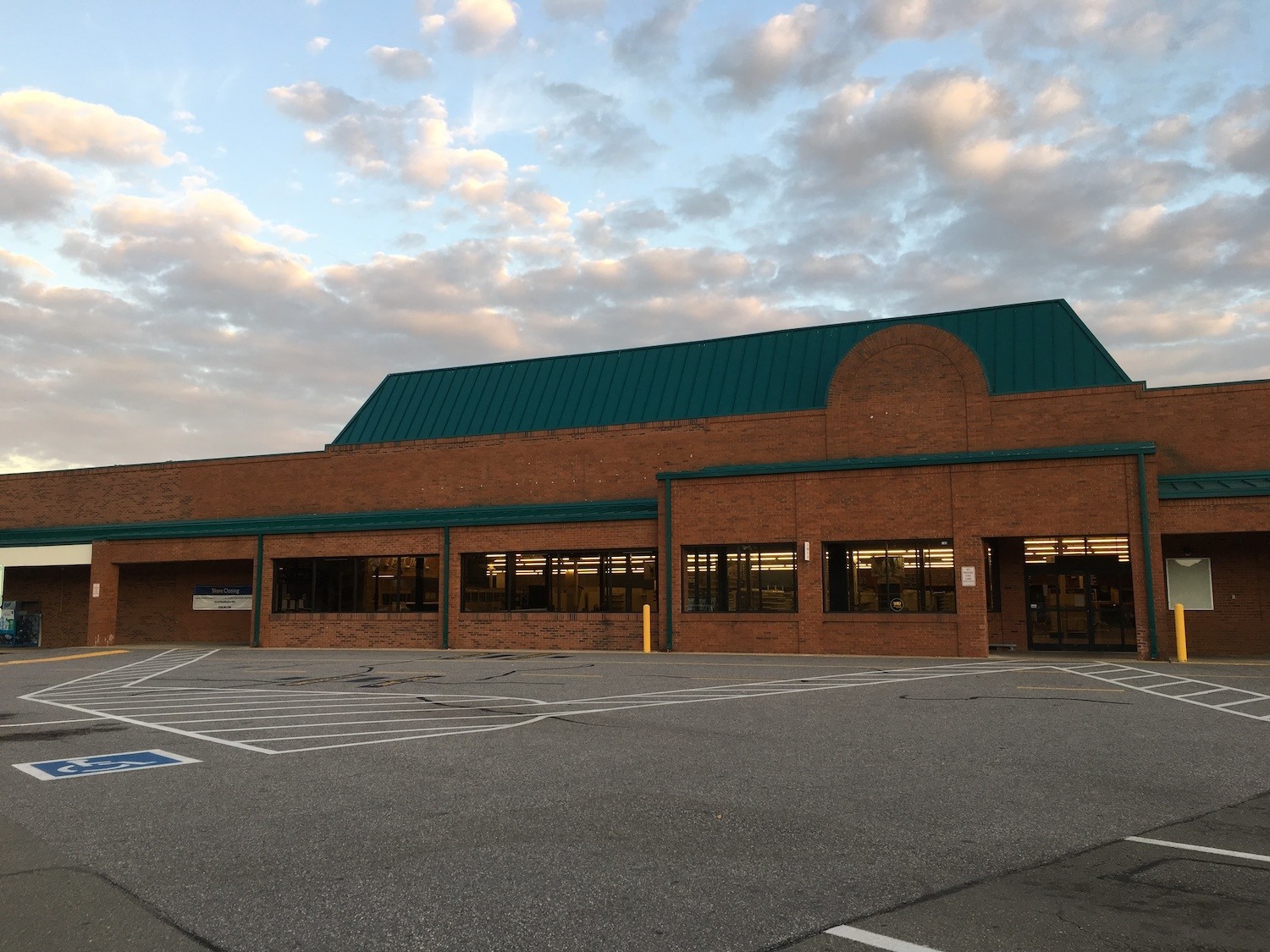
The operational reality of these covenants manifests in several distinct ways. In the event that a supermarket chain decides to close or relocate a profitable or underperforming store, it frequently retains the master lease or sells the property while embedding strict exclusionary clauses. For instance, a corporation might vacate a massive retail space but legally prohibit the landlord from leasing the facility to another grocer, a bodega, a farm stand, or any independent food vendor.
While Stop & Shop did not explicitly confirm whether such provisions were applied to its central New Haven location upon eventual turnover, the company has utilized similar tactics elsewhere. In 2012, in Stonington, Connecticut, Stop & Shop relocated its store and subsequently refused to sublease its former storefront, effectively locking out competing retail operations and leaving the town with severely limited commercial options for the space.
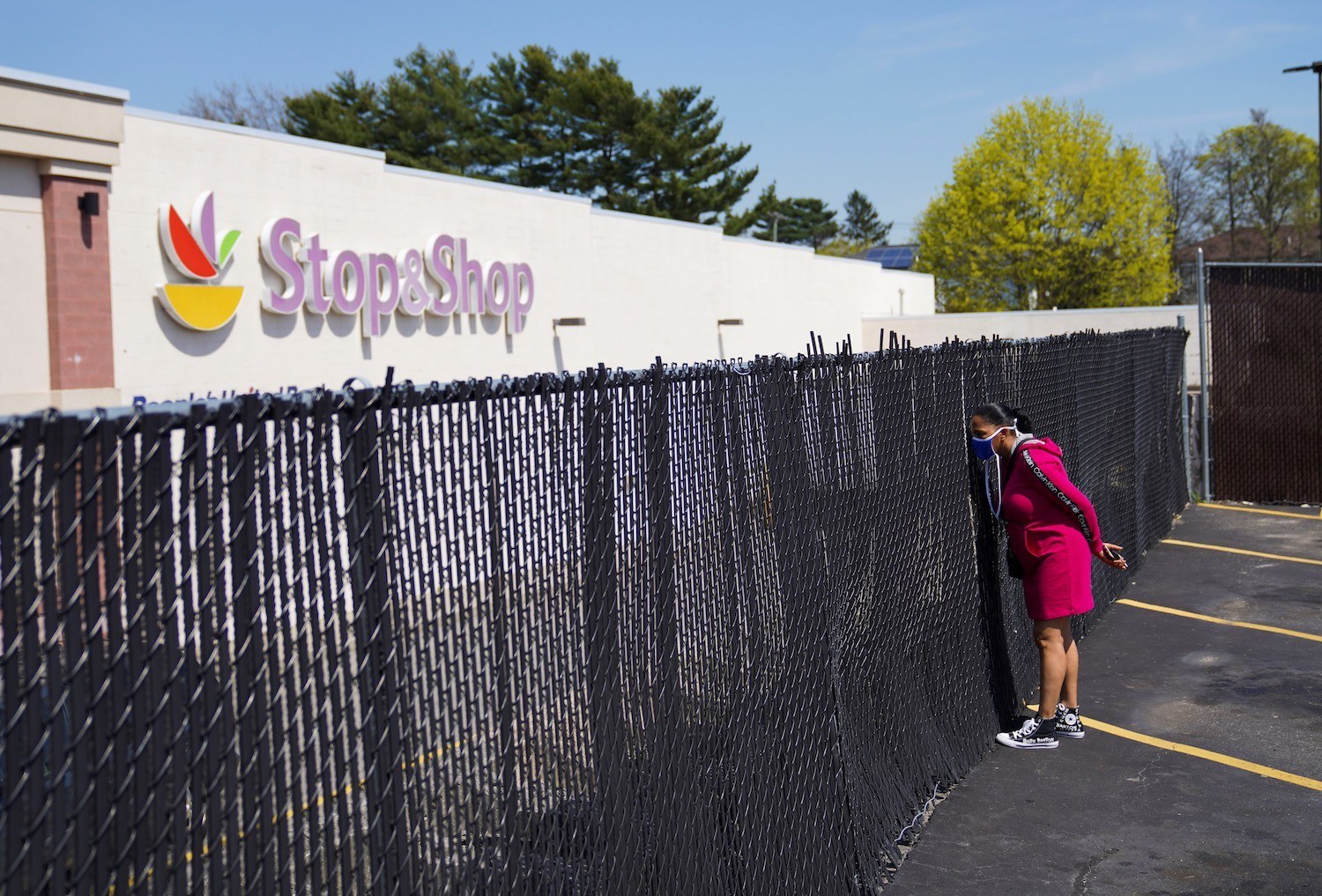
Beyond vacant storefronts, grocery corporations have mastered the art of preemptive land acquisition. By purchasing adjacent parcels of land with footprints large enough to accommodate a competing supermarket, a dominant chain can effectively preempt new market entrants. As long as the corporation retains the property, potential competitors are locked out. Even if the corporation eventually divests the land, it routinely embeds deed restrictions specifying that the parcel cannot be used for the storage, distribution, or sale of food products.
A prominent example of this tactic occurred on Cape Cod, where Stop & Shop purchased an 11-acre tract of land in Eastham, Massachusetts, for $1.3 million. The acquisition was executed ostensibly to prevent a rival supermarket from establishing a presence near one of its existing stores. The company later sold the land back to the town for $1.6 million, but attached a comprehensive deed restriction. According to local reporting by The Provincetown Independent, the restriction legally barred the community from using any portion of the property for a food supermarket, superstore, warehouse store, specialty food shop, butcher, fish market, fruit or vegetable stand, wholesale club, convenience store, or any enterprise involving the sale of food for off-premises human or animal consumption.
In other instances, corporations bypass sales altogether, choosing to hold vacant properties indefinitely. In Greenfield, Massachusetts, Stop & Shop paid a real estate entity for a full decade simply to prevent the development of a property that could have potentially housed a competing supermarket.
The Broader Economic and Community Toll
The societal implications of these real estate strategies extend far beyond mere consumer inconvenience. Laurie Beyranevand, director of the Center for Agriculture and Food Systems at Vermont Law School, notes that prolonged vacancies inflict tangible damage on municipal health.
"Having an empty storefront probably impacts people’s property values, and increases the potential for there to be crime," Beyranevand explained. Furthermore, these abandoned commercial sites typically feature vast, sprawling asphalt parking lots—valuable urban space that could otherwise be repurposed for community centers, affordable housing, or green spaces that directly benefit local residents.
Moreover, the arrival of massive supermarket chains often triggers a localized economic domino effect. Large-scale grocers possess the purchasing power and supply chain efficiencies to temporarily absorb lower profit margins, driving independent mom-and-pop grocers, local bakeries, and corner stores out of business. Once these independent entities collapse, their chances of returning are virtually non-existent.
The resulting retail ecosystem relies heavily on low-wage employment models. Residents of low-income communities are frequently hired by the dominant supermarket chain at modest wages, effectively becoming captive consumers who must shop at the very establishment where they earn their livelihoods. If that corporate entity decides to shutter its doors and relocate, both the neighborhood’s food source and its primary employment opportunities vanish simultaneously, plunging the area deeper into a cycle of structural disinvestment.
Legal Precedents and the Antitrust Landscape
For decades, consumer advocates and legal scholars have challenged restrictive covenants, arguing that they violate federal antitrust laws by intentionally suppressing market competition. However, corporate defendants have successfully defended the practice in courtrooms nationwide.
In 2010, a Walmart spokesperson articulated the industry’s legal defense to The Sheboygan Press, stating: "We welcome competition in the marketplace, but what we can’t be doing is providing infrastructure for our competitors in the same market." To date, federal and state judiciary bodies have largely found this business-protection rationale legally permissible.
Stop & Shop is far from an isolated actor. According to a comprehensive report published by the Institute for Local Self-Reliance (ILSR), restrictive covenants and vacancy tactics are widely deployed across the retail sector by major chains including Albertson’s, its subsidiary Safeway, and most notably Walmart, which stands as the largest grocer in the United States. ILSR data indicates that U.S. consumers spend approximately 25 percent of their total grocery budgets at Walmart locations nationwide, a statistic that report authors cite as a profound failure of modern corporate antitrust enforcement.
Federal and Municipal Legislative Responses
Addressing restrictive covenants at the federal level remains a complex challenge. Karissa Kang argues that federal antitrust legislation offers the most straightforward and efficient remedy, noting that the issue appears conceptually clear-cut because restrictive covenants possess no underlying commercial purpose other than to blockade competitors.
However, legal experts express skepticism regarding whether federal regulatory bodies, such as the Federal Trade Commission (FTC), view localized grocery consolidation as a primary enforcement priority. Should the agency be compelled to act, scholars like Beyranevand suggest that the FTC could potentially leverage the Robinson-Patman Act—a historically underutilized piece of antitrust legislation originally enacted to protect small and independent businesses from predatory price discrimination. Designed to prevent dominant firms from leveraging buying power to systematically bankrupt smaller competitors, the statute provides a theoretical framework for challenging monopolistic retail behavior.
In the absence of sweeping federal intervention, a handful of municipal and state governments have pursued localized solutions. In 2018, Washington, D.C., passed legislation explicitly prohibiting restrictive covenants within the district. Yet, this piecemeal approach presents significant limitations. Municipal ordinances apply exclusively to newly drafted contracts and cannot be applied retroactively to existing agreements. Furthermore, discovering the existence of a restrictive covenant typically occurs only after a supermarket has already vacated a neighborhood and attempts to secure a replacement fail.
Experts emphasize that long-term mitigation will require a fundamental shift toward proactive urban planning and zoning reform. Beyranevand points to Vermont’s longstanding Act 250, a comprehensive land-use law that subjects commercial developments exceeding specific acreage thresholds to rigorous state-level review. Such frameworks can prevent grocery conglomerates from acquiring multiple large land parcels solely to warehouse them against future competition.
Additional policy proposals include granting municipalities the statutory authority to condemn abandoned supermarket infrastructure, mandate adaptive reuse plans prior to corporate abandonment, or facilitate the municipal acquisition of vacant footprints to establish publicly supported community food hubs.
Looking Ahead: The Vulnerability of Food Deserts
As urban centers grapple with the dual crises of inflation and persistent food insecurity, the structural barriers imposed by corporate real estate practices remain an urgent policy blind spot. In neighborhoods like Central New Haven, where the arrival of a national supermarket in 2011 was initially celebrated as a triumph over food desert conditions, the underlying vulnerability remains palpable.
Reflecting on her local community, Kang acknowledges her personal mobility privileges, noting that she can easily secure transportation to alternative retailers with the assistance of peers. However, she remains acutely concerned for her less-mobile neighbors. If corporate restructuring prompts a major chain to relocate even a short distance away, thousands of residents who rely on pedestrian access will find themselves structurally isolated.
"I’m deeply concerned about what happens even if they move two miles away from their current location," Kang noted. "A lot of people can’t walk those two miles to get their groceries. Where are they going to go?"
Related posts: