Unlocking the Culinary Heritage of Kuala Lumpur: The Cultural and Gastronomic Significance of Fish Head Curry at Tugu View Cafe

Malaysia’s culinary landscape is widely recognized by international food scholars and travel economists as one of the most culturally diverse and historically rich gastronomic networks in Southeast Asia. This multifaceted cuisine is the product of centuries of cross-cultural exchange, primarily driven by the historical trade routes that brought centuries-old Indian and Chinese culinary techniques into the Malay Archipelago. Combined with Malaysia’s exceptional equatorial plant and animal biodiversity—which yields a vast array of indigenous flora, roots, and aromatics—the nation’s food culture has evolved into a sophisticated fusion of ancient cooking styles and native ingredients.
Within this expansive culinary framework, certain dishes emerge as distinct cultural markers. Among these, Fish Head Curry stands out as a prime gastronomic embodiment of Malaysia’s multicultural heritage. The dish unites traditional South Asian spice blending techniques with local seafood resources and Southeast Asian herbaceous profiles. In Kuala Lumpur, establishments specializing in this dish serve as focal points for both local dining culture and culinary tourism, contributing significantly to the urban economy and the nation’s intangible cultural heritage.
The Gastro-Geographical Significance of Tugu View Cafe
Situated on a verdant hillside near the historic Tugu Negara (National Monument) and the Perdana Botanical Garden (Lake Gardens), the Tugu View Cafe operates within a historically charged district of Kuala Lumpur. The cafe is structurally and culturally integrated into the tradition of nasi campur—a ubiquitous Malaysian dining format characterized by a bed of steamed white rice served with a personalized selection of pre-cooked curries, meats, seafood, and vegetables.
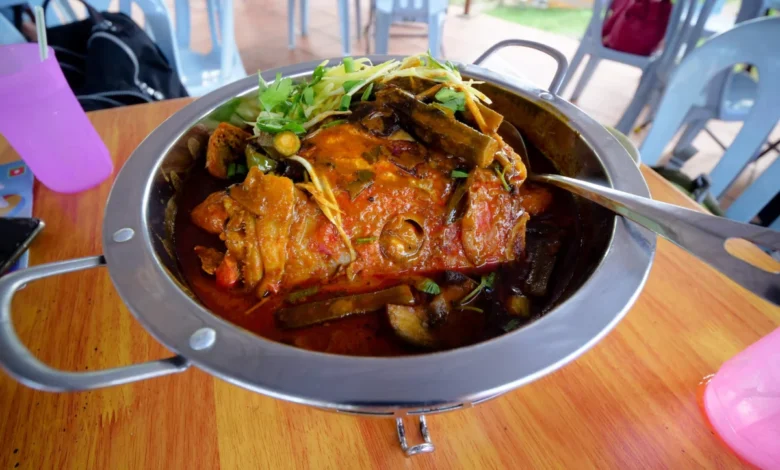
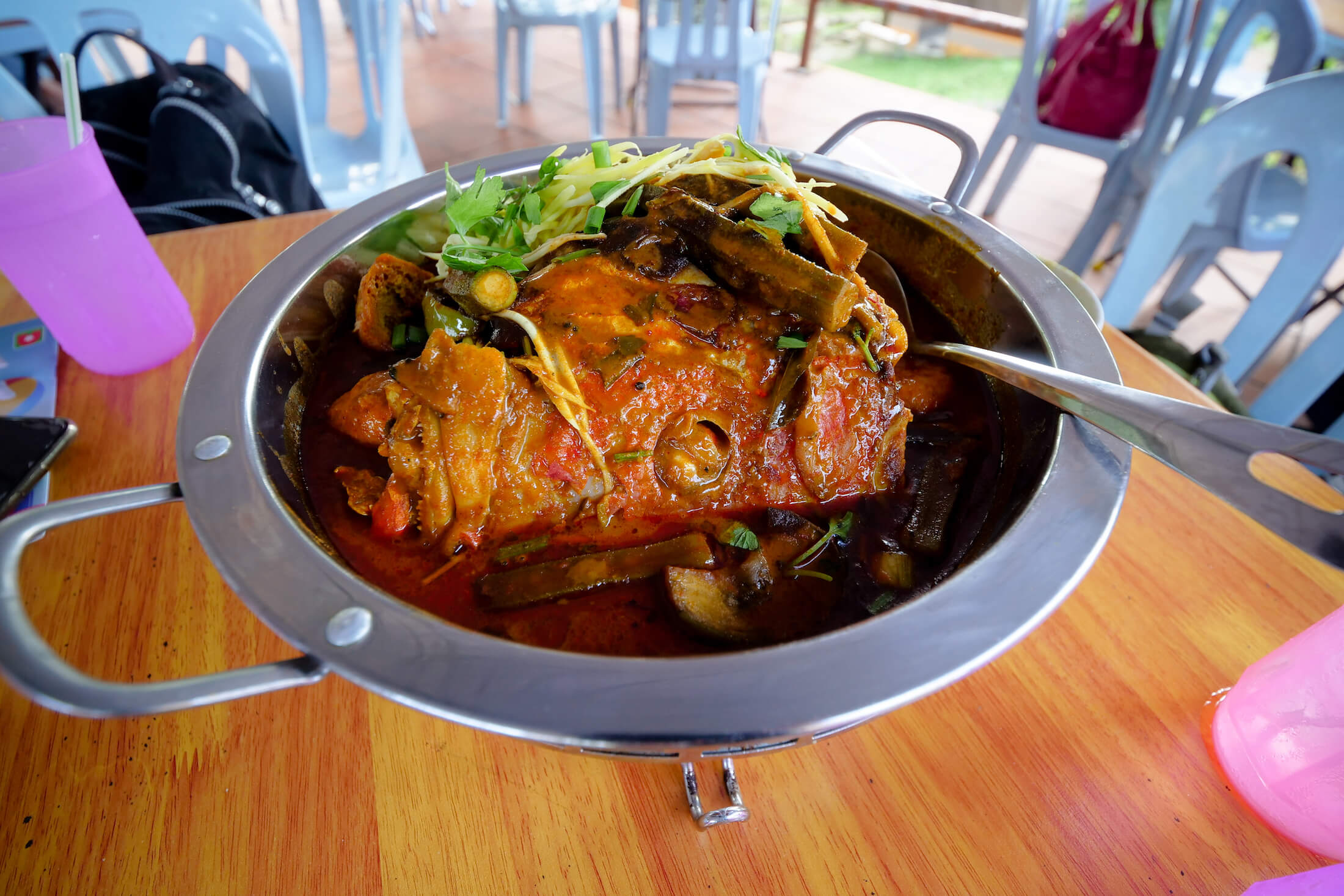
As a lunchtime institution, nasi campur represents the egalitarian nature of Malaysian dining, catering to laborers, corporate professionals, and international visitors alike. The dining protocol typically involves layering various dishes over rice, supplemented by a generous ladle of mixed curry gravies to unify the flavor profile. At Tugu View Cafe, this casual buffet format is elevated by its signature offering: locally sourced Red Snapper (Ikan Merah) head curry, cooked in a deep, spiced coconut-and-tamarind broth enriched with okra and firm tofu.

Culinary Anatomy and Gastronomic Appeal of Fish Head Curry
The culinary prominence of the fish head within Southeast Asian and South Asian cuisine is grounded in both texture and flavor science. The head of a Red Snapper contains an intricate network of connective tissues, gelatinous cartilage, and distinct muscle groups situated around the cheeks, eyes, and jawbones. When subjected to the prolonged simmering process characteristic of Malaysian curry preparation, these tissues break down, releasing natural collagens that thicken the broth while absorbing complex layers of turmeric, chili, fenugreek, curry leaves, and tamarind.
Food science analysts note that the high fat content surrounding the cranial bones protects the delicate proteins from drying out, yielding a tender texture unattainable in standard fillet cuts. For culinary tourists and local connoisseurs, the consumption of a fish head is regarded as an interactive dining experience, requiring meticulous extraction of meat from complex skeletal structures. This sensory engagement is widely cited by food researchers as a key driver of the dish’s enduring popularity across generations.

Chronology and Historical Context of the Tugu Monument District
The vicinity surrounding Tugu View Cafe carries profound historical significance for the nation of Malaysia. The Tugu Negara, or National Monument, was commissioned in the early 1960s to commemorate the soldiers who sacrificed their lives during Malaysia’s turbulent struggles for independence and the subsequent Malayan Emergency (1948–1960). Designed by the renowned Austrian sculptor Felix de Weldon—who also created the iconic Iwo Jima memorial in the United States—the monument was officially unveiled in 1966.
The urban development surrounding the Lake Gardens and the Tugu monument transitioned over the decades from a colonial administrative green space into a civic and cultural sanctuary. The establishment of local culinary institutions such as Tugu View Cafe within this historic zone reflects a broader Malaysian urban phenomenon: the coexistence of national heritage sites and traditional food vendors. These establishments serve as informal community hubs where the country’s diverse ethnic populations converge daily.

Socio-Economic Implications of Culinary Tourism in Kuala Lumpur
Gastronomy tourism has emerged as a critical pillar of Malaysia’s national tourism strategy, overseen by agencies such as Tourism Malaysia. According to economic impact assessments, food-related expenditures constitute a substantial percentage of total visitor spending in urban centers like Kuala Lumpur. Traditional eateries, ranging from roadside stalls to specialized cafes like Tugu View Cafe, play an essential role in sustaining the micro-economy by sourcing ingredients directly from local fisheries, agricultural markets, and spice merchants.
Furthermore, culinary tourism acts as an instrument of soft power and cultural diplomacy. The global visibility of Malaysian cuisine—bolstered by international travel media, digital documentation, and culinary documentaries—enhances the country’s brand equity as a premier multicultural destination. Analysts point out that food tourism fosters cross-cultural understanding by inviting foreign visitors to engage directly with the historical narratives embedded in regional dishes.

Operational Dynamics and Visitor Logistics
Operating daily from 7:00 AM to 6:00 PM (excluding Sundays), Tugu View Cafe accommodates a steady stream of patrons seeking traditional morning and midday meals. The establishment’s pricing structure reflects the accessibility of Malaysian street and cafe dining, with comprehensive meals varying according to the size of the seafood selections. For instance, large-format fish head dishes designed for shared consumption are priced to accommodate groups, aligning with the communal dining ethos central to Malaysian food culture.
Navigating the physical location requires some familiarity with the area’s topography. Situated up an incline near the main access roads of the Lake Gardens, the cafe’s entrance is occasionally obscured by adjacent retail vendors catering to regional tour groups. However, its proximity to major landmarks ensures steady foot traffic from tourists exploring the botanical gardens and historical monuments.

Broader Impact on Malaysian Food Culture
The enduring success of specialty establishments like Tugu View Cafe underscores a wider trend within contemporary Malaysian gastronomy: the preservation of heritage recipes amidst rapid urbanization and modernization. While Kuala Lumpur continues to transform into a futuristic metropolis characterized by skyscrapers and high-end fine dining, traditional culinary templates remain resilient.
Culinary historians emphasize that the preservation of dishes like Fish Head Curry safeguards ancestral knowledge systems, passing down precise spice-blending techniques and sourcing methods from one generation of cooks to the next. As Malaysia positions itself as a global gastronomic hub, the synthesis of historical memory, social inclusivity, and exceptional culinary execution found in venues like Tugu View Cafe ensures that the nation’s diverse food culture will continue to thrive on the international stage.