The Exponential Rise of Home Baking: How Micro-Yeast Management and Mathematics Reshaped the Lockdown Kitchen

During the unprecedented global disruptions of the past year, the concept of exponential growth became a dominant part of daily public discourse, typically invoked in the sobering context of the SARS-CoV-2 pandemic. From daily epidemiological briefings to nightly news updates, societies worldwide grappled with the counterintuitive nature of exponential mathematics—a phenomenon where systems appear dormant for extended periods before experiencing a sudden, dramatic surge. Yet, away from the grim statistics of public health, this very same mathematical principle played a surprisingly pivotal role in one of the defining cultural phenomena of the lockdowns: an extraordinary surge in home baking. As populations retreated indoors, demand for baking supplies skyrocketed. In countries like Norway, supermarket shelves were routinely stripped bare of commercial yeast for weeks, forcing home cooks to rethink their relationship with this essential microorganism. By understanding the biological mechanics of exponential growth, resourceful bakers discovered that a single packet of instant dry yeast could stretch much further than previously imagined, transforming a frustrating supply shortage into a masterclass in culinary science and kitchen economics.
The global lockdowns imposed in early 2020 triggered an unprecedented renaissance in culinary arts, most notably in bread and pizza making. With restaurants closed and remote work arrangements leaving millions with vacant evenings and weekends, home baking transitioned from a niche hobby into a mainstream psychological coping mechanism and a practical solution to disrupted supply chains. Major grocery chains and food distributors reported unprecedented spikes in flour and yeast sales. In Scandinavia, where the author resides, commercial yeast vanished from store shelves almost overnight. This acute scarcity forced consumers to reevaluate how they utilized dry goods. Rather than hoarding or abandoning their newfound passion, innovative bakers turned to a combination of precision kitchen tools and microbiological science to maximize their dwindling supplies, proving that a minuscule amount of yeast, coupled with extended fermentation times, could yield results superior to traditional, rapid-dough methods.
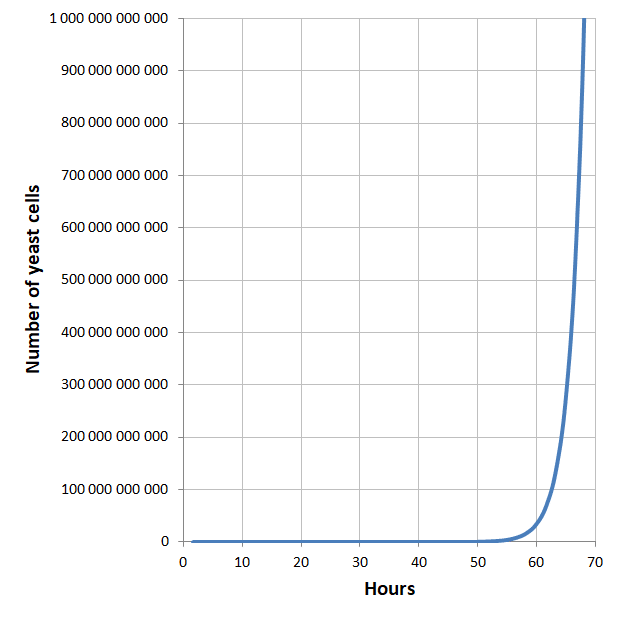
At the heart of successful baking during the supply shortages was a fundamental biological concept: exponential growth. In microbiological terms, exponential growth describes a process where a population increases by a fixed percentage over a given interval. Under ideal laboratory or commercial conditions—characterized by optimal temperatures, adequate moisture, and an abundant supply of nutrients such as oxygen and sugars—a single yeast cell (Saccharomyces cerevisiae) undergoes binary fission, splitting into two distinct cells approximately every 100 minutes. This translates to a complete biological life cycle in under two hours.
To visualize the sheer velocity of this progression, one must examine the timeline of cellular multiplication. Starting with a single active yeast cell, the division process compounds rapidly:
- After 100 minutes: 2 cells
- After 3 hours and 20 minutes (200 minutes): 4 cells
- After 24 hours: Approximately 16,000 cells
- After 48 hours: Approximately 268 million cells
- Before 72 hours (3 days): Approximately 1 trillion cells
This staggering final figure—one trillion cells—roughly equates to the total cellular mass found in a standard 50-gram block of commercial compressed yeast. While such ideal conditions are carefully maintained during industrial yeast production for a limited duration, actual bread dough operates at a significantly slower pace due to nutrient depletion, metabolic waste accumulation, and fluctuating temperatures. Nonetheless, the underlying mathematics demonstrates why massive leavening power can be achieved from minuscule initial inoculations of yeast, provided the dough is given sufficient time to develop.
The practical application of this biological principle revolutionized how home cooks approached bread and pizza dough preparation. Traditionally, recipes called for generous quantities of yeast to expedite the rising process, allowing bread to be mixed, proofed, and baked within a few hours. However, facing dwindling pantry supplies, bakers adopted extended bulk fermentation techniques—often referred to as direct or straight dough methods, avoiding complex pre-ferments like poolish, biga, or levain.
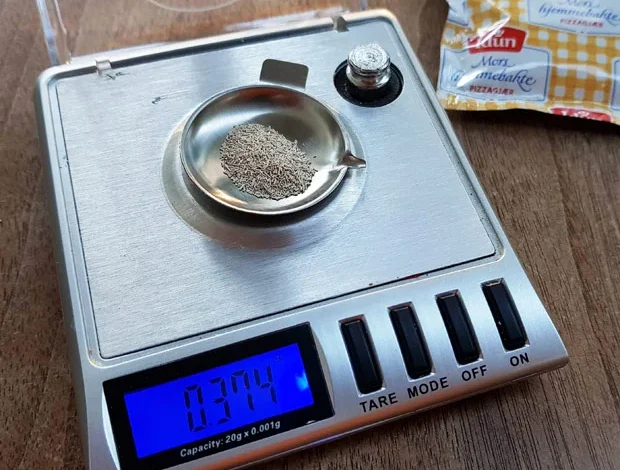
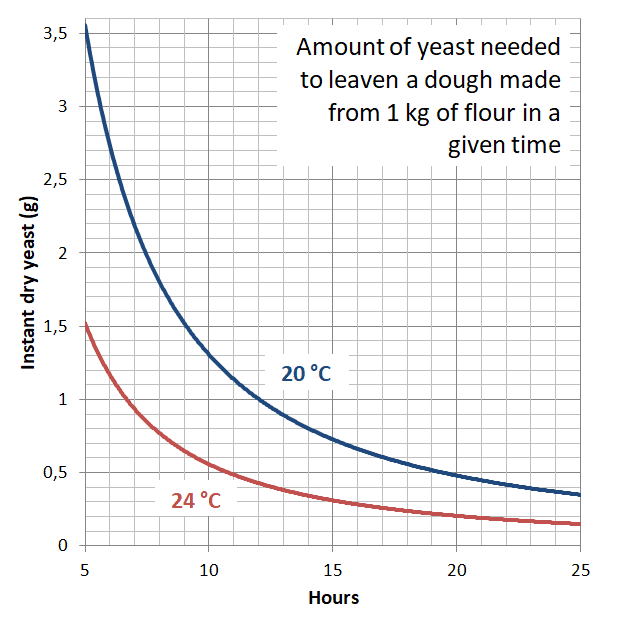
To execute this precisely without risking over-proofed or collapsed dough, home bakers increasingly relied on digital tools such as PizzApp+, a specialized mobile application originally designed for artisanal pizza makers. By inputting variables such as total flour weight, ambient room temperature, and desired fermentation duration, the software calculates the exact fraction of a gram of yeast required. For example, a standard dough formulation utilizing one kilogram of wheat flour requires a mere 0.48 grams of instant dry yeast when subjected to a 20-hour bulk fermentation at 20°C.
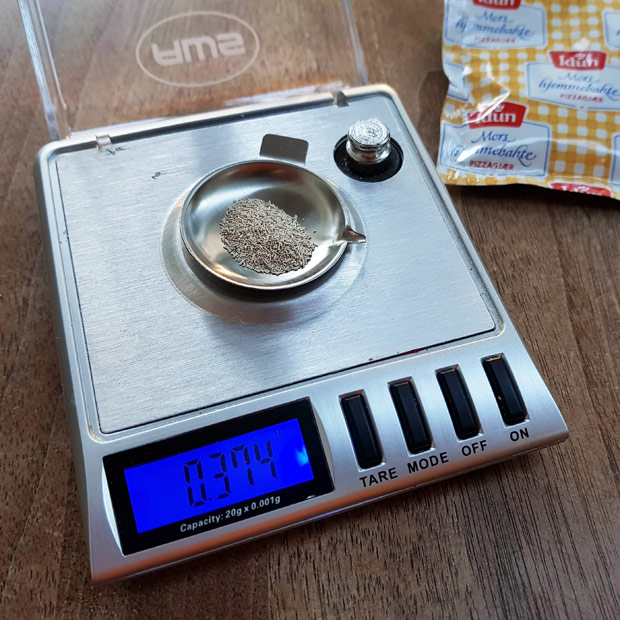
Achieving such precise measurements necessitated a modest investment in affordable digital kitchen scales capable of reading down to 0.001 grams. These micro-balances, previously restricted to scientific laboratories or jewelry workshops, became accessible consumer items. By shifting from high-yeast, short-rise methods to low-yeast, long-rise protocols, a standard 12-gram sachet of instant dry yeast could be stretched to last through dozens of baking sessions, effectively neutralizing the market shortages.
Culinary scientists and professional bakers have long noted that extended fermentation offers profound benefits that extend far beyond mere yeast conservation. When dough is allowed to ferment slowly over 18 to 24 hours, endogenous enzymes break down complex starches into simple sugars, feeding the yeast while simultaneously allowing native lactic acid bacteria to flourish. This microbial activity generates organic acids that significantly enhance the flavor profile of the final bread, yielding a more complex, artisanal taste and improving crumb structure and digestibility. Furthermore, the slow breakdown of gluten proteins often results in a loaf that is easier on the digestive system compared to rapidly forced commercial breads.
While the rise of sourdough baking also captured the public imagination during the pandemic—with enthusiasts cultivating wild yeast starters from flour and water—sourdough requires daily maintenance, feeding, and a distinct level of culinary commitment. For many home cooks, the allure of instant dry yeast remained unmatched in terms of convenience and predictability. By combining the reliability of commercial dried yeast with the patience of long fermentation times, bakers found a middle ground that required minimal grocery store trips while delivering professional-grade results.
The unexpected confluence of supply chain disruptions, mathematics, and domestic baking left a lasting imprint on consumer behavior. Food industry analysts observing the pandemic-era culinary boom note that consumers have developed a heightened awareness of ingredient efficiency, food preservation, and basic food science. The widespread adoption of digital scaling tools and algorithmic calculators like PizzApp+ indicates a permanent shift toward precision in home kitchens.
Moreover, the normalization of extended fermentation has elevated the baseline quality of home-baked goods globally. As public health restrictions recede and commercial supply chains return to full operational capacity, the lessons learned during the yeast shortages of 2020 and 2021 remain embedded in modern culinary practices. Bakers who once relied on intuition and heavy-handed ingredient usage now appreciate the subtle interplay between time, temperature, and microbiology. Ultimately, the crisis transformed a simple household frustration into a widespread appreciation for applied science, proving that even the smallest microbial organism, understood through the lens of exponential mathematics, possesses the power to sustain and inspire communities through times of uncertainty.