Tomato Risotto with Frizzled Red Onions Offers a Defiant Taste of Late Summer

The culinary calendar is frequently subjected to aggressive commercial timelines, marked by the premature introduction of autumnal marketing campaigns while summer temperatures remain at their peak. Retailers and food manufacturers routinely pivot toward squash, heavy spices, and wool garments as early as late August, ignoring the meteorological reality of lingering warm weather. Amid this seasonal dissonance, home cooks and culinary professionals face a distinct ideological divide between embracing transitional comfort foods and preserving the peak of the warm-weather harvest.

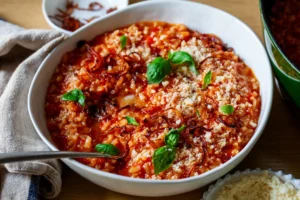
This tension is particularly acute regarding summer produce, most notably tomatoes, which achieve optimal ripeness just as retail shelves shift focus toward cooler-weather ingredients. Rather than conceding to the premature cultural pressure for hearth-style stews and roasted roots, culinary practitioners continue to advocate for recipes that honor the final weeks of agricultural bounty. The introduction of tomato risotto paired with frizzled red onions serves as a direct manifestation of this culinary defiance, bridging the gap between traditional comfort food techniques and vibrant, late-summer ingredients.
Culinary Mechanics and Recipe Innovation
Traditional risotto preparation has long been governed by rigid procedural dogma. Classical Italian culinary instruction traditionally mandates continuous stovetop stirring, the exclusive use of simmering meat or vegetable broth, and substantial infusions of heavy fats and aged cheeses. However, modern culinary analysis and experimental home cooking have increasingly dismantled these orthodoxies.

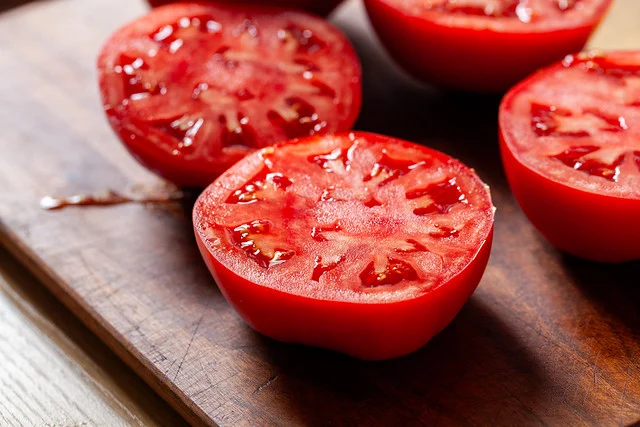
The tomato risotto formula reinterprets the traditional method by eliminating broth entirely, relying instead on the pure, unfiltered moisture and acidity of grated fresh tomatoes supplemented by water. This technique mirrors historic regional adaptations where local, hyper-seasonal ingredients dictate the cooking medium rather than pre-made stocks. By grating halved tomatoes against the coarse side of a box grater, cooks extract the maximum volume of pulp and juices while cleanly separating and discarding the fibrous outer skins. This yields approximately two and a half to three cups of intensely flavored, bright tomato pulp that functions simultaneously as the simmering liquid and the primary flavor profile.
Furthermore, the recipe incorporates an oven-baked technique first popularized in simplified risotto methods. By transferring a covered Dutch oven or deep, oven-safe braiser to a preheated 350-degree Fahrenheit oven after an initial stovetop simmer, the rice absorbs the tomato pulp and water evenly over a span of 25 to 30 minutes. This approach removes the labor-intensive requirement of constant stirring, which food scientists note is often unnecessary for achieving starch gelatinization as long as the liquid-to-grain ratio is accurately managed.

The Integration of Frizzled Red Onions
A critical structural component of the dish is the inclusion of frizzled red onions, which provide both textural contrast and aromatic depth. Rather than utilizing conventional savory garnishes such as pan-crisped prosciutto, bacon, or heavy breadcrumbs, the recipe employs thinly sliced red onions cooked in olive oil at the outset of the preparation process.
Cooked over medium-high heat for eight to ten minutes, the onions transition from softness to a deep, golden-brown crispness. Half of this yield is reserved on a paper towel-lined plate, seasoned with salt, and deployed as a finishing garnish, while the remaining portion remains in the Dutch oven to form the aromatic base alongside garlic, red pepper flakes, and uncooked short-grain rice. This dual application infuses the grains with a subtle pungency while offering a crisp, savory counterpoint to the creamy, tomato-infused interior of the finished dish.

Nutritional and culinary balance is achieved during the final finishing stage. Once removed from the oven, the risotto is vigorously stirred for two minutes to release remaining starches and create a naturally velvety emulsion. The addition of a modest quantity of butter or high-grade olive oil, coupled with grated Parmesan cheese and torn fresh basil leaves, completes the dish. For dietary flexibility, the recipe can be easily adapted to a fully plant-based format by omitting dairy products entirely, relying solely on olive oil, fresh herbs, and the savory foundation of the frizzled onions.
Seasonal Transition and Cultural Context
The release of late-summer culinary innovations highlights a broader psychological and cultural phenomenon surrounding seasonal transitions. Consumer behavior studies frequently indicate that retail saturation of autumn-themed goods triggers a sense of rushing through the calendar year. For agricultural enthusiasts, farmers, and home cooks, this premature transition undermines the actual agricultural timeline, during which heirloom and standard tomatoes remain at their peak sweetness and acidity well into September.

Culinary historians note that traditional Mediterranean cooking has historically resisted rigid calendar-based eating, favoring instead a rhythm dictated strictly by the harvest. The practice of utilizing fresh tomatoes for rice dishes is well-documented in various coastal and agrarian European traditions, where grains absorb the dense, mineral-rich juices of vine-ripened produce. By adapting these historical methods into an accessible, oven-baked format, modern recipes allow home kitchens to maximize seasonal ingredients without requiring prolonged, intensive stovetop labor during uncomfortably warm weather.
Broader Economic and Agricultural Implications
The ongoing emphasis on utilizing late-season produce carries tangible benefits for local agriculture and regional food economies. As large-scale supply chains pivot early toward imported or out-of-season goods to satisfy manufactured consumer demand, local farmers markets often experience a dip in foot traffic for traditional summer crops.

Promoting recipes that specifically call for bulk quantities of fresh tomatoes—such as grating them directly for risotto bases—encourages consumers to clear remaining farm stands of surplus produce. Agricultural extension services frequently report that late-season tomato gluts present logistical challenges for small-scale growers; therefore, high-yield recipes serve a practical function in reducing food waste at the consumer level.
Ultimately, the turn toward unconventional summer-winter hybrid dishes reflects a maturing home cooking landscape that values ingredient integrity over strict adherence to seasonal marketing cues. Whether prepared as a transitional weeknight meal or a weekend culinary project, tomato risotto with frizzled red onions demonstrates that deeply comforting food does not require the immediate abandonment of summer’s most vibrant flavors.