The Evolution of No-Knead Baking
The rise of no-knead bread recipes reflects a broader trend in home cooking: the pursuit of professional-grade results with minimal technical intervention. Historically, yeast-based breads required rigorous kneading to develop the gluten network necessary for structure and elasticity. However, the "no-knead" movement, popularized in the early 2000s, demonstrated that long fermentation times or precise hydration levels could achieve similar, if not superior, results.

By incorporating this method into a vegan-friendly framework, bakers can now bypass the need for eggs or dairy, which traditionally provided richness to enriched doughs. The current iteration of vegan cinnamon bread relies on the interaction between instant yeast and a carefully balanced ratio of flour and water, resulting in a dough that is hydrated enough to require no manual manipulation.

Technical Process and Dutch Oven Utility
The success of this specific recipe hinges on the use of a Dutch oven. This heavy-duty cookware acts as a mini-hearth, trapping steam released from the dough during the initial phase of baking. This moisture keeps the exterior of the loaf soft, allowing the bread to rise to its maximum volume before the crust sets.

The procedural timeline for creating this bread is streamlined:

- Preparation: Ingredients, including all-purpose flour, instant yeast, salt, water, and maple syrup, are combined until just mixed.
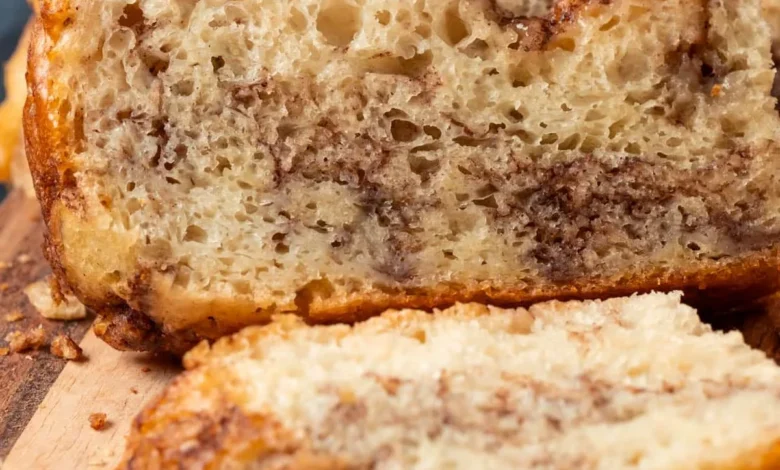
- The Swirl: A cinnamon-sugar mixture is prepared separately with vegan butter. This is folded into the dough in distinct layers. A skewer is then used to drag the mixture through the dough, creating the characteristic marbling.
- Rising: The dough undergoes a single rise of approximately one hour, during which the yeast metabolizes the sugars, creating carbon dioxide bubbles that aerate the bread.
- Baking: The loaf is placed in a preheated Dutch oven. The intense, concentrated heat creates a caramelization effect on the outer layer, resulting in a sweet, slightly sticky crust that contrasts with the fluffy interior.
Nutritional Profile and Dietary Considerations
From a nutritional standpoint, this bread serves as a carbohydrate-dense staple. Each serving, based on a yield of 16 slices, contains approximately 173 calories. The carbohydrate count sits at 32 grams, with 7 grams of sugar primarily derived from the cinnamon-sugar swirl. The protein content is modest at 3 grams per serving, typical for a refined flour-based loaf.

For those adhering to dietary restrictions beyond veganism, the recipe offers a baseline for modification. While standard all-purpose flour is used for its high protein-to-starch ratio—which is essential for structure—bakers have explored gluten-free all-purpose blends. Culinary experts note that when substituting gluten-free flours, the structural integrity of the loaf may be compromised, often necessitating the addition of xanthan gum or other binders to replicate the chew of wheat-based flour.

Market Trends in Plant-Based Baking
The emergence of such recipes is not isolated. According to recent market analysis in the food and beverage sector, consumer interest in vegan baking has surged by nearly 20% over the last five years. This shift is driven by a combination of health consciousness, environmental concerns, and the increasing availability of high-quality plant-based alternatives like vegan butter and plant-based milks.

The "no-knead" aspect of this recipe specifically addresses a key barrier to entry for novice bakers: the perceived difficulty of bread-making. By lowering the barrier to entry, these recipes contribute to a DIY culture where home bakers are increasingly likely to replace store-bought, preservative-heavy products with fresh, controlled-ingredient alternatives.

Storage and Preservation Logistics
A critical observation regarding this specific recipe is its shelf-life profile. Unlike commercial breads that utilize additives to extend freshness, this bread is designed for immediate consumption. The optimal quality is achieved on the day of baking. By the second day, the texture naturally firms, making it ideal for toasting, which helps to revive the cinnamon notes and restore a crisp exterior.

For long-term storage, the bread is freezer-stable. Industry guidelines for home freezing recommend pre-slicing the loaf before placing it in an airtight container or vacuum-sealed bag. When stored at 0°F (-18°C), the bread maintains its structural integrity for up to three months. The ability to transition directly from the freezer to a toaster provides a convenient solution for daily meal preparation, effectively mitigating the waste that might otherwise occur due to the lack of preservatives.

Expert Analysis of Culinary Implications
Food scientists observing the trend in "simplified baking" note that the shift toward these recipes suggests a change in how consumers value time versus quality. "We are seeing a move away from the ‘slow-food’ movement’s requirement for immense manual labor, toward a ‘smart-food’ approach," notes a food industry analyst. "Using a Dutch oven to replace the need for steam injection ovens or intensive kneading is a perfect example of leveraging physics to achieve culinary results."

Furthermore, the integration of vegan ingredients into traditional sweet breads suggests that the "vegan" label is becoming increasingly synonymous with "accessible" rather than "niche." The success of these recipes in various test kitchens confirms that plant-based fats, such as high-quality vegan butter, are successfully mimicking the mouthfeel and flavor profiles of dairy-based fats in baked goods.

Summary of Best Practices
To ensure success with this no-knead method, practitioners emphasize three key variables:

- Temperature: The water used must be lukewarm. If the water is too hot, it will kill the yeast; if too cold, the rise will be excessively slow, leading to a dense loaf.
- Patience: While the hands-on time is minimal, the one-hour rise time is non-negotiable. This phase is critical for the development of the internal honeycomb structure of the bread.
- Precision: Even though the recipe is "simple," measuring the flour by weight (grams) rather than volume (cups) is recommended for consistency, as flour density can vary significantly based on how it is packed into a measuring cup.
As the community continues to refine these techniques, the future of home baking appears to be leaning toward methods that emphasize efficiency without sacrificing the sensory experience of freshly baked bread. Whether served as a breakfast component or a standalone snack, this vegan cinnamon bread serves as a testament to the fact that complex flavors can be achieved through minimalist, high-impact culinary processes.